
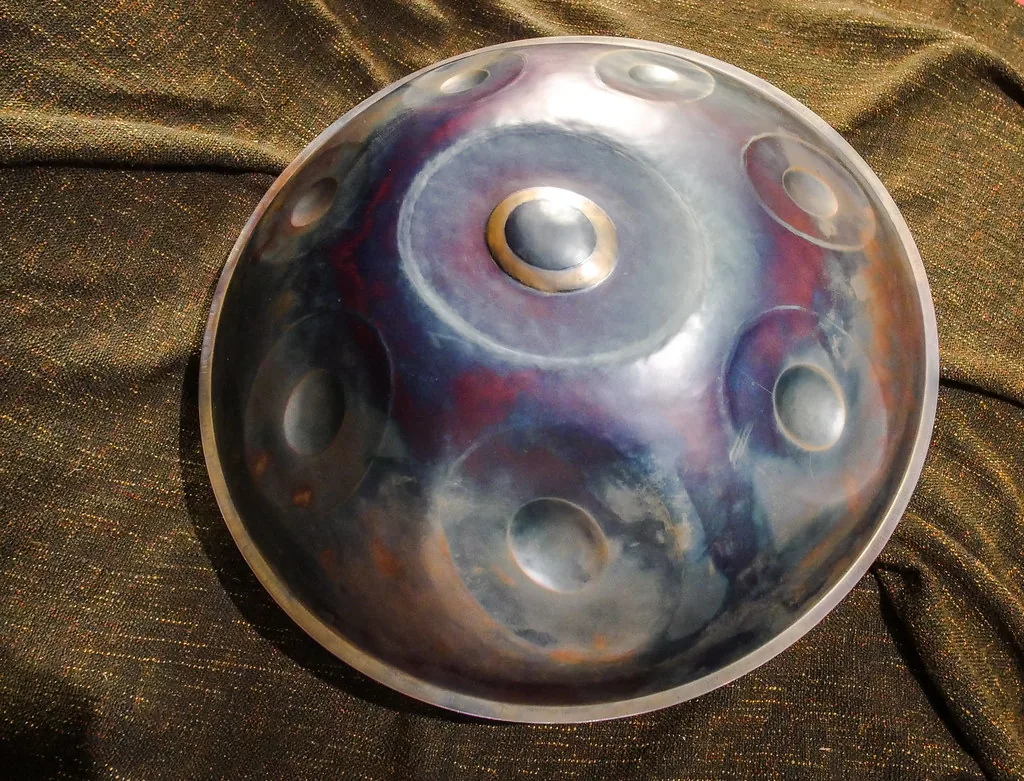
The handpan market in France has taken shape recently, with new brands emerging and more sales channels becoming available.
Today, the market includes small craft workshops and more established businesses. This wide choice makes instruments easier to find, but it also makes it important to check their quality, after-sales support and traceability.
For a quality 9-note instrument, expect to pay around €1,200 to €2,500. This benchmark can help you avoid deals that are too good to be true.
Buying directly from a reputable maker or a specialist shop often provides technical assurances and reliable after-sales support.
In this article, we cover the key criteria—sound, tuning stability, customer reviews, options (432/440 Hz), warranties, lead times and delivery—and explain how to compare models before buying.
To explore the options and places to buy in more detail, see our practical guide to the world of handpans.
A growing market in France and easier access to instruments
New brands and a wider range of sales channels are changing how people find instruments. The number of models and makers has grown in just a few years, making a first purchase easier.
Recent changes and new sales channels
A few years ago, buyers almost always ordered directly from a maker and faced long waits. Today, specialist shops, showrooms and reputable websites offer more transparency, verified reviews and after-sales support.
These channels let you compare instruments, try them and order online or in a shop. In some cases, lead times are shorter and instruments are available from stock.
What this means for a first purchase
For a confident start, budget €1,200 to €2,500 for a quality instrument. This price reflects tuning stability and the quality of the finish.
Such a wide choice can make comparisons harder: offers differ, and they can vary in sound and durability. Careful research and verified reviews can help you buy with confidence. Buying a handpan from a reputable website or shop remains the best option.
How to assess a handpan maker before buying
Before buying, it is essential to assess the maker’s credibility and skill. Start by listening to the sound: pitch accuracy, harmonic richness and consistency across the notes.
Check whether the instrument holds its tuning over time and whether the maker can answer technical questions. Read verified customer reviews on the maker’s site and independent platforms.
Range, models and tuning options
Examine the range on offer: different models, note counts and clearly stated 432/440 Hz options on product pages. A good maker specifies the technical features and available variations.
After-sales support, warranties, lead times and shipping
Check the written warranties, retuning policy and arrangements for damage during delivery. Confirm stock levels and realistic lead times for instruments made to order.
| Criterion | What to look for | Question to ask | Reliable indicator |
|---|---|---|---|
| Sound and tuning | Pitch accuracy, harmonics, stability | How many customers report that their instruments hold their tuning? | Recordings and verified testimonials |
| Range & options | Models, notes, 432/440 Hz | Do you offer a 432 Hz option? | Clear product descriptions |
| After-sales support & shipping | Warranties, lead times, packaging | What support is available if the instrument is damaged? | Legal information and written terms |
To organize your search, list your needs, compare offers and ask specific questions. For more detail, read our online buying guide.
Metal Sounds: a signature French craft workshop
Metal Sounds stands out for handcrafted instruments focused on musicality and tuning stability. Based in Saint-André-de-Sangonis, the workshop holds the Artisan d’Art designation and has a dedicated team of tuners.
The Spacedrum range includes several models. Prices generally run from €1,000 to €3,000, depending on the finish and number of notes.

Trying and buying an instrument
You can buy directly from the maker’s website or try instruments at the showroom (21B rue de la Lucque, 34725 Saint-André-de-Sangonis).
Retail network and after-sales support
Metal Sounds supplies a network of retailers in France. Shops offer trials and sell instruments subject to availability, while the maker handles retuning.
- Advantage: a named contact and support over the long term.
- Tip: check the legal information, lead times and warranties before buying a handpan.
Ederod and the Endro® handpan: tradition, innovation and patented sheet steel
In Besançon, Ederod combines regional craftsmanship with metallurgical innovation to produce the fifth generation of the Endro®.
Handcrafted in Besançon
Production takes place entirely in the workshop, which forges and shapes its own steel shells. This craft production gives the workshop full control over quality and finishing.
Steel quality and tuning stability
After nearly ten years of research and development, Ederod developed patented sheet steel. The result is a rich sound and notable tuning stability.
Tuning requires thousands of hours of practice. That technical investment helps the instrument hold its tuning over time.
D minor ranges: Intégrale, Celtic, Mystic and custom models
The D minor models offer several sound characters:
- Intégrale — a complete Aeolian mode.
- Celtic — a warm sound without B-flat.
- Mystic — a more melancholy sound that emphasizes B-flat.
Custom versions are available on request, subject to feasibility.
Notes, prices, shipping, retuning and care
The Endro® comes in a 9-note version (€1,500) and a 10-note version (€1,650). Its standard diameter is 51 cm.
Distance sales are available: shipping in a custom-made package costs €48 within France and €50 to €70 within Europe.
Retuning is available after an impact or a change in tuning. To care for the instrument, store it somewhere dry and out of the sun, protect it and apply oil regularly, such as coconut oil.
Handpan makers in France: a survey of workshops
The craft scene includes established workshops and small independent makers, each with its own approach.

Established workshops and small independent makers
Established workshops often have instruments in stock at retailers and formal after-sales support.
Independent makers frequently work to order and offer more extensive customization.
Key differences: tone, finish, models and prices
Listen to the tone, harmonic richness and projection when comparing handpans.
Visually, check that the hammering is even, the steel is consistent and the edges are well finished.
| Type | Advantage | What to check |
|---|---|---|
| Established workshops | Stock, after-sales support, in-store trials | Prices, warranties, retailers |
| Independent makers | Custom orders, direct contact | Lead times, availability |
| Practical tip | Listening and hands-on trials | Reliable recordings, followed by a trial |
A reputation built over years remains a useful indicator. Try several models in a shop when possible to appreciate each instrument’s musical qualities.
Where to buy: directly from a maker, at a music shop or on a specialist website
Whether your priority is customization, trying an instrument or getting one quickly, where you buy matters. Your choice affects the advice you receive, the warranties and the delivery time.

Buying directly from the maker
Advantage: detailed discussions with the maker and the ability to customize the tone and options.
You can learn more about the techniques, lead times and possible finishes. Bear in mind, however, that stock may be limited and making an instrument takes time.
Music shop
In a shop, you can try and compare several instruments immediately.
Check the seller’s expertise and relationship with the maker for after-sales support and retuning. Examples in France include Djoliba (Toulouse) and Percussions du Monde (Paris).
Specialist website
A reputable website is transparent: it provides verified customer reviews, legal details (address and SIRET business registration number) and prompt replies.
Favor platforms connected to a physical shop or an established maker for greater legal assurance.
“Check that legal details and reviews are clear before buying online.”
| Sales channel | Advantage | What to check |
|---|---|---|
| Direct purchase | Customization, contact with the maker | Lead times, limited stock |
| Shop | Hands-on trial, comparison, quick access | Seller expertise, after-sales policy |
| Specialist website | Convenience, transparency, reviews | Legal details, terms of sale |
To make the right choice, follow your priority: customization with a maker, a hands-on trial in a shop or a secure order through a specialist website. Some brands, such as Metal Sounds, combine these channels and may offer instruments from stock and prompt trials.
Price benchmarks and value for money
To judge whether a price is fair, distinguish the real cost of an instrument from the appeal of a sales offer.

A quality handpan with 8 or 9 notes generally costs €1,200 to €2,500. This range reflects the time needed to make it, the tuning skill involved and the quality of the steel.
Indicative price range
Be cautious below about €1,200: a heavily discounted price is often no bargain.
Why prices vary
The following factors account for price differences:
| Factor | Effect on price | What it means for the buyer |
|---|---|---|
| Tuning time | Hours of skilled work | Better tuning stability |
| Steel quality | Material and treatment | Lasting tone |
| After-sales support & warranty | Support after purchase | Peace of mind after buying |
Tip: compare several models in the same range to assess their musicality and finish.
“A well-made instrument can last for years: prioritize reputation and service over immediate savings.”
Always check the terms of sale and warranties before deciding.
Technical details that matter: construction, steel and tuning
The type of steel and the care taken with each shell largely determine an instrument’s sound.
Steel, shells, treatment and their effect on tone
Steel quality, thickness and heat treatment affect resonance, projection and how well notes hold their tuning.
Well-chosen sheet steel produces more harmonics and longer resonance. Ederod, for example, makes its own shells and has patented sheet steel designed to improve tuning stability.
Tuning: skill, stability and retuning
Tuning takes thousands of hours of practice. A maker’s skill affects pitch accuracy and harmonic consistency.
Retuning may be needed after an impact, exposure to heat or high humidity. For reliable retuning, favor the handpan’s original maker.
“Ask for clear technical specifications, especially when buying online: understanding the instrument helps you buy wisely.”
| Element | Effect | Advice |
|---|---|---|
| Steel & treatment | Tone, harmonics, durability | Ask for specifications and the material’s origin |
| Shell | Projection and playing comfort | Check consistency and hammering |
| Tuning & retuning | Accuracy and stability | Confirm the maker’s after-sales service |
Avoiding pitfalls: marketplaces, opaque websites and low-quality instruments
Marketplaces and unclear offers increase the risks for buyers. Online, some sellers use urgency and low prices to hide defects. Handpans offered without clear information often lead to disputes.
Warning signs and common risks
Watch out for pages with no legal details, address or SIRET business registration number. An unusually low price (below roughly €1,200 for 8 or 9 notes) is almost never a bargain.
Marketplaces bring more cases of instruments that do not match their descriptions: poor quality, sellers who cannot be contacted and no after-sales support.
Check verified customer reviews and the site’s reputation before paying. Read the return terms, cancellation rights and statutory warranties as well.
Favor the website of a reputable handpan maker or one connected to a physical shop. Ask about material traceability, quality checks and production methods.
Educational resources and practical guides can help you assess a listing.
“It is better to pay a fair price than risk a dispute and disappointment.”
Buying secondhand from an individual: opportunities and precautions
A secondhand instrument often offers a good balance of cost and sound quality. A handpan that has already been played may have settled in and be available immediately, appealing to many musicians.
Essential checks: tuning, structural defects and recourse
Before buying, ask to try the instrument in person. Listen to every note, play softly and then more strongly, and check the stability of the harmonics.
Record the trial so you can listen again later. Cracks or creases in the handpan may become apparent when you play harder.
Quick checks:
- Pitch accuracy and the stability of each note.
- No visible dents, creases or cracks.
- History: age, storage conditions, drops and retuning.
Remember: a sale between individuals comes with no warranty from the seller. Record the instrument’s condition in writing, note the model and scale, and keep evidence of the trial.
“Choose dedicated groups or a circle of trusted contacts over general marketplaces.”
Avoid eBay or Le Bon Coin when possible. Buying an instrument from a trusted friend is often the safest approach.
Conclusion
In short, the best approach combines hands-on trials, warranties and verified information. This article offers practical benchmarks to guide your search and reduce risk.
Favor buying directly from a reputable maker, at a specialist shop or on a website connected to a workshop. Check the indicative price (€1,200 to €2,500 for a 9-note instrument), quality, tuning and after-sales support.
Compare offers and reviews, document each trial and ask clear questions before buying. Makers such as Metal Sounds and Ederod illustrate the quality of French craftsmanship and the range of models available.
Finally, use this article to choose a handpan with confidence: listen, compare and buy from someone you trust.