
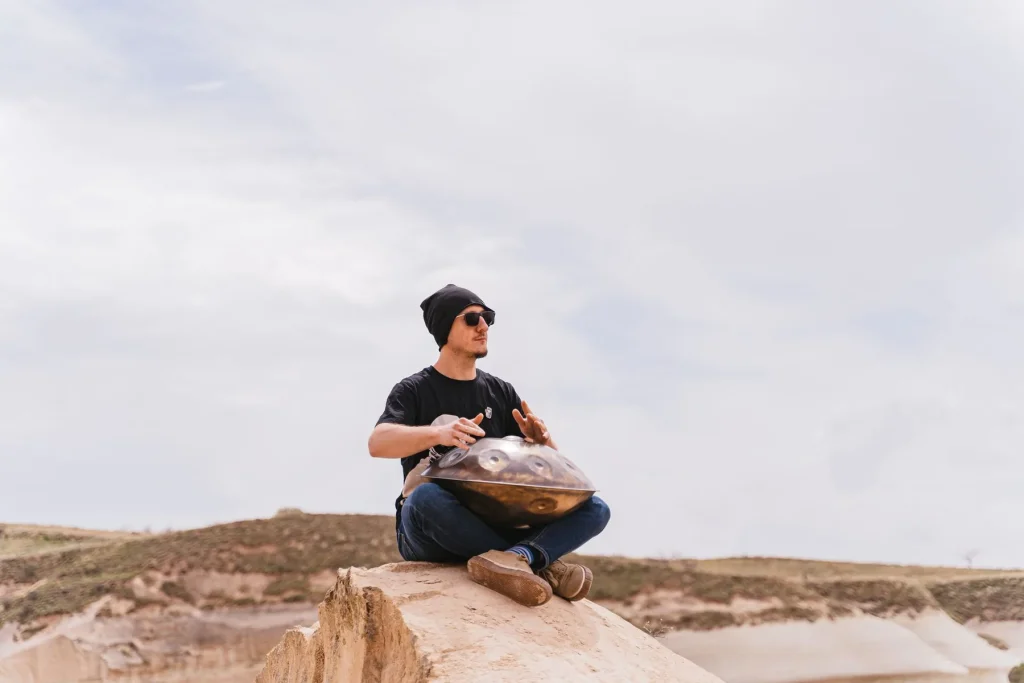
What this guide offers: this article provides a clear guide to choosing an instrument that suits your experience, how you plan to use it and your budget.
The handpan emerged around the turn of the 2000s from PANArt’s Hang. It consists of two steel shells that form a Helmholtz resonator. This design gives it a meditative tone valued in contemporary music.
In 2025, the brand offers models such as the nitrided steel Melody D Kurd and stainless steel Harmony D Kurd, tuned by professionals. The D Kurd and D Amara scales remain popular, while other makers offer Celtic Minor 440 equivalents.
Here, we compare the most sought-after models with some of the best handpans on the market. You will find buying criteria, detailed comparisons, and playing and care advice. Technical details such as materials, weight and notes support the comparison.
Coming up: a step-by-step guide, from reasons to choose this brand to practical advice for beginners.
Why choose a Sela handpan in 2025?
An instrument’s origin and tuning affect its long-term reliability.
German manufacturing: rigorous quality control, consistent tuning tolerances and careful finishing. This level of workmanship reduces unwelcome surprises on delivery and helps the instrument hold up over time.
Professional tuning: this ensures accurate fundamental notes and harmonics. The notes sound even and stay in tune with use.
Specific examples
- Melody D Kurd SE220: nitrided steel, 9 notes, approximately 57 cm in diameter, with a carrying bag with shoulder straps included — a clear attack and well-defined sound.
- Harmony D Kurd 201: stainless steel with a premium gold finish — long sustain and a bright sound.
- Melody D Amara SE221: a deeper sound at a manageable price.
“An instrument that is ready to play and comes with a padded bag makes a better first impression.”
Value for money: the range offers high quality without reaching the prices of the most exclusive instruments. The price reflects the materials, professional tuning and included accessories.
Tip: pay attention to the accessories and look for a padded bag with shoulder straps. To confirm your choice, listen to sound samples alongside those of other respected makers.
Scales, keys and tuning: understand the basics before buying
The choice of notes defines an instrument’s character and melodic possibilities.
A scale is a selection of notes that creates a particular mood. It guides your playing and determines the intervals available for improvisation.
How the scales feel
D Kurd (D minor) has a melancholy quality, ideal for meditation and learning. It is one of the most common scales for improvisation.
D Amara offers a captivating depth. It lends itself to sustained textures and soothing, repeated patterns.
Celtic Minor 440 combines a singing quality with versatility. Tuned to 440 Hz, it supports playing that ranges from gentle to energetic.
Tuning, sustain and projection
Tuning to 440 Hz makes it easier to play with guitar, voice and other instruments. The material affects sustain: stainless steel tends to sustain longer than nitrided steel.
Projection matters if you play outdoors or onstage. Choose an instrument with balanced notes for a polished sound.
“Listen to examples in D Kurd, D Amara and Celtic Minor 440 to discover which scale speaks to you.”
| Scale | Character | Sustain | Recommended use |
|---|---|---|---|
| D Kurd | Melancholy, introspective | Medium | Meditation, learning, improvisation |
| D Amara | Deep, enveloping | Long | Sustained textures, atmosphere |
| Celtic Minor 440 | Singing, versatile | Variable | Stage, accompaniment, energetic playing |
For a practical comparison, listen to sound samples and explore options suited to your budget, such as affordable handpans.
Popular Sela models examined
A short comparison guide to help you quickly identify the best choice for your budget, style and intended use.

Sela Melody Handpan D Kurd SE220: a dependable choice
The D Kurd SE220 handpan has 9 notes (D3 A3 Bb3 C4 D4 E4 F4 G4 A4).
It weighs 4.6 kg, measures about 57 cm in diameter and comes with a padded bag. Made of nitrided steel, it has a crisp attack and good volume. Its price below €1,000 makes it a dependable entry-level option.
Melody D Amara SE221: a deep sound
The D Amara version emphasizes a more enveloping tone. It appeals to players interested in relaxation and composition.
Harmony D Kurd 201: a premium finish
This premium version uses stainless steel with a gold finish. It has longer sustain and projection better suited to reverberant spaces.
“Listen to them side by side: Kurd for versatility, Amara for immersion and stainless steel for brightness.”
| Model | Material | Notes | Main strength |
|---|---|---|---|
| Melody D Kurd SE220 | Nitrided steel | 9 (D Kurd) | Value for money, precise attack |
| Melody D Amara SE221 | Nitrided steel | 9 (D Amara) | Deep tone |
| Harmony D Kurd 201 | Stainless steel | 9 (D Kurd) | Premium finish, long sustain |
Sela handpans: reviews, scales and popular models — our editorial verdict
After several hours of listening and playing, a clear picture emerges of the instruments’ sound consistency and finish.
Sound quality and durability
Sound quality: the Melody series (nitrided steel) emphasizes a clear attack and precise notes. The Harmony series (stainless steel) offers longer sustain and notable brightness.
Professional tuning helps the notes stay consistently in tune. For outdoor use, stainless steel resists corrosion better, while nitrided steel remains excellent for rhythmic playing.
Playability, bags and accessories
The instruments are thoughtfully designed: the playing areas are well defined and the shells are balanced, making it easier to position your hands consistently.
The included padded bags with shoulder straps make transport easier and provide effective protection. An adjustable stand and a care kit suited to the material are recommended for greater playing comfort.
“Sound matters, as do durability and the long-term quality of the accessories.”
| Criterion | Nitrided steel | Stainless steel |
|---|---|---|
| Character | Precise attack, power | Long sustain, brightness |
| Durability | Strong, with corrosion-resistant treatment | Highly resistant to moisture |
| Recommended use | Street performance, rhythmic playing, mobile studio | Studio, stage, home recording |
Useful comparisons: Sela and other market options

Comparing several instruments helps you find the best balance of materials, sound and price.
Thomann Handpan D – Celtic Minor 440: dynamic and versatile
Features: stainless steel, 440 Hz tuning, wide dynamic range and good projection.
This popular model appeals to players for its power and long sustain. The included case adds value.
Patera D Minor HPDM-2: handcrafted from nitrided steel
Features: handmade construction, nitrided steel, 55 cm diameter, D Kurd (440 Hz).
Professionals appreciate its tone and attack. It competes with other nitrided models for clarity.
RAV Vast D Celtic Minor: a melodic tongue drum alternative
Features: tongue drum, easy to play, rich sustain and reasonable price.
It is an appealing option if you want a lower starting price without giving up musicality.
“Compare stainless steel and nitrided steel versions by ear to choose the tone you prefer.”
- Thomann (stainless steel): long sustain, good projection and versatility for stage and studio.
- Patera (nitrided steel): distinctive tone, precise attack and handcrafted construction.
- RAV Vast: accessibility, intuitive playing and an economical option.
| Model | Material | Tuning / size | Main strength |
|---|---|---|---|
| Thomann D – Celtic Minor 440 | Stainless steel | 440 Hz / standard size | Projection, long sustain, versatility |
| Patera D Minor HPDM-2 | Nitrided steel | D Kurd 440 Hz / 55 cm | Handcrafted construction, attack and clarity |
| RAV Vast D Celtic Minor | Steel (tongue drum) | Celtic Minor / variable | Easy to play, attractive price |
Practical tip: compare the Melody and Harmony models with these alternatives by listening to them. Consider tone, playing comfort and accessories (cases and bags) to judge their value.
Essential buying criteria for a quality handpan
The search for excellent sound quality begins with listening closely to every note.
Note clarity: look for clear fundamental notes without unwanted vibrations. Harmonics should be consistent so individual patterns remain distinct.
Harmonic richness and volume balance: a balanced spectrum gives the instrument character without muddying patterns. Every playing area should sound even; no single note should dominate.

Materials, care and durability (France & humid climates)
Materials: stainless steel resists corrosion better and often has longer sustain. Nitrided steel provides a pleasing attack but needs more attention in humid climates.
Care: wipe the instrument after each use, store it somewhere dry and apply a light oil (jojoba or coconut) to nitrided surfaces. Avoid impacts and sudden temperature changes.
“Testing how the instrument responds to both soft and strong playing helps you assess its dynamics and quality.”
- Check its projection if you plan to play outdoors or on a small stage.
- Compare reliable audio samples to assess sound quality.
- Choose a maker that provides follow-up support and retuning.
Prices, budgets and deals in France
On the French market, price differences often reflect real differences in quality. Well-made instruments generally cost more than €900.
Sensible entry-level and premium models
A dependable entry-level model such as the Melody SE220 remains available for under €1,000. It offers good value for a first purchase.
Premium stainless steel or handcrafted versions justify their higher prices through their materials, professional tuning, bag and finish.

Where to buy with confidence
Choose the maker’s website or a reputable dealer. Check after-sales service, the warranty, return terms and shipping protection.
Be wary of low-priced offers on general marketplaces: product information may be incomplete and quality can vary.
“Consider the listed price along with the accessories and care costs.”
| Price tier | Examples | Strength |
|---|---|---|
| Sensible entry level (< €1,000) | Melody SE220 | Good value, bag included |
| Mid-range (€1,000 to €2,000) | Thomann D – Celtic Minor 440 | Stainless steel, long sustain, case included |
| Premium (> €2,000) | Premium artisan makers | Custom tuning, premium finish |
Tip: compare audio samples, specifications and warranties before buying. If your budget is tight, a tongue drum such as the RAV Vast is another option to consider.
Choosing for meditation, stage performance or learning
To get the most from a handpan, match its finish and scale to where and how you play.
Meditation and relaxation: D Kurd and D Amara offer introspective textures. They support slow, unhurried improvisation suited to yoga and relaxation practices.
Stage: consider a stainless steel finish with long sustain (such as Harmony) for projection and clarity. Plan for suitable amplification and a quality microphone.
Learning: a nitrided steel model such as the Melody SE220 has a clear attack that helps you practise precise strikes. It is a good instrument for developing your technique.
- Workshops & introductions: easy to pick up, it is ideal for introducing people to music.
- Street performance: prioritize durability, a good bag and strong projection.
- Group playing: 440 Hz tuning makes it easier to play with guitar, voice or flute.
Since the 2000s, these instruments have found a place in many settings: relaxation, street performance, the stage and teaching.
| Use | Scale / finish | Key benefit |
|---|---|---|
| Meditation / yoga | D Kurd / D Amara | Enveloping textures, slow improvisation |
| Stage / concert | Stainless steel (long sustain) | Projection, easier amplification |
| Learning / workshops | Nitrided steel (SE220) | Precise attack, faster progress |
Practical advice for starting with a Sela Melody or Harmony
To get started well, choose an instrument that suits your style and the space where you play. Your choice of scale immediately affects the tone and ease of learning.
Choose a scale that suits your musical style
D Kurd is versatile: this scale is ideal if you want an accessible melodic language. D Amara offers deeper sustained textures, well suited to relaxation.
For a balance between attack and sustain, consider the nitrided steel Melody D Kurd handpan (SE220). For longer sustain, the stainless steel version (Harmony D Kurd 201) may suit you better.
First playing techniques and controlling sustain
Work on accuracy: strike lightly with your fingertips while keeping a consistent angle. Power comes from consistency, not force.
Use damping to shorten the sustain, especially on stainless steel models. Alternate hands and begin with simple patterns before adding rhythms.
“Recording your practice sessions helps you correct your posture, hand symmetry and consistency of tone.”
| Tip | Action | Effect |
|---|---|---|
| Choosing a scale | D Kurd: accessible; D Amara: deep | Supports learning or immersion |
| Technique | Light strikes, consistent angle | Clearer notes, better sound quality |
| Care | Wiping, light oil, bag | Durability and ease of use |
To compare options and hear an example, see this Sela Melody handpan resource.
Conclusion
After exploring these options, the essentials are still note clarity and how well the instrument suits your playing.
In 2025, the German brand offers nitrided steel instruments (Melody SE220, SE221) and a stainless steel model (Harmony D Kurd 201). For good quality at a moderate price, the Melody D Kurd SE220 handpan is a compelling starting point.
The best handpans are judged by ear: listen for clarity, harmonic richness, sustain and projection. Check the materials, care requirements, bag and maker’s website before buying. Play the instruments, compare samples (including Celtic Minor 440 and artisan models), then choose according to your needs: meditation, stage performance or learning.