
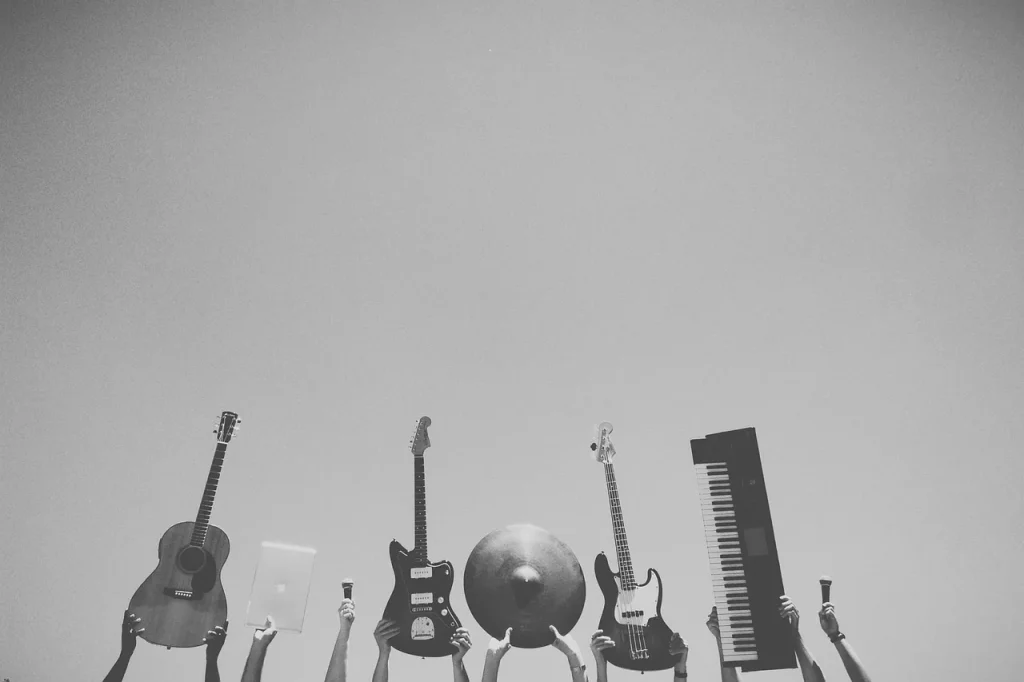
Reggae, a popular musical style originating in Jamaica, is characterized by essential instruments that contribute to its unique sound.
Reggae’s iconic instruments include the guitar, bass, drums and percussion, piano and keyboards, vocals, and horn section. Each plays an essential role in creating reggae music.
The guitar helps maintain the rhythm and adds catchy melodies to reggae songs. It produces the chords and rhythms characteristic of reggae, creating a warm, vibrant atmosphere.
The bass is fundamental to reggae: it produces the distinctive bass line and rhythmic feel that give the music its characteristic groove. It provides a solid foundation for the other instruments.
Drums and percussion are also essential to reggae: they provide the rhythm and energy that get listeners dancing. The “one drop” technique is widely used in reggae songs and creates a powerful, hypnotic heartbeat-like feel.
Keyboard instruments such as the piano, organ, and clavinet add rich texture and harmonic complexity to the reggae sound. They enrich the melodies and create an atmosphere that sets this musical style apart.
Vocals are another important element of reggae. Various vocal techniques convey messages and emotions. Singers, “DJs,” and “Sing-J” performers each bring their own style and interpretation, contributing to reggae’s diversity and artistic expression.
Finally, the horn section, which includes instruments such as the trumpet, trombone, and saxophone, plays a crucial role in reggae. Horns are used for introductions, countermelodies, and solos, adding a dynamic dimension to reggae songs.
Exploring these iconic reggae instruments and how they are used helps us appreciate the richness and diversity of this distinctive musical genre.
Guitar and bass in reggae
The guitar and bass play a central role in creating reggae’s characteristic bass lines and rhythms. These instruments give reggae songs essential depth and harmony.
The reggae guitar stands out for its characteristic rhythmic playing, generally centered on basic chords. It maintains the rhythm through syncopated patterns and particular playing techniques, such as the “skank,” which involves strumming the strings in rhythm.
The reggae bass, meanwhile, is often prominent in reggae songs. It creates the distinctive bass line essential to the genre’s characteristic groove. The reggae bass emphasizes strong beats and plays melodic lines, contributing to the track’s drive and energy.
| Reggae guitar | Reggae bass |
|---|---|
| Uses basic chords | Creates the distinctive bass line |
| Rhythmic strumming | Emphasizes strong beats |
| Playing techniques such as the “skank” | Melodic bass lines |
Together, the guitar and bass create a solid foundation for the other instruments in reggae. They are often accompanied by drums, percussion, piano, organ, vocals, and a horn section, forming a harmonious, rhythmic ensemble in reggae songs.
Drums, percussion, and reggae rhythm
Drums and percussion are essential to maintaining the rhythm in reggae songs. The distinctive “one drop” technique gives this musical style its particular pulse. Reggae drumming is characterized by snare playing that emphasizes the second and fourth pulses of each measure, creating a syncopated groove. Percussion instruments such as congas and drums add rhythmic layers that reinforce the hypnotic quality of reggae music.
The “one drop” is a drumming technique regularly used in reggae. It involves striking the hi-hat cymbal on the second and fourth beats while playing the ride cymbal on every beat. This technique gives reggae music a rhythm that is both relaxed and lively, contributing to its recognizable sound. Reggae drumming is often prominent in the mix, with a powerful, clear sound that highlights each song’s pulse.
Alongside the drum kit, percussion adds rich rhythmic texture to reggae. Congas, for example, create complex rhythmic patterns and give the music a tropical atmosphere. Drums mark accents and transitions within songs. By combining drums and percussion, reggae musicians create a solid, compelling foundation on which the other instruments can develop their melodies and harmonies.
“The one drop is reggae’s rhythmic signature; it is what truly distinguishes this musical style. It is this way of playing the drums, of creating a simple but deep pulse, that makes it impossible to keep still when reggae plays.” — Maxime, reggae musician.
The “one drop” technique also creates rhythmic space in reggae songs, leaving room for the other instruments and vocals. This subtle approach allows the melodies and lyrics to stand out while maintaining a steady, captivating pulse. The combination of drums, percussion, and the “one drop” gives reggae its distinctive groove and broad appeal.
| Instruments | Use |
|---|---|
| Drums | Maintain the rhythm through the “one drop” technique. |
| Percussion | Add rhythmic layers and a tropical atmosphere. |
Piano, organ, and keyboards in reggae
The piano, organ, and keyboards are often used in reggae to add layers of sound and enrich songs. These keyboard instruments play an essential role in creating reggae’s characteristic atmosphere.
One of reggae’s most iconic instruments is the Hammond organ. This electric organ is known for its warm sound and ability to create vibrant tones. It is often used to play staccato chords and bass lines, adding harmonic depth to reggae music.
The piano, meanwhile, provides softer, more flowing chords and melodies. It can create countermelodies and musical embellishments, adding lightness and another dimension to reggae songs.
| Keyboard instruments | Description |
|---|---|
| Piano | Provides gentle chords and melodies |
| Hammond organ | Creates vibrant tones and plays staccato chords |
| Clavinet | Adds funky effects and distinctive tones |
Another keyboard instrument often used in reggae is the clavinet. This electric instrument with struck strings produces distinctive, funky tones, often used to create special effects and solo passages in reggae songs. The clavinet adds groove and rhythm to reggae, strengthening its musical drive.
In short, the piano, organ, and keyboards are essential instruments in reggae. They add layers of sound, depth, and complexity to the music, creating reggae’s characteristic sound. Their use contributes to the relaxed atmosphere and positive energy associated with this iconic Jamaican musical style.
Vocals, using techniques such as singing, “DJing,” and “Sing-J,” and the horn section, which includes instruments such as the trumpet, trombone, and saxophone, play an essential role in reggae’s sound and energy. In reggae, vocals range from gentle harmonies to powerful, socially engaged singing. Artists often use song to convey social and political messages through profound, meaningful lyrics.
“DJing” or “toasting” techniques are also widespread in reggae. This is a form of Jamaican rap in which artists deliver lyrics rhythmically and melodically over instrumental versions of reggae songs. “DJing” adds a rhythmic dimension to songs, and reggae DJs are often praised for their energetic performances and ability to engage a crowd.
The horn section is another essential component of reggae. Instruments such as the trumpet, trombone, and saxophone add melodies and countermelodies to songs, creating a characteristic, lively sound. Many reggae tracks begin with a catchy horn introduction, while saxophone or trumpet solos are often featured in concerts.
| Instrument | Role |
|---|---|
| Trumpet | Introductions, countermelodies, solos |
| Trombone | Reinforces bass lines and harmonies |
| Saxophone | Introductions, solos, harmonies |
Horns bring a warm, vibrant sound to reggae. They play a crucial role in creating the festive, lively atmosphere that characterizes this musical style. Their flowing melodies and harmonies add depth and richness to reggae music while blending with the other instruments.
In conclusion, vocals and the horn section are essential elements of reggae. Vocals convey powerful messages and express the artists’ emotions, while horns add a captivating melodic and rhythmic dimension. Together, they contribute to reggae’s unique, recognizable sound, which resonates with listeners around the world.
Conclusion
Reggae’s iconic instruments, such as the guitar, bass, drums, keyboards, vocals, and horn section, are all essential to creating its characteristic sound and atmosphere. Each contributes to reggae music through compelling rhythms, captivating melodies, or rich harmonies.
The guitar and bass play an essential role in reggae: they maintain the rhythm through chords and powerful bass lines. Drums and percussion, often associated with the “one drop” technique, add a characteristic pulse that gets listeners dancing.
Keyboards such as the piano, organ, and clavinet add texture and complexity to the reggae sound, with colorful harmonies and distinctive melodic patterns. Vocals, whether singing, “DJing,” or “Sing-J,” play a crucial role in conveying profound messages and expressing emotions in reggae songs.
Finally, the horn section, including instruments such as the trumpet, trombone, and saxophone, adds a dynamic dimension to reggae songs through catchy introductions, striking countermelodies, and captivating solos.
By bringing all these instruments together, reggae artists create a unique, instantly recognizable sound. Reggae has captivated listeners around the world with its compelling rhythms and socially engaged messages. Reggae’s iconic instruments are central to creating this musical legacy, which continues to thrive today.
FAQ
What are reggae’s iconic instruments?
Reggae’s iconic instruments include the guitar, bass, drums and percussion, piano and keyboards, vocals, and horn section.
What role does the guitar play in reggae?
The guitar maintains the rhythm and adds melodies to reggae songs.
Why is the bass important in reggae?
The bass is essential to creating reggae’s bass line and rhythmic feel.
What role do drums and percussion play in reggae?
Drums and percussion maintain the rhythm in reggae songs, which often use the “one drop” technique.
Which keyboard instruments are used in reggae?
The piano, organ, and clavinet add texture and complexity to the reggae sound.
What role do vocals play in reggae?
Vocals play an important role in reggae through techniques such as singing, “DJing,” and “Sing-J.”
What role does the horn section play in reggae?
The horn section, which includes the trumpet, trombone, and saxophone, is used for introductions, countermelodies, and solos in reggae songs.