
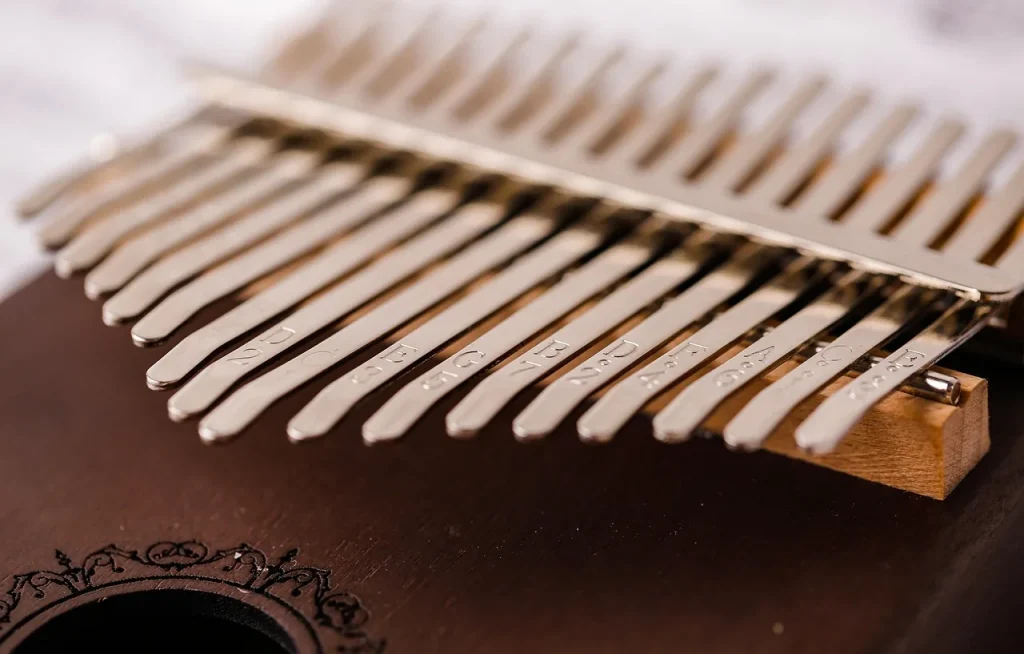
The kalimba is a fascinating musical instrument belonging to the idiophone family. Its origins go back several thousand years on the African continent. This kalimba consists of a wooden resonator fitted with metal tines of different lengths. Each tine produces a distinct note.
Played with the thumbs, this instrument produces a gentle, captivating sound. The term “kalimba” was popularized by ethnomusicologist Hugh Tracey in the 1950s. The instrument is also known by other names, including mbira, likembe, and sanza.
This journey through history will show how this iconic instrument has evolved. From its ancient origins to its place in modern music, the kalimba has won audiences around the world. In 2020, the art of the mbira was inscribed on UNESCO’s list of intangible cultural heritage, underscoring its cultural and spiritual importance.
Introduction: discovering the kalimba and its mysterious past
This fascinating percussion instrument, often called a “thumb piano,” is far more than a simple musical object. The kalimba is a lamellophone, capable of producing captivating melodies with just a few metal tines. Simple models have five or six tines, while more elaborate versions often have over 20.
Its basic structure consists of a wooden resonator fitted with tines of different lengths. Each tine corresponds to a distinct note, allowing for considerable expression. This kalimba has endured through the ages, carrying a history passed down mainly by word of mouth from one generation to the next.
Its ease of use and portability have helped this instrument spread across Africa and around the world. Its English nickname, “thumb piano,” describes the intuitive way it is played, making this instrument accessible to everyone.
The gentle, soothing sound of its metal tines has accompanied generations of storytelling and the passing on of traditions. Interest in the kalimba grew in the modern era, particularly after Western musicians rediscovered it in the twentieth century. This brought greater attention to the cultural heritage embodied by the instrument.
In this article, we will explore the many sides of this instrument: its ancient origins, cultural meaning, modernization, evolution, and global impact. Despite its apparent simplicity, the kalimba continues to delight and inspire artists and music lovers worldwide.
The origins of the kalimba: an ancient African instrument
This iconic instrument has a rich history. The earliest archaeological traces date back about 3,000 years on the West African coast, mainly in what is now Cameroon. At that time, local peoples made the instrument from materials such as wood and bamboo.
These early kalimbas were made entirely of wood, with tines of bamboo, rattan, or palm. They were more fragile than modern models because metalworking techniques had not yet been mastered. Few examples survive, making them difficult to study.
After an apparent gap of about a thousand years in the record, the instrument reappeared. Around 1,300 years ago, versions with metal tines emerged in the Zambezi region. The river runs through Zambia, Zimbabwe, and Mozambique, and this development marks a significant change in the instrument.
This second invention is considered independent of the first. No link has been established between the two versions, raising questions about whether designs were passed down orally over the centuries. The shift from bamboo to metal improved the instrument’s durability and sound quality.
Archaeological discoveries confirm that this instrument has a fascinating history. Although its origins remain partly mysterious, the kalimba has clearly changed over time, reflecting the richness of African musical culture.
The cultural and social significance of the kalimba in Africa
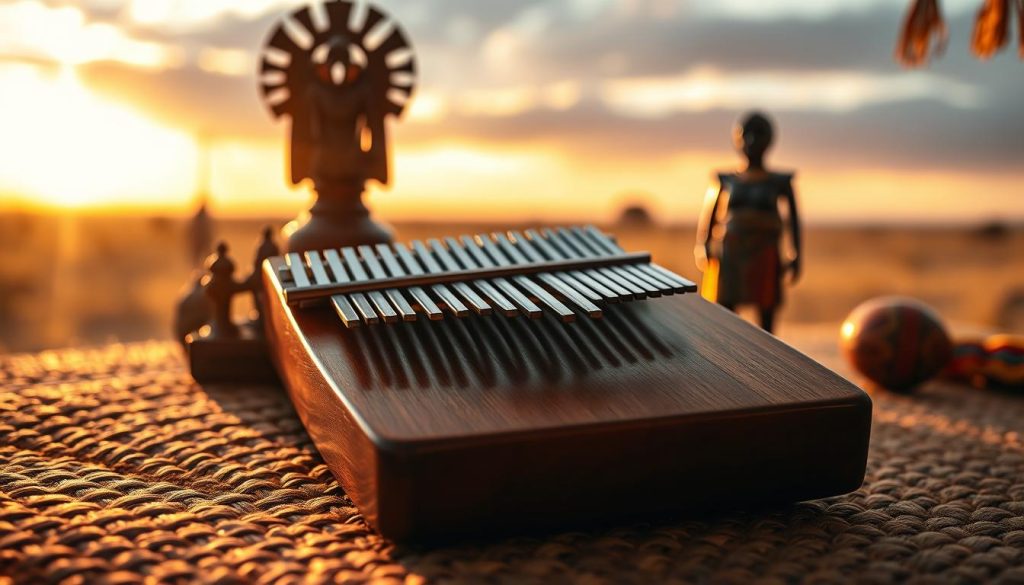
In traditional African societies, this instrument has a role beyond music. It plays an important part in communicating with ancestors and is present at rituals and ceremonies, including weddings, funerals, and initiation rites.
Kalimba music accompanies tales and stories, conveying knowledge and traditions through melody. Among the Shona of Zimbabwe, for example, mediums use the mbira to enter a trance and communicate with the spirits of the dead. These rituals show how the instrument can serve as a bridge between the living and their ancestors.
African griots and storytellers also use the kalimba to enrich their narratives. Music thus accompanies the oral transmission of traditions, helping keep legends and stories alive from one generation to the next.
Beyond its spiritual role, this instrument can be used for teaching. Its intuitive playing technique lets a musician pluck the tines with their thumbs while speaking. This makes it easier to pass on life lessons and moral values to younger generations.
The kalimba is played in many settings, from large public gatherings to intimate family moments. This versatility highlights its place in the daily lives of African communities.
The instrument is also of great anthropological interest. It offers living testimony to African cultures and their relationships with music, spirituality, and the sharing of knowledge. Through the ages, despite historical upheaval, the kalimba has helped preserve African languages, tales, and philosophies.
Modernizing the kalimba: Hugh Tracey’s crucial contribution in the 1950s
The 1950s marked a turning point for this fascinating instrument. Hugh Tracey, an ethnomusicologist with a passion for music, played a key role in its transformation. In 1921, he arrived in Southern Rhodesia, now Zimbabwe, where he encountered the richness of local music.
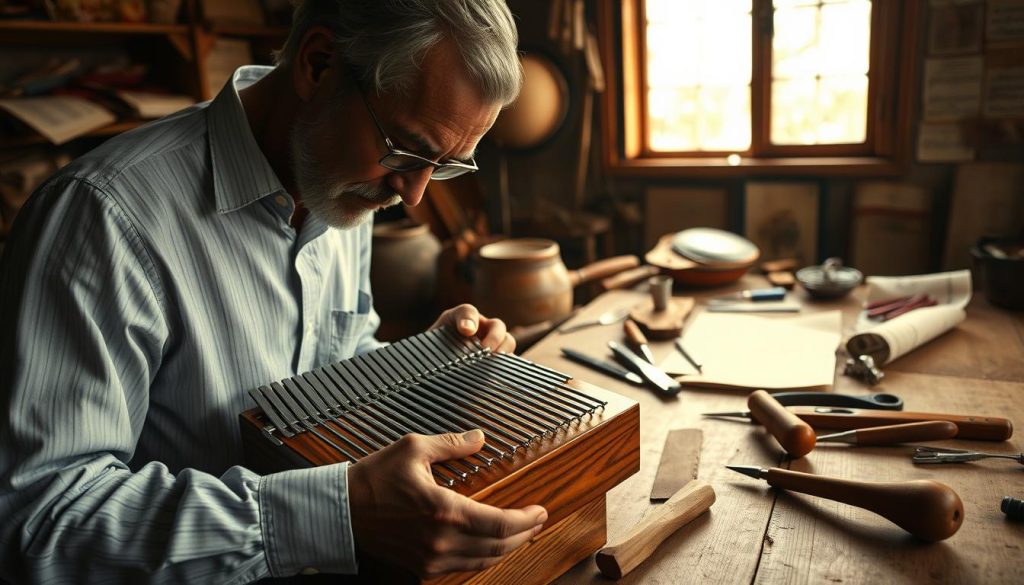
Tracey spent years studying African thumb pianos. His aim was to create a version suited to Western musical conventions. He named this new version the “kalimba,” a name now closely associated with the instrument.
Creating a Western model tuned to the diatonic scale
One of Hugh Tracey’s major innovations was the tuning of the tines. Previously, the notes produced by these instruments often varied from one instrument to another. On his model, the tines were tuned to the diatonic scale: do, re, mi, fa, sol, la, and ti.
Tracey’s kalimba has 15 tines and is tuned to G major. This allows musicians to play more complex melodies and explore different sounds. The standardized tuning changed how the instrument could be played.
The resonator and worldwide distribution
Another important aspect of the modernization was the design of a resonator. In place of a simple board, Tracey made a hollow wooden body with a central sound hole. This design increases the volume and enriches the listening experience.
In 1954, Hugh Tracey founded AMI (African Musical Instruments) to sell his kalimba worldwide. Creative Playthings also offered the instrument as an educational toy in the United States, bringing it into music education at the time.
Tracey thus had a lasting influence on the kalimba’s popularity. His model provided a foundation for later versions of the instrument. Through his work, the kalimba became a symbol of the meeting of tradition and modernity in music.
How the kalimba has evolved and spread across regions
Over the centuries, this instrument has crossed borders and evolved while retaining its essential character. Different African regions have given it their own forms and sounds. The many variants of the instrument reflect the continent’s cultural richness.
Regional varieties and names across Africa
The kalimba has different names in different regions. For example, it is called mbira in Zimbabwe and Malawi, likembe or sanza in Cameroon and Congo, and lukeme or karimba in Uganda. Other names include mbila, huru, nhare, matepe, njari, okeme, ubo, and gyilgo.
Each version has been adapted to local musical and cultural traditions, illustrating the diversity of African musical practices.
Materials, numbers of tines, and contemporary innovations
Since the 1950s, Hugh Tracey’s model has strongly influenced kalimba design. His instrument originally had 15 tines and was tuned to G major. Today, standard models generally have 17 notes in C major, though some kalimbas have fewer than five tines and others have more than 20.
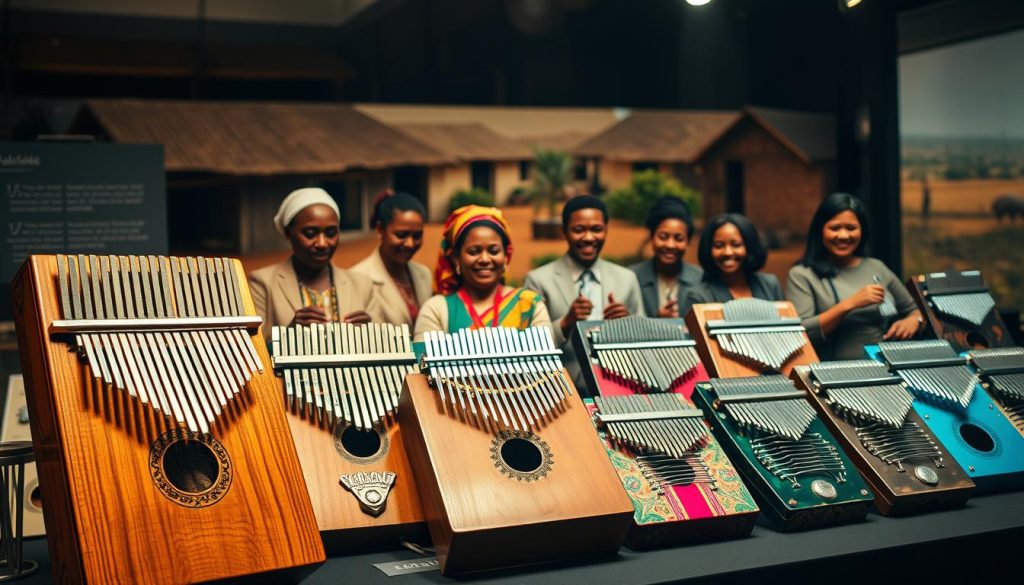
Materials have changed as well. Makers now use bodies of transparent acrylic, giving the instrument a distinctive look. They also use a wider variety of woods, including mahogany, acacia, and walnut. Playful shapes, such as cats and foxes, have appeared on the market.
A major innovation is the chromatic kalimba, which incorporates all 12 semitones of Western music. This greatly expands the musical possibilities of the instrument.
Brands such as Hokema, Gecko, and Hluru now compete with Hugh Tracey’s historic brand, offering new designs and accessories to protect players’ thumbs.
“Music is the universal language of humanity.”
The kalimba has evolved while retaining its original charm and adapting to the tastes and needs of contemporary musicians. Its adaptability reflects the vitality and richness of musical cultures around the world.
| Name | Region | Number of tines | Materials |
|---|---|---|---|
| Mbira | Zimbabwe, Malawi | 15-20 | Wood, metal |
| Likembe | Cameroon, Congo | 5-17 | Wood, bamboo |
| Karimba | Uganda | 5-20 | Wood, acrylic |
| Hokema | International | 17+ | Wood, acrylic |
The kalimba’s global impact on modern music
The reach of this instrument extends far beyond Africa. It has captivated artists and enriched musical genres around the world. Its distinctive sound has found a place in jazz, classical music, folk, and even electronic music.
Many musicians and groups have helped popularize it. Artists such as Tracy Chapman, Peter Gabriel, Cat Stevens, and the Beach Boys have incorporated this instrument into their music, introducing it to Western audiences. Their work has opened the way to a wider appreciation of its sound.
Influence across genres: jazz, folk, electronic music, and more
In jazz, the kalimba is often used to add a rich melodic texture. Its ability to produce gentle, soothing sounds makes it well suited to introspective compositions. In folk music, it brings a sense of tradition.
In electronic music, producers explore the harmonic possibilities of this instrument. Contemporary musicians pair the kalimba with modern rhythms to create inventive, engaging pieces.
Notable artists and the international stage
Earth, Wind & Fire helped bring the kalimba wider recognition with their 1974 track “Kalimba Story.” The song showcased the musical potential of the instrument alongside Maurice White’s powerful voice.
The kalimba also appears in some Red Hot Chili Peppers compositions, showing its ability to cross genres and eras. Today, performers such as April Yang, a kalimba virtuoso, have gained large online audiences through their performances.
Global exchange has also played a key role in spreading the instrument. Musicians around the world have adopted the kalimba, combining styles and enriching the international music scene. In December 2020, UNESCO inscribed the art of making and playing the mbira on its list of intangible cultural heritage, recognizing its importance in Malawi and Zimbabwe.
The kalimba continues to inspire new generations of artists worldwide, a testament to its broad appeal and stylistic flexibility.
| Artist | Musical genre | Contribution |
|---|---|---|
| Tracy Chapman | Folk | Incorporating the instrument into her compositions |
| Earth, Wind and Fire | Pop/funk | Success with “A Kalimba Story” |
| April Yang | Contemporary music | Online virtuoso |
| Red Hot Chili Peppers | Rock | Using the instrument in their songs |
Conclusion
The kalimba, a musical treasure, has endured across ages and cultures. Although this percussion instrument has a history stretching back more than 3,000 years, many who enjoy its sound know little about its past. Its growing popularity has sometimes brought a decline in quality.
The art of the mbira was inscribed on UNESCO’s list of intangible cultural heritage in 2020. This instrument continues to inspire musicians around the world and cross cultural boundaries with its fluid, enchanting sound.
Exploring the sounds of this instrument reveals a distinctive musical richness. The kalimba is much more than a thumb piano; it reflects a living history and tradition.
We invite you to explore the captivating world of this instrument and enjoy its timeless melodies.