
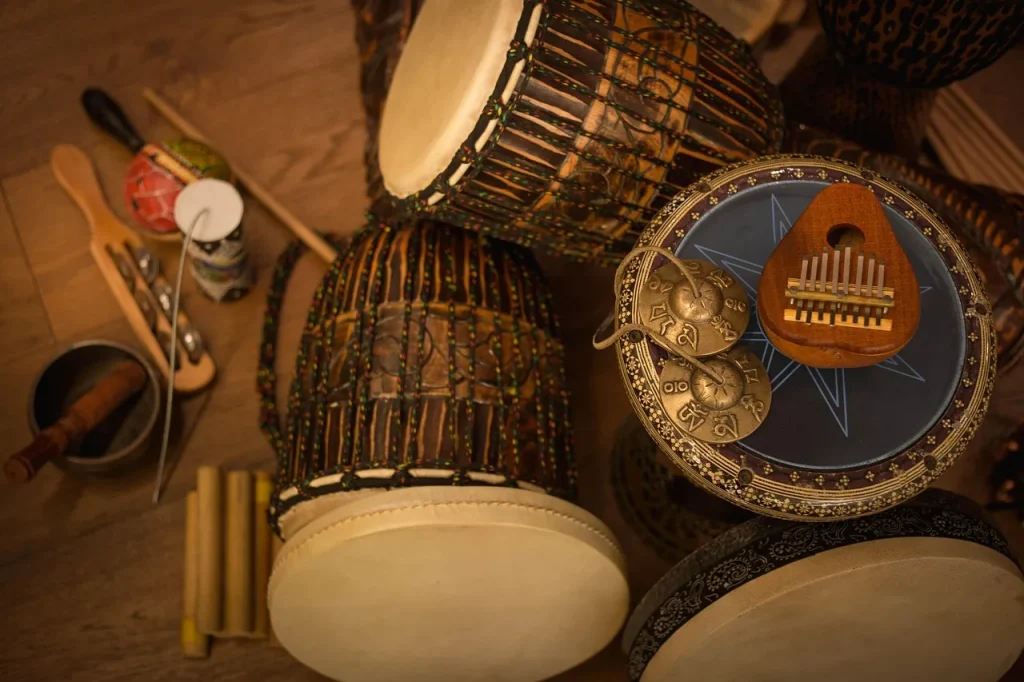
In the fascinating world of musical instruments, a question often arises: are the kalimba, mbira and sanza the same instrument? It is a fair question, since these terms are often used interchangeably.
In this article, we draw on more than 10 years of experience to clarify the differences. You will learn that the mbira and sanza are traditional African instruments with a history stretching back more than 3,000 years, while the kalimba is a modern adaptation dating from 1954.
We will also look at the sansula, an innovation from 2001 distinguished by its stretched membrane. Understanding these differences will help you make an informed choice when buying a thumb piano.
Read on to learn how to recognize each instrument and decide which best suits your musical needs.
Introduction to thumb pianos: Kalimba, mbira, sanza and sansula
Among musical instruments is a fascinating category known as thumb pianos. It includes the kalimba, mbira, sanza and sansula. Each has its own characteristics and rich history.
All these instruments belong to the idiophone family and, more specifically, are lamellophones. They are played with the thumbs and have a soundboard that amplifies their sound. The mbira, for example, is a traditional African instrument, while the kalimba is a modernized version created by Hugh Tracey in 1954.
Sanza is a general term whose use varies across African regions. The sansula, invented by Peter Hokema in 2001, combines elements of the kalimba with a drum membrane. This variety enriches the world of thumb pianos.
Here is an overview of the four instruments:
- Kalimba: a modern adaptation with a gentle, melodic sound.
- Mbira: an ancestral instrument often used in spiritual settings.
- Sanza: a general term for several regional variants.
- Sansula: a hybrid innovation whose membrane gives it a distinctive sound.
These instruments are becoming more popular in the West, particularly in therapeutic music and relaxation practices. The music they produce is both soothing and melodic, which contributes to their growing appeal.
“Thumb piano” is therefore a convenient name for all these instruments with plucked tines. In the following sections, you will discover the historical, technical and cultural features of each one. Knowing these distinctions will help you avoid common mistakes when buying or discussing them.
We draw on reliable historical sources and detailed technical comparisons to give you a complete overview. By the end of this article, you will be able to tell the instruments apart at a glance.
| Instrument | Origin | Characteristics | Origin or adaptation date |
|---|---|---|---|
| Kalimba | Modern adaptation | 15 to 17 tines, melodic sound | 1954 |
| Mbira | Traditional African instrument | Used in rituals, rich sound | About 3,000 years ago |
| Sanza | General term | Regional variants, varied sounds | Unknown |
| Sansula | Modern invention | Combination of a kalimba and a membrane | 2001 |
Definitions and shared features of the kalimba, mbira and sanza
Musical instruments such as the kalimba, mbira and sanza share fundamental characteristics. To understand them better, it helps to examine how they are classified and how they work.
Idiophones and lamellophones: A family of instruments
Idiophones, from the Greek idio, meaning “one’s own,” are percussion instruments whose sound is produced by the instrument’s own body. Within this category, lamellophones have tines that are fixed at one end and free at the other. The player makes them vibrate with their thumbs.
The kalimba, mbira and sanza all belong to this family. That explains their similarities and their shared playing technique.
The soundboard and thumb-playing technique
The soundboard is a key part of these thumb pianos. It may be made of wood or acrylic and amplifies the vibrations produced by the tines. Each instrument’s sound quality depends largely on its construction.
The playing technique is another clear similarity. Musicians hold the instrument in their hands and pluck its tines with their thumbs, producing gentle, melodic music.
Although these instruments have much in common, their construction, materials and sounds differ considerably. Whether you play a modern kalimba or a traditional mbira, however, the basic movement remains the same.
This common foundation is essential to understanding the distinctions discussed below. To learn more about these fascinating instruments, read this guide to everything you need to know about the kalimba.
The instruments’ historical and cultural origins
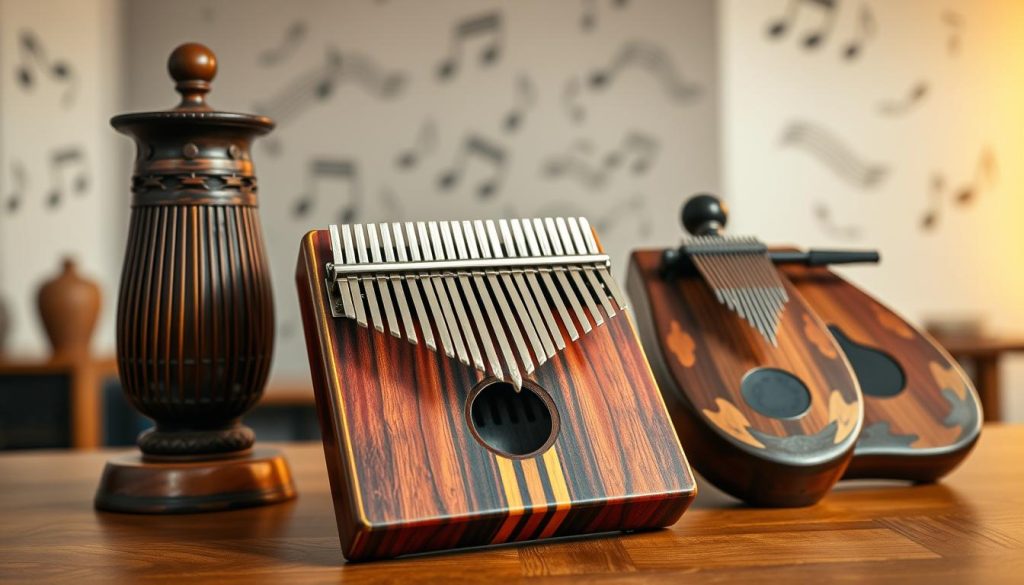
These instruments have a rich and varied history. Their origins go back centuries and reveal fascinating stories of culture and spirituality. Let’s explore the roots of the mbira, kalimba and sanza.
The ancestral mbira and its spiritual role in Africa
The earliest traces of the mbira date back more than 3,000 years on Africa’s west coast. At that time, its tines were made of bamboo and produced a distinctive sound. About 1,300 years later, the instrument appeared in the Zambezi Valley, where metal keys replaced bamboo tines.
For the Shona people of Zimbabwe, the mbira is sacred. Considered the voice of the ancestors, it is played during spiritual ceremonies called bira. These rituals make it possible to communicate with spirits, underscoring the instrument’s cultural and spiritual importance.
In 2020, the art of making and playing the mbira was inscribed on UNESCO’s Intangible Cultural Heritage list, reinforcing its standing worldwide.
The modern kalimba: Hugh Tracey’s Western adaptation
Hugh Tracey, a dedicated ethnomusicologist, traveled through Africa in the 1930s. He studied African thumb pianos and created the modern kalimba in 1954. This version was designed for Western scales while retaining the essence of the mbira.
The kalimba quickly became popular, especially in Western music. Its design and gentle sound make it a favored instrument for contemporary music and relaxation.
Sanza: A general term with many names
Sanza is a general term encompassing many regional variants. Depending on the community, the instrument may have other names, including likembe, mbila and huru. This variety of names reflects Africa’s cultural richness.
Ancient trade routes helped spread and diversify these instruments across sub-Saharan Africa. Although “sanza” is widely used, the term does not indicate a fundamental technical difference between instruments.
This long history gives the instruments a cultural depth that reaches far beyond their musical function.
| Instrument | Origin | Characteristics | Origin or adaptation date |
|---|---|---|---|
| Mbira | Traditional African instrument | Used in rituals, rich sound | About 3,000 years ago |
| Kalimba | Modern adaptation | 15 to 17 tines, melodic sound | 1954 |
| Sanza | General term | Regional variants, varied sounds | Unknown |
Is the mbira really different from the kalimba?
Music lovers often wonder whether the mbira and kalimba really are different instruments. To answer, we need to examine their origins, construction and sounds.
Differences in origin and history
The first major difference is when and where they emerged. The mbira is an ancestral African instrument, while the kalimba is a Western creation from 1954. This historical distinction shapes how each instrument is perceived and used.
Construction, tine shape and distinct sounds
Visually, the mbira stands out for its two rows of tines. These are wider at the end plucked by the player’s thumbs. Hugh Tracey’s kalimba, by contrast, has a single row of 15 narrow, evenly shaped tines tuned to a G major diatonic scale.
The mbira has characteristically African sounds, with non-diatonic scales in which some notes may be absent. These can surprise Western ears accustomed to the kalimba’s more familiar melodies.
Sound effects and resonators specific to the mbira
Another distinctive feature of the mbira is its use of resonators, often made from metal bottle caps. Attached to the soundboard, they create a characteristic buzzing effect. Some traditional mbiras are also played inside a calabash resonator, setting them apart from kalimbas with wooden or acrylic bodies.
The mbira therefore differs from the kalimba in both construction and sound. You can see and hear the differences. To get a sense of them, watch a traditional mbira player perform and listen for yourself.
Kalimba, mbira or sanza: What are the practical differences?
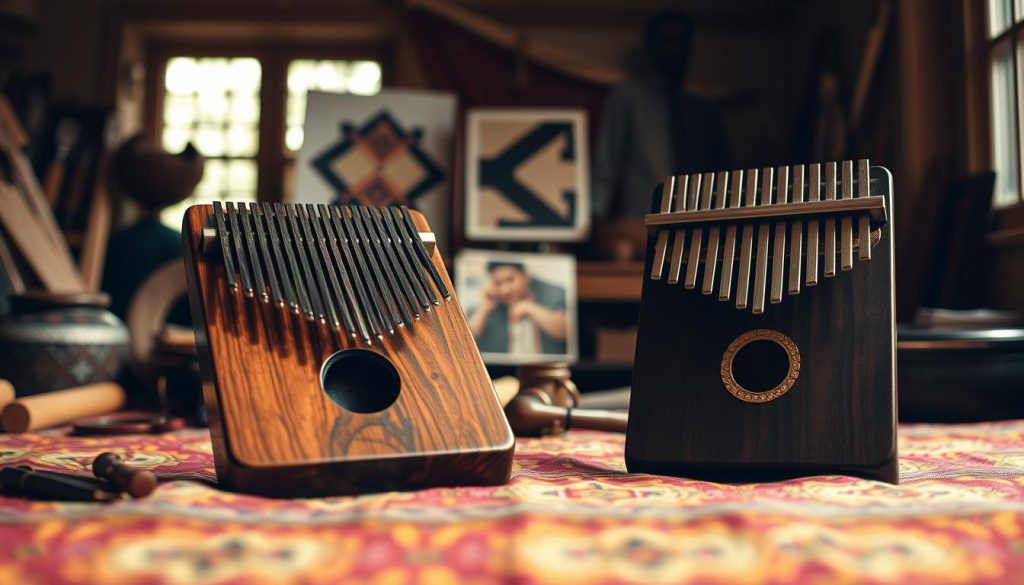
When exploring thumb pianos, it helps to understand the practical differences between them. Each has features that affect everyday use.
Comparing materials
Materials play a crucial role in each instrument’s sound. Here are the typical choices:
- Kalimba: made of mahogany or acrylic, giving it a warm, resonant sound.
- Mbira: traditionally made with mukwa wood, which gives it a rich, deep tone.
- Sanza: often made from flat wooden boards, sometimes covered with membranes to vary the sound.
The choice of materials directly affects resonance and sound projection, helping give each instrument its character.
Differences in tuning and musical scales
Tuning is one of the most important distinctions between these instruments. The kalimba is generally tuned to a diatonic G major scale, making it easy to use in Western music. Mbiras and sanzas, meanwhile, use pentatonic scales that vary by region and produce characteristically African sounds.
Construction variations and acoustic effects
The instruments also differ in construction. A modern kalimba has a hollow resonator box with:
- a hole at the front for creating vibrato effects;
- two holes at the back for creating a wah-wah effect by covering and uncovering them while playing.
Some traditional sanzas, by contrast, consist of flat boards, limiting the acoustic effects available.
These variations directly affect the kind of music you can play. For example, a kalimba with 17 tines is ideal for Western pop songs, while a mbira is better suited to traditional African melodies.
Your choice will depend above all on the repertoire you want to explore and the sounds you are looking for.
The sansula: An original hybrid innovation
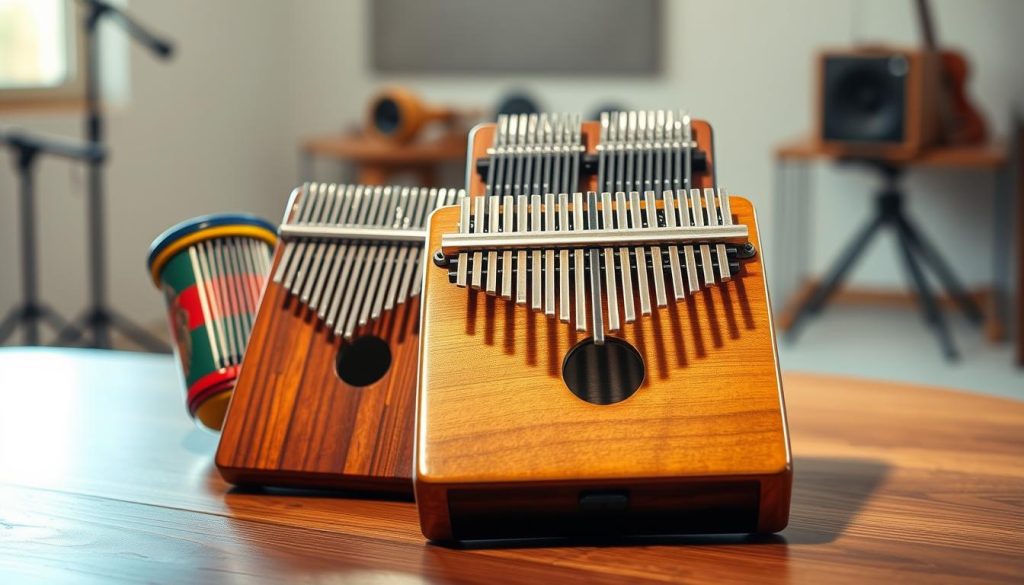
The sansula is a fascinating instrument that deserves special attention. Invented in 2001 by Peter Hokema, it arose from an accidental discovery. While playing a kalimba resting on a frame drum, Hokema discovered the combination’s potential. The result was the sansula, whose name literally means “little sanza”: it combines “sanza” with “ula,” meaning “small.”
The birth of the sansula and its inventor
Peter Hokema, founder of the Hokema brand, drew on his musical experience to develop this distinctive instrument. Its design places a kalimba directly on a stretched membrane, distinguishing it from other thumb pianos.
Fundamental differences in resonance and sound effects
The sansula resonates much more strongly than a traditional kalimba. Its membrane amplifies the sound and creates a deeper, longer resonance. Notes can sustain generously, making the sansula well suited to soundscapes and atmospheric layers.
By moving and handling its frame, players can create varied sound effects and change the instrument’s projection and tone. These effects are especially valued in meditative music and sound design.
Special uses and applications of the sansula
The sansula is clearly set apart from the kalimba, mbira and sanza by its construction and distinctive sound. It is particularly suited to immersive soundscapes, making it appealing to musicians exploring new textures.
To hear this hybrid instrument, watch a demonstration by Peter Hokema himself. The sansula is a modern innovation that expands the sonic possibilities of traditional thumb pianos.
Technical features and materials
Examining the components of these instruments shows how each element influences their sound. Every technical detail plays a part in thumb-piano sound quality.
The importance of the resonator body
The resonator body acts as a natural amplifier. Its construction directly affects volume and sound quality. Here are three types:
- Solid block: offers a precise, intimate sound, ideal for delicate nuances.
- Hollow body with sound holes: projects sound and makes the instrument louder.
- Drum frame with a stretched membrane: creates a resonant halo that enriches the sound.
Holes in the resonator allow players to change the sound as they play. Covering and uncovering them with their hands creates vibrato variations.
The tines: Number, shape and effect on sound
Tines have changed over time. Historically made of bamboo, they are now primarily metal. Metal tines hold their tuning better and sustain longer.
The number of tines also affects musical possibilities. Standard models usually have 15 to 17, while extended versions may have up to 21. This expands the instrument’s range and the repertoire it can play.
Tine shape is also important. Wider tines produce strong low notes, while narrower ones give clear, precise high notes.
Modern materials and their influence
The choice of materials matters. Mahogany, for example, gives the sound warmth, roundness and full bass notes. African mukwa produces a sharper attack, while lighter woods give a softer sound.
Modern materials such as clear acrylic offer a contemporary appearance and excellent durability. They may, however, sound more crystalline than wood. Materials affect more than appearance: they strongly influence tone and projection.
Build quality and manufacturing precision are often more important than the material alone. Understanding these technical factors will help you choose a thumb piano.
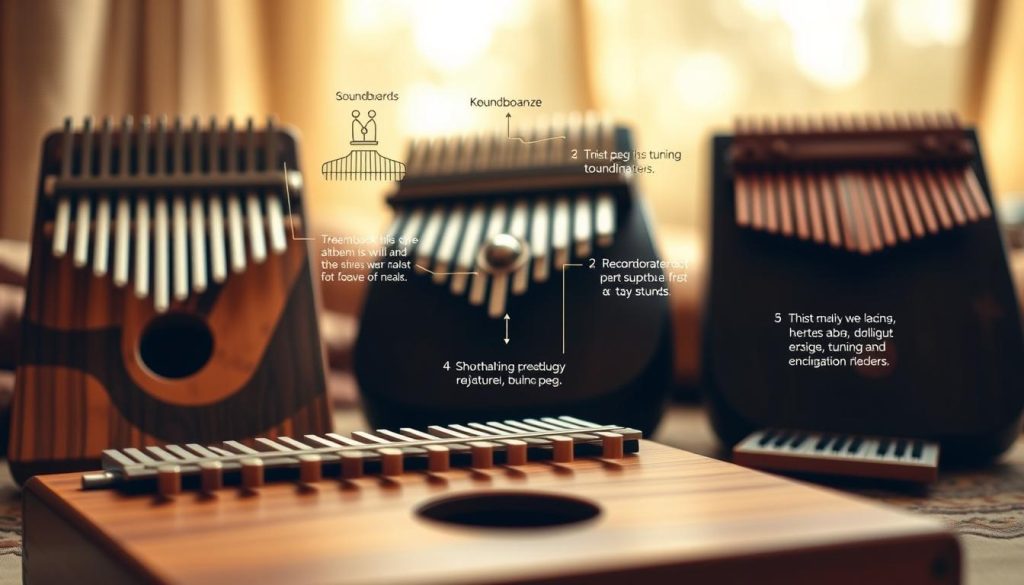
Tunings, scales and sounds: What distinguishes each instrument
Differences in thumb-piano tuning reveal fascinating subtleties. Understanding the types of tuning will help you choose an instrument suited to your musical goals.
Diatonic, pentatonic and chromatic scales
Three main kinds of scale distinguish thumb pianos:
- Diatonic scale: the modern kalimba’s standard G major tuning makes Western popular music easier to play.
- Pentatonic scale: this scale avoids dissonant notes and supports free improvisation, making it ideal for relaxation and meditation.
- Chromatic scale: models with two or three rows of tines allow players to explore complex harmonies and change keys.
How tuning affects musical styles and accessibility
Tuning directly shapes the repertoire you can play:
- A diatonic kalimba makes pop songs relatively easy to play.
- A pentatonic model lends itself to meditation and soothing music.
- Chromatic models offer many harmonic possibilities and suit advanced musicians.
In addition, 432 Hz tuning is often favored in sound therapy for its purported calming effects on mind and body.
The number of tines also affects the available range. Models with 17 tines cover the basic notes of most songs, while those with 21 tines add lower or higher notes.
Finally, check the tuning after transporting the instrument or after a change in humidity. A tuning app can be very useful.
Choose a tuning based on the music you want to play and your musical experience.
Traditional and contemporary uses: From spirituality to modern music
Plucked-tine instruments have endured through the ages and adapted to different cultural and spiritual settings. Their versatility extends from ancestral rituals to modern music studios.
Rituals, ceremonies and the cultural symbolism of the mbira and sanza
The mbira holds a central place in the culture of Zimbabwe’s Shona people. Considered the voice of the ancestors, it is played in ceremonies called bira. These rituals allow communication with spirits and show the instrument’s profound spiritual role.
Griots, traditional storytellers, also use the mbira and sanza to connect with the deceased. In doing so, they pass on ancestral stories and knowledge. Mystical guardians of communities also use these instruments to ask for favorable weather, illustrating their symbolic and spiritual role.
The mbira is much more than a musical instrument. Its inscription on UNESCO’s Intangible Cultural Heritage list attests to its importance in the cultural and spiritual lives of African communities.
The kalimba in modern music, sound therapy and live performance
Over time, the kalimba has found a place in modern music. With MIDI integration in software such as Logic Pro and Ableton, it has become popular in production studios.
Genesis’s album Wind and Wuthering is a notable example of its use in modern music: it helped popularize the kalimba in pop and rock.
The kalimba is also increasingly used in sound therapy. Tuning to 432 Hz is reputed to ease anxiety and stress, offering listeners a relaxing experience.
Contemporary collaborations between Zimbabwean craftspeople and European instrument makers have produced hybrid instruments combining tradition and modernity. They serve as cultural bridges between ancestral heritage and contemporary creation.
The ability of these instruments to find a place in both spiritual rituals and modern recording studios shows their richness and broad appeal.
How to choose between a kalimba, mbira and sanza: Practical advice
Choosing a musical instrument can be difficult, especially when it comes to thumb pianos. To help with your choice, we will look at comfort, budget and maintenance so you can find the best fit.
Comfort, tine count and ease of learning
For beginners, a diatonic kalimba with 17 tines is often recommended. It lets you learn melodies quickly without first learning to read music. Comfort is essential: rounded edges, moderate weight and a natural hand position reduce strain and protect your fingertips while playing.
When choosing a tine count, also consider the size of your hands and how much time you can devote to practice. Here are some suggestions:
- 10 tines: ideal for meditation.
- 17 tines: excellent for versatility.
- 21 tines: recommended for advanced musicians.
Budget, sound quality and recommended brands in France
A basic entry-level sanza costs around €20, while a quality kalimba costs between €30 and €80. An authentic handmade mbira can cost up to €300. Solid woods such as walnut or pine offer good value.
Beware of low-quality counterfeits, which can compromise sound quality. Check manufacturers’ warranties too; they may last up to 2 years. We recommend Gecko and Hluru, which offer quality models with learning guides for beginners.
Maintenance and durability
Regular care helps your instrument last longer. Here are a few tips:
- Use a microfiber cloth and beeswax to clean the tines and prevent oxidation.
- Store the instrument in a dry place with humidity below 60%.
- Protect it with a suitable case, such as one from Gator Cases.
Ultimately, the best choice is the one that suits your needs and musical interests. Try an instrument before buying it if you can.
| Criterion | Kalimba | Mbira | Sanza |
|---|---|---|---|
| Ease of learning | High | Moderate | Variable |
| Budget | €30 to €80 | €300 | €20 |
| Durability | Good | Excellent | Variable |
| Recommended makers | Gecko, Hluru | Artisan makers | Basic models |
Conclusion
Plucked-tine instruments such as the kalimba and sanza offer rich, varied musical experiences. The kalimba, a modernized version dating from 1954, is distinguished by its diatonic tuning and acrylic body. It is ideal for beginners. With its two rows of tines, the mbira is a spiritual and cultural symbol with a tradition spanning millennia.
Sanza is a general term covering various regional forms and reflecting the diversity of African music. The sansula, an innovation from 2001, offers distinctive resonance thanks to its stretched membrane.
Your choice depends on your musical preferences and the repertoire you want to explore. Consider attending an introductory workshop in France to try these instruments. As a master instrument maker from Malawi puts it: “Every note tells a story; every melody carries a heritage.” Begin your thumb-piano journey and enjoy playing!