

Welcome: this article is a guide to understanding the Neotone and its place among electronic handpans in France today.
An electronic handpan replaces the resonance chamber with sensors and an electronic system powered by a battery or a wall outlet. Its sounds are generated digitally and are often inspired by the acoustic handpan.
We cover the available types, recent manufacturers (Soundventure, Lumen, WavePan, Oval/Ovalsound), connection options, battery life and amplification needs.
Our goal: to assess quality, advantages and drawbacks to help you make a purchase decision today.
As you read, you will discover how these instruments work internally, how they integrate with MIDI and DAWs, how to change notes on the fly and what accessories you need for the stage or studio.
What you will learn: when this product meets your musical needs and how to compare it with other models on the market.
Introduction to the electronic handpan era in France
The French market is gradually discovering digital alternatives to the acoustic handpan. Today, these instruments are still very rarely sold in stores, but their technology continues to mature.
Several projects have made an impression: Oval (a pioneering project now mainly available secondhand), Lumen (FSR pads and audio/MIDI outputs), WavePan and recent initiatives from startups such as Soundventure.
Why the music world is interested: flexible scales, MIDI integration, relative portability and new creative possibilities.
- Current situation: few models are readily available; purchases are often made directly from the manufacturer.
- Points to check: battery life, after-sales service, the long-term viability of brands and parts availability.
- Intended users: producers, live performers and educators.
Prices are generally a little higher than those of many acoustic handpans. Before buying, weigh the advantages (changeable scales, instant transposition) against the drawbacks (dependence on power, technical complexity).
This guide surveys the models and discusses their uses, technology, playing experience, prices and recording options. For practical advice, see our electronic handpan guide.
Neotone, Lumen, Oval and WavePan: models and their distinctive features
A brief overview of current models shows where each instrument stands in terms of technology and intended users.
Neotone (Soundventure) focuses on a rich sound library and internal sensors.
It has no built-in speaker: you will need headphones or an external speaker. It offers USB and Bluetooth MIDI connections.
Its stated battery life is around 6 to 8 hours, suitable for long sessions.
Lumen Handpan offers nine pressure-sensitive FSR pads and five instruments sampled by Soniccouture.
Its built-in speaker, stereo TRS outputs and DIN/USB MIDI connections make it an all-in-one option.
Additional sound packs expand its possibilities.
Oval / Ovalsound remains a pioneering project, with up to 12 pads, a dedicated app and Bluetooth MIDI.
The company ceased operations in 2017, so this type of Oval handpan is now available only secondhand.
WavePan stands out for its different design, eight pads and Bluetooth MIDI.
Its battery life is around six hours. Distribution and recent information about it are more limited.
For live performance, instant transposition, stereo/MIDI outputs and DAW compatibility are key considerations.
Sound quality depends as much on the samples as on the internal sound engine and digital conversion.
For detailed information or a quote, get in touch through our guide.
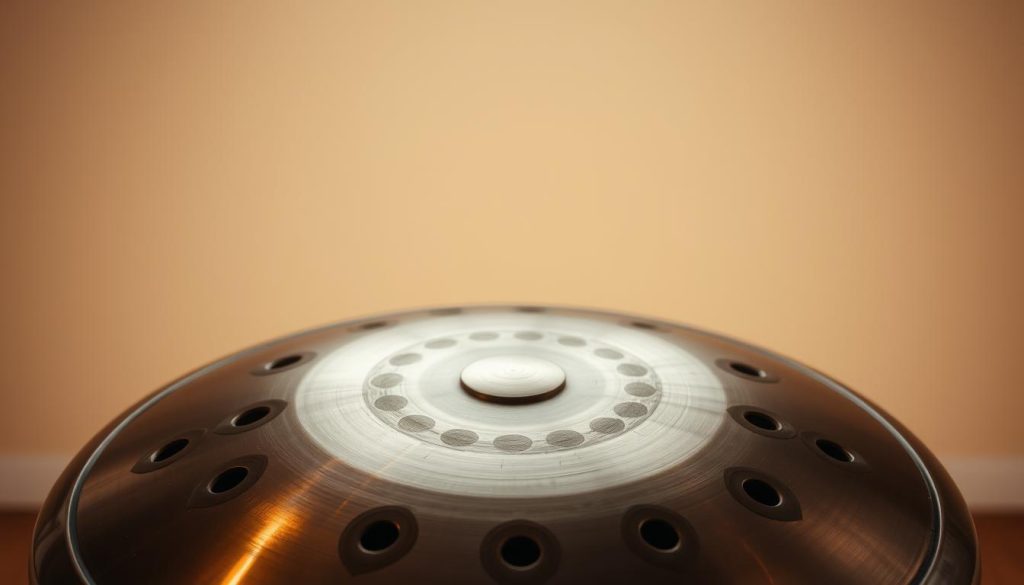
Neotone handpan: electronic model and musical uses
The latest generations sound so faithful that most listeners find it hard to distinguish them from an acoustic handpan. The sound quality of the libraries is striking: crisp attacks, rich harmonics and simulated resonance.
Perception and limitations
Experienced listeners can still hear subtle differences: sustain, microvibrato and tactile response are not quite the same as on an acoustic instrument. The sound libraries excel in consistency, but some nuances remain unique to acoustic handpans.
Creative uses and performances
A few gestures are enough to change scales: switching from D Kurd to Low Pygmy is quick, making it possible to combine scales and layers of sound on stage.
DAW/MIDI integration for professionals
USB and Bluetooth MIDI connections let you control amplifiers, automate parameters in a DAW and resample sounds. On stage, a typical setup includes the instrument, an audio/MIDI interface, real-time effects and an FRFR sound system.
- Monitoring: headphones for quiet practice, an external speaker for the stage.
- Recording: direct output for a clean track; MIDI for postproduction processing.
- Limitation: the number of pads or simultaneous notes sometimes requires reconfiguration during a piece.
In short, this option combines realism, flexible scales and professional integration. It is ideal for producers and live performers who want to expand their range of sounds. To try sounds and presets, explore the online demo.
How an electronic handpan works: sensors, MIDI and power
Beneath the surface, sensors turn touch into digital signals. The process is straightforward: detect contact, process the signal, generate sound and send audio or MIDI output.
Sensor types and playing response
An FSR (Force Sensitive Resistor) responds to pressure to provide gradual dynamics. Capacitive sensors detect light touches and are useful for subtle nuances.
Piezoelectric elements capture distinct impacts. Each type affects sensitivity, note response and perceived vibrations.
Connections and latency
USB allows direct recording into a DAW. Bluetooth MIDI gives you more freedom of movement, while stereo TRS or headphone outputs provide audio for amplification. To reduce latency, use short cables and a reliable interface.
Power, battery life and stage requirements
Most models offer a rechargeable battery (6 to 8 hours) or mains power. On stage, plan for an external battery, a DI box for long cable runs and proper grounding.
Tip: choose sensors and connections to suit your use—studio, stage or recording—because they also affect price and sound quality.
Sound, playing and tactile experience: authenticity and flexibility
The tactile experience and responsiveness of the pads shape a musician’s relationship with the instrument. New systems offer highly realistic sounds, but the playing sensation remains different from the resonance of an acoustic handpan.
Scales, notes and presets
The ability to switch from D Kurd to Low Pygmy with a few gestures is a real advantage. Presets organize scales and notes to suit your repertoire. On stage, this avoids changing instruments and allows quick transitions.
Playing experience and touch
Velocity-sensitive pads offer controllable dynamics. An acoustic instrument’s metal surface, however, produces physical vibrations and subtle nuances.
- Strengths: instant transposition, consistent tuning and preset recall on stage.
- Drawbacks: less vibrational feedback and dependence on electronics.
Practical tips: adjust pad sensitivity, work on your dynamics and minimize latency to maintain a steady rhythm. Combine multilayer pads and reverb to approach the depth of a hang drum while retaining modern sound quality.
Depending on their needs, some musicians will favor tactile authenticity, while others will favor flexible sounds. To try presets and sounds, see our electronic handpan guide.
Price, durability and availability: advantages, drawbacks and risks
In this still-limited market, cost and maintenance often guide professionals’ choices.
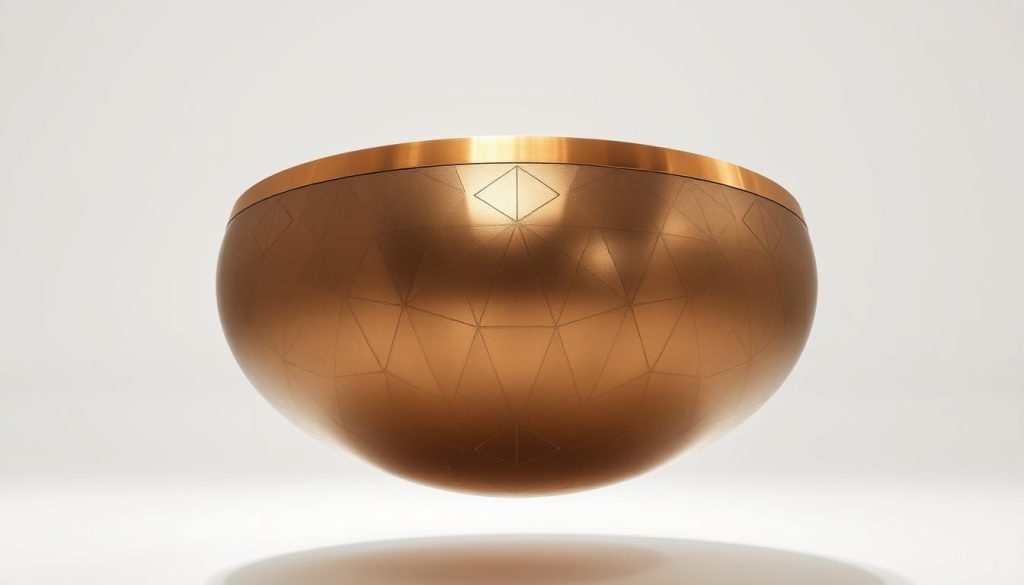
Current prices and options
Observed price ranges often exceed those of acoustic instruments. Expect to pay around €3,000 to €4,000 including VAT for some high-end models.
The price reflects the sensors, sound engine, finish and connections. Options include a version with a speaker, sound packs and accessories (headphones, DI box, case).
Durability, after-sales service and long-term support
Key point: batteries (with 6 to 8 hours of battery life) wear out, and electronic parts may become scarce if a brand closes. Several projects have already become rare or are available only secondhand.
Purchases are rarely made in stores: you often need to make direct contact and request a quote. Check the warranty, repair times and availability of firmware updates.
- Advantages: flexible scales, presets and MIDI integration.
- Drawbacks: dependence on power, risk of electronic failure and parts that may be unavailable.
- Advice for professionals: arrange a backup for the stage and choose an established brand or one with an active community.
In short, you need to weigh price, quality and risks. Before buying, check the warranty, after-sales terms and long-term maintenance options.
Recording and amplification: microphones, interfaces and best practices
Recording starts with a simple decision: a direct connection or microphone recording. This choice affects track clarity, editing options and effects management.
Direct recording, MIDI and effects
Instruments with stereo TRS or headphone outputs provide a short, clean connection to the DAW. USB/Bluetooth MIDI lets you edit notes, layer sound libraries and apply effects without audio loss.
In the DAW, route the signal in stereo, create an effects bus (short reverb, subtle echo), apply light compression and monitor latency to maintain a steady rhythm.
Condenser or contact microphones for an acoustic instrument
Condenser microphones offer superior sound quality and a wide frequency response. They require phantom power and an acoustically treated room.
Contact microphones are simple, less sensitive to ambient noise and practical on stage. They reproduce fewer nuances but capture direct vibrations well.
Practical tips: placement, power and noise management
Place a condenser microphone above the ding at a moderate distance; use an XY or AB setup depending on the room. Avoid resonant surfaces and place the instrument on a stable support.
For phantom power, choose a reliable interface, raise the gain gradually and avoid clipping. On stage, use a DI box for long cable runs and keep the volume at a controlled level.
Test levels, save frequently and combine audio output with MIDI to blend the realism of the original sound with more extensive sound design.
| Method | Advantage | Drawback | Recommended use |
|---|---|---|---|
| Direct recording (TRS/USB) | Clean signal, low noise | Less natural ambience | Studio, multitrack recording |
| MIDI (USB/Bluetooth/DIN) | Note editing, layering | May require synchronization | Production, sound design |
| Condenser microphone | High fidelity, good dynamics | Requires phantom power, sensitive to noise | Studio recording of an acoustic instrument |
| Contact microphone | Reduced ambient noise, simplicity | Less harmonic richness | Stage, quick setup |
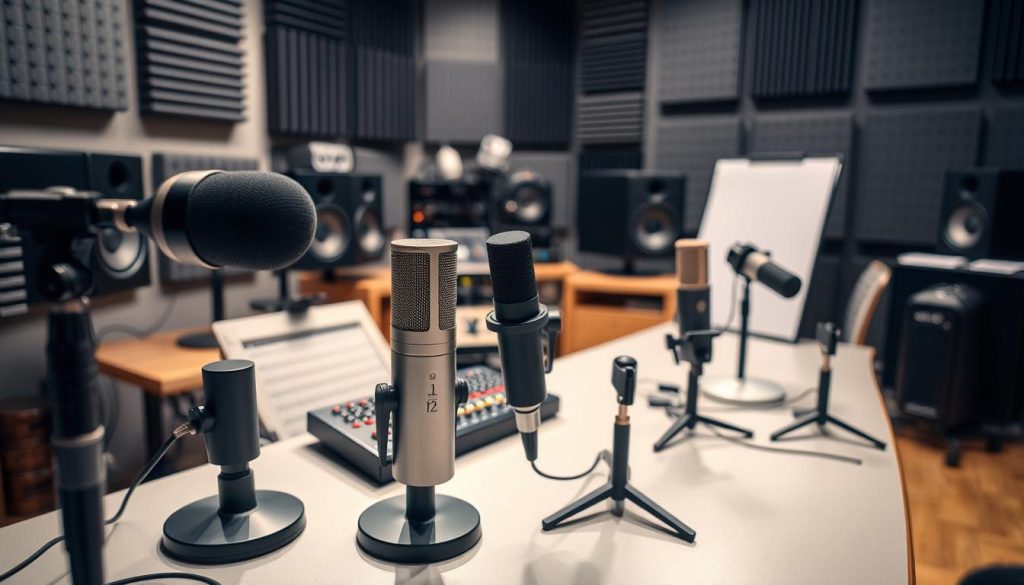
For accessories and playing pads, also see the percussion options discussed in finger drum pad.
Conclusion
Ultimately, the key is to balance authenticity and versatility. This article has reviewed the strengths and limitations of models on the market, from the Oval handpan to the Lumen handpan.
Key benefits: flexible scales, MIDI/DAW integration, direct recording and possibilities for live performance.
Summary of the advantages and drawbacks: cost and dependence on power must be weighed against creative possibilities and consistent sound.
Before buying, check after-sales service, battery life, connections and your actual needs. This article aims to help you choose the instrument that supports your everyday playing and music.