

This guide helps you decide whether an affordable model is right for your first instrument. A handpan is an acoustic idiophone introduced in 2001. It consists of two steel shells, with a central ding and notes around it. Playing is intuitive and offers an immediate musical journey.
Here, we explain the practical criteria: tuning, stability, balance between notes, and crosstalk. These matter more than the advertised price alone.
We also examine quality in relation to materials (nitrided or stainless steel), pitch reference (432 Hz or 440 Hz), sustain, and the number of notes. These criteria help you assess whether this instrument is suitable as a first handpan.
By the end of this section, you will know what signs to look for and what budget to allow. The goal is a frustration-free learning experience, with alternatives if the instrument does not meet your needs.
Understanding your buying goals: beginning your musical journey with a handpan
The first step is to identify how you mainly want to use this instrument.
Solo playing, meditation, composition, or group playing: each goal affects your choice. Solo use favors warmth and sustain. Playing in an ensemble requires a compatible pitch reference and stable tuning.
The handpan encourages improvisation and independent learning. Diatonic scales help beginners avoid conspicuously wrong notes and create music quickly.
“Listen to several demonstrations and note which atmosphere speaks to you: that is often where your preferences lie.”
Essential criteria to prioritize: tuning stability, reasonable sustain, number of notes, and material.
- First, clarify what you want to do with the instrument.
- Make a shortlist and assess the instruments using videos.
- Accept the trade-off between budget, quality, and room to progress.
| Setting | Recommended scale | Pitch reference | Priority |
|---|---|---|---|
| Solo playing / wellbeing | Minor (D minor) | 432 Hz | Sustain & warmth |
| Composition / studio | Versatile diatonic scale | 440 Hz | Tuning stability |
| Ensemble | Compatible scale | 440 Hz | Tuning and intonation |
Startone handpan: an entry-level choice for beginners?
Before buying, it helps to know who this instrument is really for.
Who is this instrument actually suitable for?
A budget model can work well for exploring the handpan, personal practice, or learning the basics.
It lets you try the instrument without a major investment.
Advantages and limitations: price, sound quality, tuning, and resonance
Advantage: the accessible price (the market ranges from €700 to €3,500) makes these instruments easier to try.
Limitations: sound quality depends on the balance between notes, crosstalk, and tuning stability.
Moderate sustain (8 to 12 seconds) helps each note remain clear and supports rhythmic progress.
Budget models may have more noticeable crosstalk and an uneven tone.
What alternatives are there if it does not meet your criteria?
If an audio or video demonstration reveals inconsistencies, consider a 9-note D minor Kurd model made from stainless steel. It may be better suited to long-term use and easy maintenance.
Test every note: play the same phrase across all the notes and listen for beating or interference.
- Check tonal consistency and tuning stability.
- Ask about the return policy and warranty.
- See this link for a concrete example: D Kurd A440Hz model.
Essential criteria for choosing your first handpan
Choosing the right instrument starts with simple, measurable criteria. Begin by writing down your needs: solo playing, group playing, or meditation.
Scale and musical character
The scale influences the tone and mood. A major scale sounds brighter. A minor scale feels more intimate.
Listen to every note: each should have a clear attack and consistent sustain.
Pitch reference
432 Hz is often chosen for relaxation and personal practice. 440 Hz makes it easier to play with other instruments. Choose according to your needs.
Number and balance of notes
A smaller number of notes (9) makes the instrument easier to learn. Ten or more notes offer more harmonic possibilities.
Prioritize tonal balance, consistency across the note fields, and sustain of around 8 to 12 seconds.
“Always check tonal consistency and tuning stability before buying.”
| Criterion | Practical guide | Priority |
|---|---|---|
| Scale | Major / minor / Eastern, depending on the mood | High |
| Pitch reference | 432 Hz for relaxation, 440 Hz for compatibility | Medium |
| Number of notes | 9: simple; 10 or more: richer | High |
| Balance & sustain | 8 to 12 seconds of sustain; consistent tone | High |
| Material & tuning | Nitrided or stainless steel; stable tuning | High |
- Prepare an assessment checklist and score each criterion as you listen.
- Prioritize durability and tuning over appearance.
Handpan scales: major, minor, and Eastern modes
Each scale opens up a distinct sound world and shapes the way you play.
Major scales create bright moods. They encourage simple, cheerful playing and work well for approachable melodies and public performances.
Minor scales offer a more introspective, expressive character. They invite musical storytelling and personal expression.
Eastern modes evoke a mysterious atmosphere. Their distinctive intervals stimulate the imagination during a musical journey.
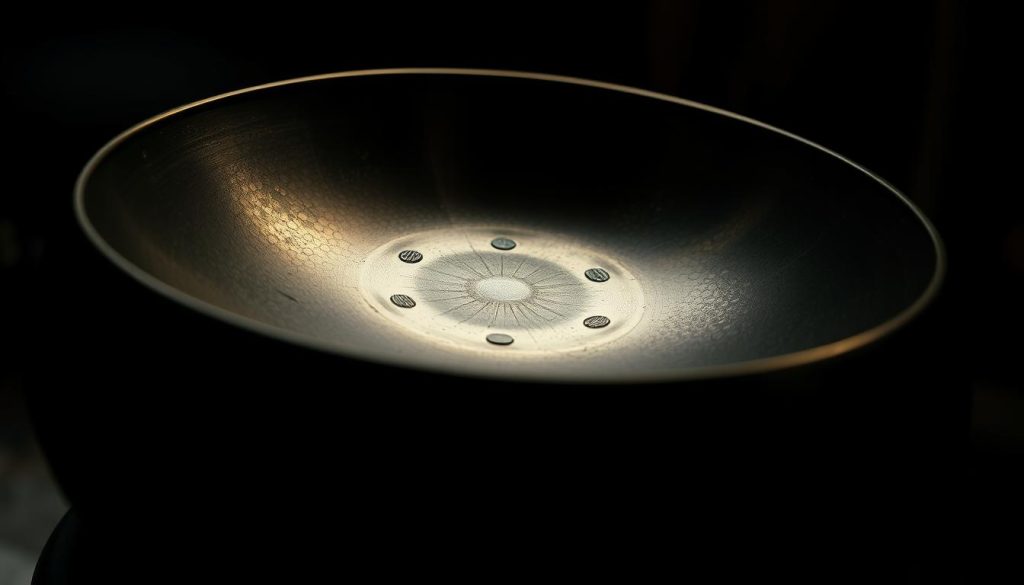
Why the D minor (Kurd) scale is so popular
This scale in D minor (Kurd) combines versatility with harmonic coherence. It makes improvisation easier and reduces discordant notes.
Its range lets you explore melodies and rhythms without technical complexity. It is often the best starting point for building a consistent musical style.
“Listen to different scales and note which ones best match your preferences.”
- Decide what mood you want (cheerful, melancholy, or exotic).
- Compare several recordings and take notes.
- Choose a scale that will support your musical journey over time.
| Scale family | Mood | Strengths |
|---|---|---|
| Major | Bright, cheerful | Accessible and sociable |
| Minor | Introspective, expressive | Harmonic richness and storytelling |
| Eastern | Mysterious, exotic | Distinctive colors and a musical journey |
432 Hz or 440 Hz: which pitch reference should a beginner choose?
The choice of pitch reference affects both pitch and how playing feels. It provides the basis for tuning and determines compatibility with other instruments.
432 Hz: relaxation, musical journeys, and personal resonance
432 Hz is often associated with relaxation. Some listeners perceive its sound as warmer and find that it encourages an inward journey. It can suit solo practice, meditation, and wellbeing sessions.
440 Hz: the modern standard for group playing
440 Hz is the usual reference for ensembles. It makes it easier to play in tune with other musicians at public sessions or during recordings.
Musical compatibility: avoiding dissonance
Do not mix 432 Hz and 440 Hz instruments in the same ensemble: the difference creates beating and out-of-tune notes.
Listen to comparisons before deciding: hearing the difference will help you choose.
| Use | Recommended pitch reference | Main advantage |
|---|---|---|
| Solo practice / meditation | 432 Hz | Deep resonance and relaxation |
| Group playing / studio | 440 Hz | Compatibility and easier ensemble playing |
| Undecided | Try both | A choice based on personal experience |
Tip: prioritize precise, stable tuning at either pitch reference. For practical advice tailored to beginners, consult this beginner’s guide.
Sustain: resonance time and its effect on playing quality
How long a note lasts determines whether sounds blend together or remain distinct. Suitable resonance helps preserve clarity without overwhelming musical phrases.
Balanced sustain: ideal for learning and clarity
Sustain of 8 to 12 seconds offers a practical balance. It supports steady progress in learning while preserving sound quality.
Excessively long sustain causes notes to overlap and blurs the rhythm. This makes it harder to control nuances during faster playing.
Notes with consistent resonance times improve the overall sound of the instrument.
- Test how long notes last using gentle strikes, then stronger ones.
- Check that notes remain consistent across the instrument’s surface.
- Choose moderate sustain if learning is your main goal.
Playing comfort also depends on managing silence and being able to control each sound; both contribute to the experience.
Longer sustain may suit meditative playing. For percussive playing, favor speed and definition. If you are looking for a first instrument, choose a model that strikes a balance.
Sound quality: testing note balance and crosstalk
Sound quality is judged first by tonal consistency and the clarity of each note.
A good instrument has balanced volume and sustain around its entire note circle. The note fields should project sound similarly, providing a consistent experience when playing.
Note balance: consistent tone, projection, and harmony
Test each note separately, then play simple chords. Listen to the attack, sustain, and tone. If one field sounds duller or sharper, the balance is compromised.
Play the same phrase across all the notes and listen for differences in tone.
Crosstalk: controlling interference
Crosstalk occurs when striking one note unintentionally activates other note fields. It muddies the harmony and makes the music less clear.
- Simple test: strike one note, rest your hand on the remaining surface, and listen for unwanted vibrations.
- Beginners should favor low crosstalk for a less frustrating learning experience.
- Advanced players can sometimes use controlled crosstalk artistically.
| Criterion | What to observe | Recommended action |
|---|---|---|
| Clarity of each note | Clean attack, little background noise | Test notes alone and in chords |
| Balance | Consistent tone and sustain | Compare several recordings |
| Crosstalk | Ideally minimal | Choose an instrument with little crosstalk |
Your ability to judge sound quality improves with listening. Compare recordings side by side to assess overall balance before buying.
Construction materials: nitrided steel or stainless steel
The material shapes your instrument’s sound and lifespan. This choice affects construction, resonance, and maintenance.
Nitrided steel receives a surface treatment that provides protection and influences its tone. It often produces a warmer sound with rich harmonics. Sustain may be moderate, making it pleasant for solo or meditative practice.
Stainless steel has excellent resistance to corrosion. Its sound is often brighter, with stronger projection and longer sustain. It is easier to maintain, which is useful if you play outdoors or travel frequently.

Sound and durability: resonance, sustain, and care
Construction affects tuning stability and consistent quality. A well-controlled process reduces variation between instruments.
“Good production checks reduce the need for adjustments and improve long-term tuning stability.”
Which material should you choose for your surroundings and use?
- Humid climate or frequent outdoor use: favor stainless steel for its corrosion resistance.
- If you want a warm tone and rich harmonics, nitrided steel is often preferred.
- Regular transport: stainless steel copes better with changing conditions and handling.
- Studio and stage: choose according to the resonance you want (bright or warm) and tuning stability.
| Criterion | Nitrided steel | Stainless steel |
|---|---|---|
| Tone | Warm, rich harmonics | Bright, clear |
| Sustain & projection | Moderate sustain and projection | Often longer sustain and stronger projection |
| Corrosion resistance | Good (requires protective treatment) | Excellent |
| Maintenance | More sensitive; needs protection | Simpler care |
| Recommended use | Wellbeing, solo practice, indoors | Stage, outdoors, frequent transport |
Tip: match your choice to the construction and intended use. Whatever the metal, regular maintenance preserves your instrument’s sound and resonance.
Choosing the number of notes: 9, 10, and beyond
The number of notes directly affects your melodic freedom and how easy the instrument is to learn.
How notes are counted: some sellers include the central ding in the total. An instrument described as having 9 notes may therefore be presented as “8 + ding.” This affects its layout and how easily you can reach each field.
9 notes: an intuitive, reassuring first handpan
Advantage: simplicity and coherence. Nine notes offer an appealing balance for a first instrument. The layout remains easy to understand, with a gentle learning curve.
10 notes or more: more melodic possibilities
Additional notes bring more harmonic possibilities, varied arpeggios, and richer patterns.
Check every added note for consistency: balance, tone, and crosstalk should remain even.
- Be cautious about starting with too many notes: complexity increases and learning takes longer.
- Choose the number according to your preferred sound and playing style.
- Note quality always matters more than quantity.
| Number | Character | Main strength | Recommendation |
|---|---|---|---|
| 9 | Simple, consistent | Intuitive layout | Ideal for a first handpan |
| 10 | More tonal colors | More harmony and melodic possibilities | Good for expanding your sound |
| 11 or more | Complex, rich | Wide harmonic palette | Best suited to advanced players |
Price and value: what the price tag really tells you
The price tag often reflects more than the cost alone: it points to a balance between craftsmanship, materials, and quality control.
Realistic range: expect to pay roughly €700 to €3,500, depending on construction, reputation, and complexity. A higher price may indicate more precise tuning or careful stainless-steel work, but it does not guarantee either.
Connect the price to evidence: listen to demonstrations and test note balance, crosstalk, and sustain. These checks help confirm an instrument’s quality or reveal hidden compromises.
Be cautious: an exceptionally cheap product may have tuning defects and limited quality control. Equally, a high price without a technical justification deserves scrutiny.

Focus on value: pay for stable tuning, consistent note balance, and clear warranty and return policies. Take notes while listening so your choice reflects your preferences and intended use.
| Price range | What it may reflect | What to check |
|---|---|---|
| €700–€1,200 | Exploration, straightforward production | Check tuning and crosstalk |
| €1,200–€2,200 | Controlled craftsmanship, better tuning | Note balance and consistent sustain |
| €2,200–€3,500 and above | Reputation, premium materials (stainless steel) | Warranty, sound tests, long-term stability |
Read comparisons to refine your budget and make an informed choice before buying.
Maker, tuning, and quality control: criteria that make a difference
You can hear how an instrument was made from its first note. Hand craftsmanship often brings closer attention to note fields, tuning stability, and harmonics. Industrial production reduces costs but may be less consistent.
Handmade or factory-made: stability, harmonics, and construction
Good tuning produces a clear fundamental, a correctly tuned octave, and a fifth. These affect musicality and overall balance.
- Check that the fundamental is clear and the harmonics are in tune.
- Ask the maker for sound recordings; they help musicians compare instruments.
- Assess tuning stability when the instrument arrives and again after a few weeks of use.
An attractive finish is a bonus; the instrument’s value depends above all on balance and stable tuning.
| Criterion | What to expect | Recommended action |
|---|---|---|
| Construction | Handmade: consistency; industrial: possible variation | Prioritize sound evidence and quality checks |
| Tuning | Clear fundamental, accurate octave and fifth | Test every note and its harmonics |
| Quality control | Multiple checks before shipping | Ask about certification, after-sales support, and retuning |
Learning and experience: playing the handpan intuitively
Playing this instrument is approachable: it relies more on listening and movement than advanced knowledge of music notation. Beginners can progress quickly thanks to its visual and tactile layout.
Start with simple exercises: basic rhythms, hand independence, and short melodic patterns. Practice in short, regular sessions instead of long, irregular ones.

Useful resources: videos, communities, and gradual progress
Practical resources: video tutorials, specialist blogs, and Facebook or Discord groups offer step-by-step lessons. These communities can speed up learning and provide useful feedback.
- Follow video lessons to see striking techniques in action.
- Join forums and groups to share recordings.
- Consult structured guides for step-by-step learning.
Record your practice sessions to track your musical progress. Develop finger sensitivity and dynamic control by varying the strength of your strikes.
Improvising with other musicians speeds up rhythmic adaptation and broadens your musical horizons.
| Step | Goal | Recommended time |
|---|---|---|
| Basic rhythms | Steady pulse | 10 to 15 min/day |
| Hand independence | Coordination | 10 min/day |
| Melodic patterns | Musicality and memory | 15 to 20 min/day |
| Improvisation / recording | Active listening and sharing | 1 to 2 times/week |
Tip: choose a responsive instrument to stay motivated. Regularity matters more than session length: 20 minutes each day can help more than one intensive weekly session.
Color, accessories, and care: practical details for beginners
Small details can make a big difference: the finish, case, and stand all affect everyday use.
Color is purely aesthetic. It does not affect the instrument’s sound. Choose what you like, bearing in mind that marks may show sooner on a dark finish.
Case, stand, and routine care
Padded case: essential for transport and protection from impacts. Look for an inner pocket for accessories and a sturdy strap.
Stable stand: a suitable stand or cushion supports good posture and protects the instrument’s surface. Comfortable playing helps you learn and reduces mistakes in technique.
Appropriate care: clean the instrument regularly with a soft cloth. For nitrided steel, avoid water and prolonged moisture; apply a protective product if recommended. Stainless steel needs less care but should still be dried after exposure to moisture.
Avoid sudden temperature changes and storage in damp places. Put the instrument in its case after each session and let it reach room temperature before playing.
- Useful accessories: padded case, stable stand, microfiber cloths.
- These make everyday learning easier and extend the instrument’s life.
Protecting your instrument helps protect your enjoyment of playing it.
Further reading: consult a complete care guide if you are a beginner and want to choose a handpan with confidence.
Conclusion
In short, use a simple method: prioritize the essential criteria, listen carefully, and match your choice to how you plan to play.
This approach supports a positive experience. Quality depends on stable tuning, controlled resonance (8 to 12 seconds of sustain), and good balance between notes.
Consider the D minor scale (Kurd) if you want versatility. A 9- or 10-note instrument offers a rich sound without making learning too complicated.
Match the pitch reference to your use: 440 Hz for group playing, 432 Hz for relaxation. Check the construction and quality control before buying.
For a concrete example and a way to compare sounds, look at this D Kurd A440Hz model, then choose an instrument to accompany your musical journey.