

This article offers a comprehensive, up-to-date review of a French brand known for its craftsmanship and thoughtful design.
Founded in 2011 by Philippe Maignaut and the Djoliba store, the company makes Spacedrum and Zenko instruments by hand. Its showroom in Monteux lets visitors try the instruments before buying.
We explain why this maker appeals to musicians: rigorous production, quality control and innovative designs. The Evolution, Inox, Nitro and Master Piece ranges offer different materials and a design that makes the notes easy to identify.
In the following sections, we examine quality, durability, sound, leading models and the experience of trying them. To compare the range and see the available models, consult the dedicated Metal Sounds product listings.
Our aim: to help musicians choose an instrument suited to their skill level, style and budget.
Why this review of a French maker matters to musicians in France
Musicians need clear guidance when choosing such a responsive instrument. A structured review helps them distinguish marketing claims from the experience of playing it.
The French market includes makers and retailers. Retailers offer broad catalogues, online sound samples and after-sales support. Workshops offer personal contact, customization and visits.
Buyers look for quality, a chance to listen before purchasing, practical advice and reliable after-sales service. This article examines those points through the ranges, their quality and durability, and players’ experiences.
Communities, forums and groups play a key role in evaluating instruments and sharing feedback useful to beginners and experienced musicians alike.
- Maker’s advantage: customization and workshop visits.
- Retailer’s advantage: availability and a wider selection.
To discover local events related to the instrument, read this regional article: report and news.
The sections that follow move from the production process and quality to specific models and budgets, helping each musician find a range suited to their music.
Metal Sounds handpans: a review of French craftsmanship
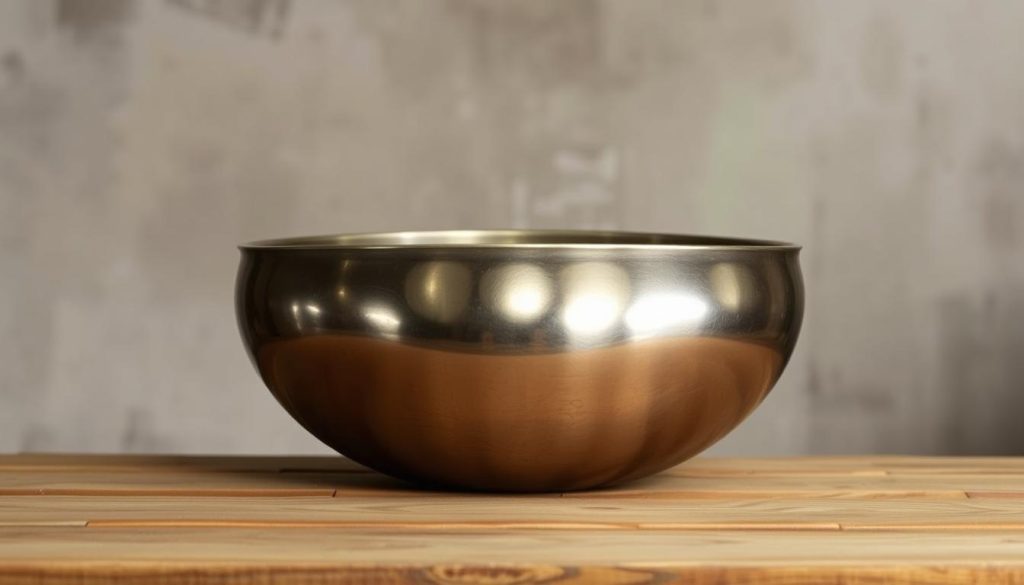
An artisanal partnership formed in 2011 laid the foundations for carefully made French instruments. Philippe Maignaut brought his steel drum expertise, while Djoliba shaped the commercial identity. Together, they developed instruments focused on precision and visual consistency.
Strong artisanal roots
Philippe Maignaut is central to this craftsmanship: handwork, a tuner’s ear and skills developed through playing the steel drum. That heritage is present in every Spacedrum handpan, designed for tuning stability and musicality.
A workshop and showroom in Monteux
The workshop showroom lets visitors try instruments and speak directly with the maker. It makes it easier to get a feel for an instrument, hear its sound and judge the playing experience beyond the technical specifications.
Innovation and quality control
The Evolution, Inox, Nitro and Master Piece ranges reflect an innovative approach: stainless alloys, nitrided steel and heat treatments. The copper-colored design and silver-colored notes make the layout easier to read and play.
| Range | Material | Strength |
|---|---|---|
| Evolution | Stainless steel | Rich harmonics, long sustain |
| Inox | Polished stainless steel | Versatility and comfort |
| Nitro | Nitrided steel | Tuning stability, low crosstalk |
| Master Piece | Advanced treatments | Extended range for the stage |
Our view: this French brand combines craftsmanship with modern processes to make consistent, accomplished instruments. To see the models and their specifications, consult the Metal Sounds product listings and plan a visit to Monteux.
Sound quality, materials and durability: our detailed assessment
Sound quality depends as much on the choice of material as on careful tuning. Here we explain the practical differences between stainless and nitrided steel, followed by the effects of treatment and shaping.
Stainless steel
Stainless steel offers long sustain, strong corrosion resistance and a full sound. For musicians seeking sustained textures or strong projection, it adds harmonic richness.
Nitrided steel
Nitrided steel favors balance and controlled sustain. It reduces crosstalk between notes, making individual tones clearer. This material suits players who prioritize precision and articulation.
Tuning and long-term stability
Surface treatments and hand shaping produce precise initial tuning. Durability tests confirm that the notes remain stable after intensive use.
- Note stability: a stable DING and consistent tone.
- Durability: mechanical strength and, for stainless steel, lower sensitivity to moisture.
- Advice: choose according to your musical goal — sustained textures with stainless steel or rhythmic precision with nitrided steel.
Assessment: quality depends on both the material and the rigor of tuning and final inspections.
The Spacedrum ranges explained: Evolution, Inox, Nitro and Master Piece
The Spacedrum line has four distinct families, each designed for a particular musical use.
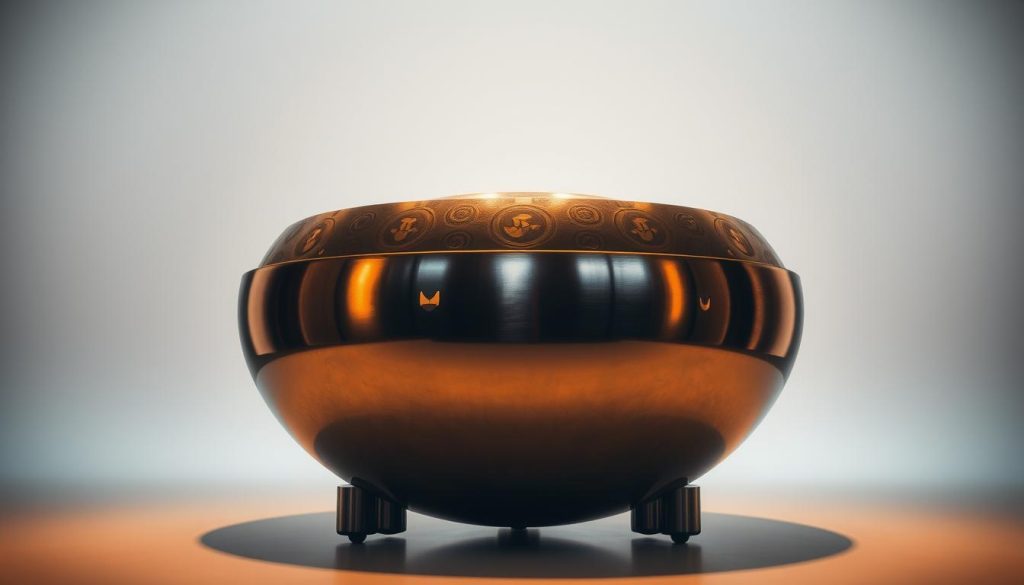
Spacedrum Evolution: harmonic richness and a French-made icon
Evolution uses a stainless alloy and measures 60 cm across. It comes with 8, 9 or 13 notes and eleven scales.
Its large diameter produces a rich sound and long sustain, ideal for immersive textures.
Spacedrum Inox: versatility, playing comfort and long sustain
The 55 cm Inox range has 9 notes and four key options.
It offers a good balance of durability, projection and playing comfort.
Spacedrum Nitro: nitrided steel for demanding musicians
Nitro measures 55 cm across and offers 9 or 10 notes in nitrided steel. The treatment reduces crosstalk.
This range appeals to musicians seeking precision and controlled dynamics.
Spacedrum Master Piece: an extended range for professionals and the stage
Master Piece has 14 notes and offers customization options. It is designed for stage performance and creative playing.
“Four families cover needs from first steps to professional performance.”
Budget guide: from entry-level ranges to stage instruments, prices vary with the material, diameter and finish. To compare models and makers, read this Metal Sounds guide, which helps match a choice to your needs and budget.
Leading models reviewed: strengths, sounds and suitable players
This section presents key models, their sounds and the players they suit.
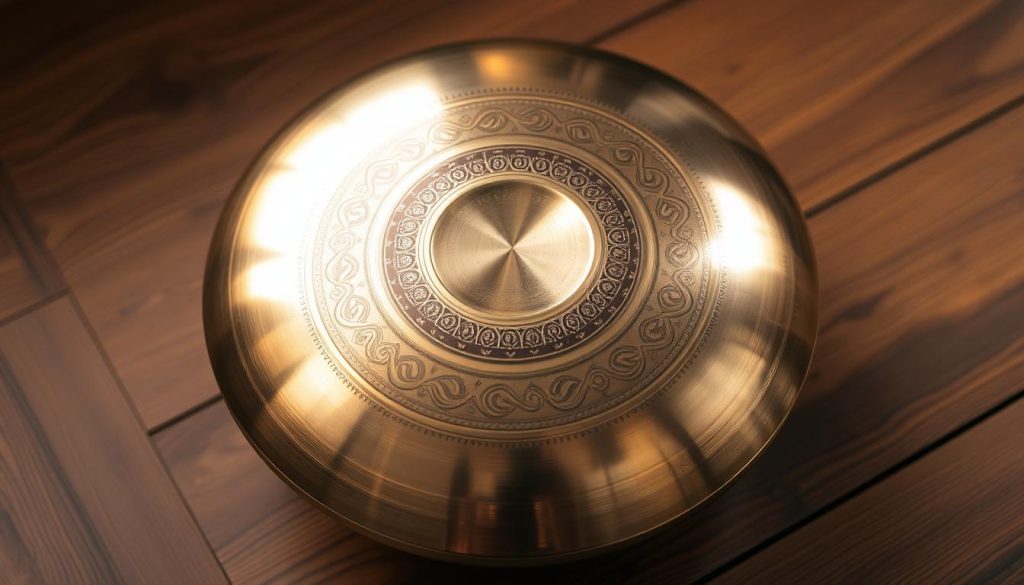
Evolution, 9 notes, 60 cm
Strengths: a large diameter, full bass notes and a double DING that enriches playing.
Sound quality: generous sustain and rich harmonics, ideal for textures and relaxation.
Recommended for: musicians seeking an approachable instrument and sustained textures.
Nitro, 9 notes — D minor Amara, 55 cm
Strengths: nitrided steel, a balanced range and reliable tuning stability.
Notes: D3 – A3 C4 D4 E4 F4 G4 A4 C5. It is a bestseller for musicians seeking articulation and durability.
Uses: dynamic expression, rhythmic precision and group playing.
Inox, 9 notes, 55 cm
Strengths: comfortable ergonomics, a precise touch and the characteristic resonance of stainless steel.
Sound quality: clarity in the low-mid range, excellent for players at every level.
Suitable for: learning, teaching and improvisation sessions.
Master Piece, 14 notes, 55 cm
Strengths: an extended range, with 9 notes on the dome and 5 underneath, plus precision and clarity for the stage.
Uses: composition, performance and advanced improvisation. The extra notes provide more harmonic options.
“Each model meets a different need: textures with Evolution and Inox, articulation with Nitro, and performance with Master Piece.”
| Model | Number of notes | Material | Recommended use |
|---|---|---|---|
| Evolution 9 | 9 | Stainless steel | Relaxation, sustained textures, approachability |
| Nitro 9 Amara | 9 | Nitrided steel | Articulation, tuning stability, bestseller |
| Inox 9 | 9 | Stainless steel | Learning, intuitive playing, all levels |
| Master Piece 14 | 14 | Nitrided steel | Stage, composition, extended range |
Quick guide: more notes mean more harmonic and improvisational possibilities. Choose according to your experience and musical needs.
How to choose a Metal Sounds handpan: essential criteria
Before buying, decide what matters most: room to progress, harmonic range and playing comfort. This brief guide helps you make a choice based on how you intend to use the instrument.
Number of notes
Effect: the number of notes — 8, 9, 10 or 14 — changes how the instrument plays and the movements you learn.
Eight- and nine-note models suit beginners and encourage simple patterns. Models with 10 to 14 notes offer more harmonic options for progress and improvisation.
Scale and key
Role: the scale shapes your musical vocabulary.
D minor Amara provides familiar modal colors. The diatonic and chromatic scales offered in the Evolution range provide versatility across musical styles.
Budget and value for money
Balance materials and finishes to get the best price without sacrificing instrument quality.
Tip: choose the alloy that meets your expectations for sustain and tuning stability.
Player’s skill level
Beginners: Evolution and Inox models for comfort and learning.
Intermediate players: Nitro for tuning precision.
Professionals: Master Piece or chromatic versions for performance and composition.
Finish, design and ergonomics
The copper-colored design and silver-colored notes improve visibility and comfort. Check the attention to detail and ease of playing.
Try the instrument when possible, and listen to good-quality recordings to confirm your impression.
“Trying an instrument remains the best way to confirm a choice: touch, projection and comfort are best judged in person.”
| Criterion | Question to ask yourself | Recommendation |
|---|---|---|
| Number of notes | Do you want simplicity or an extended range? | 8 or 9 to start, 10 to 14 as you progress |
| Scale | What harmonic character are you looking for? | Amara for a modal sound; diatonic or chromatic for versatility |
| Materials | Sustain or precision? | Stainless steel for long sustain, nitrided steel for control |
| Budget | Is your priority quality or a premium finish? | Choose materials and options for the best value |
Comparing the French market: buying from a maker, a retailer or an alternative
In the French market, choosing between a workshop and a major retailer changes the buying experience.
Personal contact and customization with a maker: a maker can welcome you to the workshop, offer custom options and provide direct support. A visit lets you hear and handle the instruments before buying.
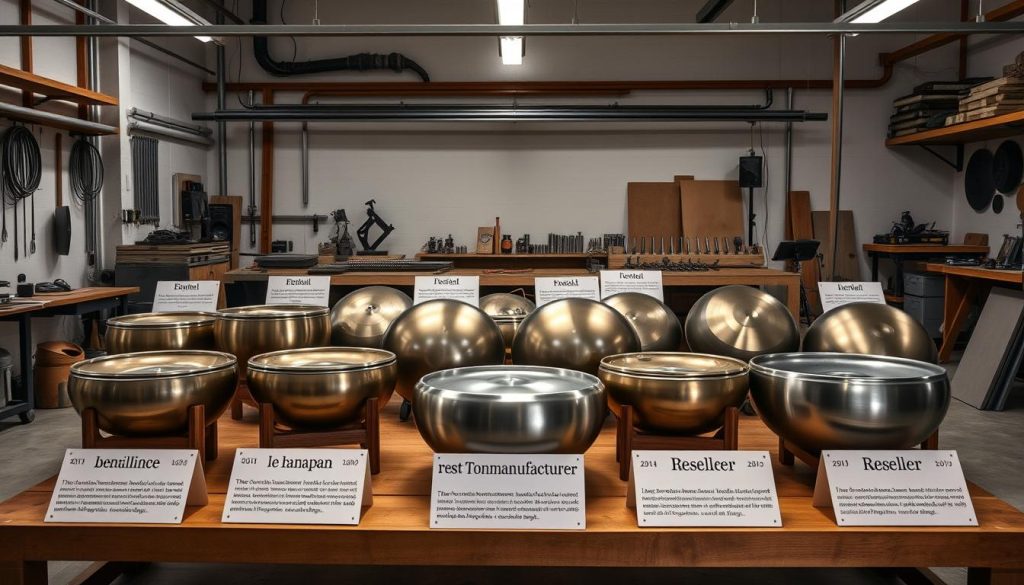
Retailers and online listening
Handpan France offers a broad catalogue of models with 8 to 17 notes, a recording of each instrument on its website, responsive after-sales service and free returns. That makes ordering remotely convenient.
Other makers to consider
French alternatives include Mayura, known for unique instruments; Zenapan, with its broad range; and Handpan Cocorico, a platform for artisans. Each has different strengths in pricing, lead times and warranties.
“Trying an instrument in a workshop is a reliable way to judge its feel and resonance. When buying online, look for recordings and dependable after-sales support.”
| Type | Advantage | Consideration |
|---|---|---|
| Direct from a maker | Customization, workshop visits, consistent instruments | Often longer waits and higher prices |
| Online retailer | Wide choice, sound samples, easy returns | Variable quality; be cautious about very low prices |
| Platforms and small brands | Original designs, unique instruments | Variable availability and support |
Tip: decide on your preferred scale, budget, timeline and buying experience before choosing. If you cannot try an instrument in person, listen to recordings and check the quality of customer service.
For a lower-cost option, compare affordable handpans using this link: affordable handpans.
Reviews, services and accessories that make a difference
Buyer reviews provide useful evidence for assessing product quality. They often praise remarkable resonance and an impeccable finish from the first time they play the instrument.
“Master Piece with 14 notes… unbeatable value for money.”
Player feedback
Several reviews mention long-term tuning stability and the clarity of the sound. Others praise the app that lets buyers try instruments before purchasing.
The showroom and online listening on the website make choosing a model easier. Responsive after-sales service adds reassurance about durability.
Accessories, care and contact microphones
Accessories improve everyday use and protection. They include cases, stands, gloves, mallets and cleaning products.
For performance and recording, a contact microphone provides precise, controlled sound capture. These accessories help protect the instrument and expand its uses through faithful amplification.
- Protection: a case and gloves to limit physical wear.
- Comfort: stands and mallets to vary how you play.
- Stage and studio: a contact microphone for controlled sound.
Conclusion: customer reviews and supporting services increase the instrument’s practical value. Suitable accessories and effective after-sales support improve the experience beyond the initial purchase and strengthen the products’ value for money.
Conclusion
Our assessment places the brand among the reliable artisanal choices for many musicians.
Since 2011, the Spacedrum range has combined a workshop showroom in Monteux, strict quality control and models designed for different uses.
The choice of steel, whether stainless or nitrided, clearly affects sound and durability. Evolution and Inox suit sustained textures and are approachable; Nitro favors control, while Master Piece is aimed at the stage.
Before buying, try instruments at a workshop or listen to recordings, compare models against your needs, and choose between a maker and retailer according to your budget and schedule.
To refine your decision, consult this guide to handpans in France and book a session to try an instrument.