
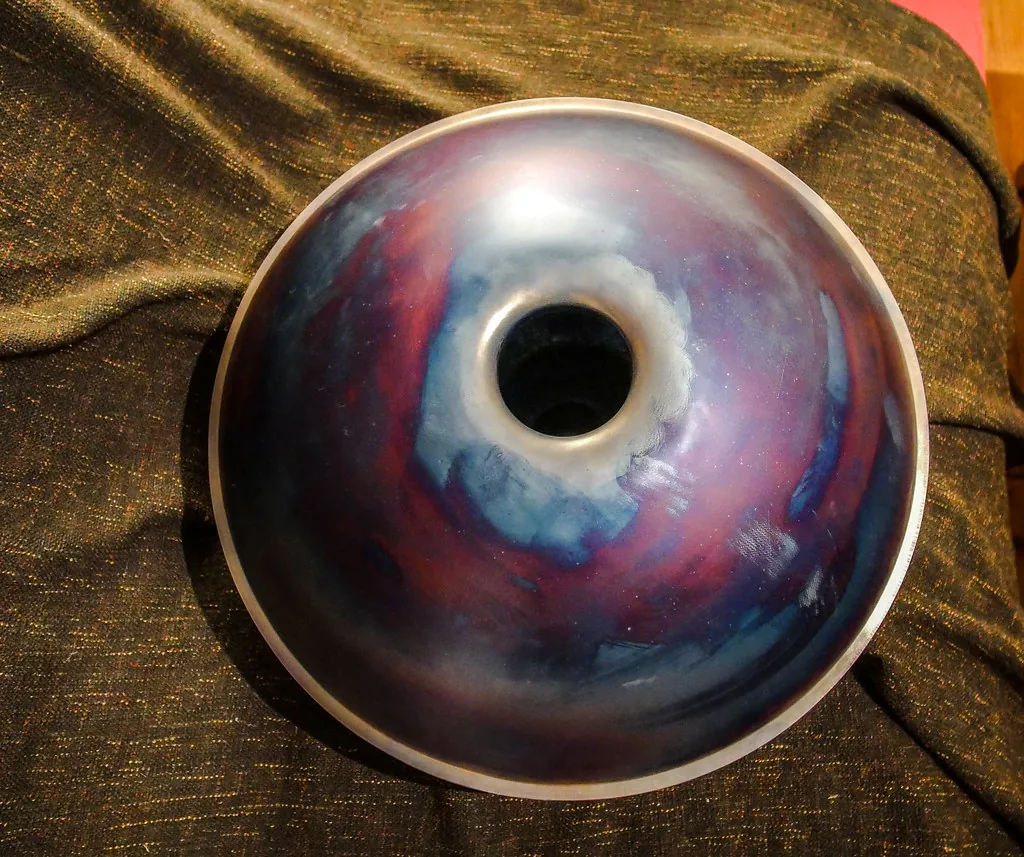
First, this article explains how to care for a handpan to preserve its sound, finish, and value over time.
Care focuses on three simple areas: cleaning, protection with a suitable oil, and rust prevention. Clean, dry hands limit the salty deposits that damage steel.
After each playing session, wipe the instrument with a dry microfiber cloth. Occasional cleaning with 50–75% rubbing alcohol can also clean both shells, the rim, and the inside through the opening.
Avoid harsh solvents such as acetone. Ask the maker which procedure suits your instrument’s surface treatment and model. Nitriding strengthens the surface, but does not replace regular care.
This guide provides detailed steps, suitable products, and guidance on when to apply protective oil and how to adjust the frequency for your climate. For more practical advice, see our practical guide.
The basics of everyday handpan care
Simple daily habits protect your instrument and preserve its tone.
First, always wipe the surface after each session with a clean, dry microfiber cloth. This reduces corrosion caused by sweat, dust, and dirt.
Wash your hands and dry them thoroughly before playing. This is the most effective way to limit deposits on the instrument.
For a deeper clean, wiping with 50–75% rubbing alcohol removes the film left by skin oils. Be aware that alcohol also removes the existing protective coating. Reapply suitable protection if needed.
Keep the instrument out of its case when you are not sure it is completely dry. Letting the handpan breathe on a stable stand prevents condensation and unpleasant surprises.
| Action | Frequency | Effect |
|---|---|---|
| Wipe with a cloth | After each session | Removes sweat, dust, and dirt |
| Wash your hands | Before playing | Prevents deposits and corrosion |
| Clean with alcohol | Periodically | Removes skin oils; requires protective coating to be reapplied |
Handpan cleaning routine: cloth, alcohol, and good practices
A simple, regular routine is enough to preserve your instrument’s surface and tone. After each session, immediately wipe the surface with a clean, dry microfiber cloth. Dirty or sweaty hands speed up rust formation and deterioration.
Use 50–75% rubbing alcohol for a deep clean. Dampen a soft cloth with it and slowly wipe both shells, the rim, and the inside through the opening. Alcohol removes films left by skin oils, but also strips away the protective oil. Remember to reapply it once the instrument is dry.
Always avoid acetone and strong solvents. They can discolor the finish and damage the glue joining the shells.

- Keep one cloth for daily wiping and another for cleaning with alcohol.
- Be patient with stubborn marks; repeat the alcohol cleaning and wiping cycle instead of using harsh products.
- Let the instrument air-dry completely before applying a thin protective layer.
Apply oil correctly to protect the surface
Protecting the surface means applying a suitable oil with care. Choose a light natural oil, such as grapeseed or coconut oil, or a dedicated formula such as Phoenix Oil, Metal Sounds Oils, or Isthmus Oil.
Always check with the maker: some nitrided models or instruments with a particular finish should not receive any product. Porous steel may absorb excess oil, which can change the sound.
Before applying oil
Degrease the surface by removing the old coating with rubbing alcohol on a clean cloth. Let the instrument dry completely.
Application and waiting time
Apply a few drops, then spread them with even strokes. A very thin layer is enough: leave it for a few minutes, then wipe away the excess with a soft cloth.
- Use only a small amount of oil to avoid leaving a greasy film.
- On very porous surfaces, leave several months between applications.
- In humid climates, apply it slightly more often to prevent rust.
Record the brand and amount used. This will help you refine the routine for your instrument without compromising its tone.
Handpan care: oils, cases, and rust prevention
Nitriding changes the surface of the steel and may make some areas more receptive to protective products. This treatment improves resistance, but does not prevent rust if basic care is neglected.

Variation in treatments
Each maker uses different treatment times and temperatures. These differences affect porosity and, therefore, oil absorption.
Care in humid and coastal areas
Salt speeds up corrosion. Near the ocean, visually inspect the instrument every week.
- Favor very thin layers of oil to avoid excessive absorption.
- By the sea, consider applying protection at least once a month.
- After an outing, follow this order: wipe, inspect, remove deposits, and apply protection if needed.
Cleaning and drying always come first. If you are unsure how your handpan’s steel was treated, ask the maker to recommend a suitable care schedule.
Cases, storage, and transport: protect your handpan without trapping moisture
Storing a musical instrument properly extends its life and prevents many problems. A sturdy case should protect it from impacts without trapping moisture.

Choose suitable protection
Choose a clean, dry case that fits well. Never put a damp handpan inside it. Wipe the surface with a soft cloth before closing the case.
Let the instrument breathe and control humidity
Use a stand or wall mount when possible to let the instrument breathe. If you store it in a bag, leave the bag partly open in a dry room.
- Use reusable desiccant packets in humid environments.
- Avoid direct sunlight, hot car trunks, and damp basements.
- During transport, secure the instrument to limit minor impacts.
- After each trip, quickly inspect vulnerable areas for rust.
For travel, prepare a small kit: a light oil, a clean cloth, and desiccant packets. This simple routine helps maintain the tuning and appearance over time.
Stainless steel and nitrided steel: differences in care and frequency
To choose the right care schedule, first identify the type of steel your instrument is made from.
Stainless steel: it resists rust better than nitrided steel. Some grades, such as ferritic stainless steel, are still vulnerable. Basic protection is therefore useful. Applied sparingly, a very thin layer of oil can add a water-resistant barrier without changing the sound.
Nitrided steel: nitriding strengthens the surface through heat treatment, but porosity may call for more regular care. In humid or coastal areas, check the instrument often and care for it more frequently.
Adjust the frequency for climate and use
In a dry climate, a stainless steel handpan may go several months without oiling if you wipe it after each session.
However, if you often perform outdoors or visit the coast, clean and protect the instrument more often, whatever material it is made from.

Remove rust gently without damaging the instrument
Removing rust without rubbing too hard preserves your handpan’s tone and appearance. Start with targeted cleaning, then move to more intensive steps if needed.
Basic steps: alcohol and careful wiping
- Apply alcohol: dampen a soft cloth with rubbing alcohol and clean both sides, the rim, and the inside. Alcohol may remove the existing protective coating.
- Inspect the affected areas and remove any visible dust and residue.
Green scouring pads, polishing cloths, and changes in appearance
If rust remains, use the green side of a slightly damp sponge. Rub very gently without applying pressure so you do not damage the finish.
- For stubborn areas, a polishing cloth such as Miracle Cloth or Cape Cod can help lift the oxide when used in circular motions.
- The appearance may change: polishing can lighten the area.
- Avoid steel wool and overly abrasive tools, which create more places for rust to take hold.
Final cleaning and a fresh protective layer
Clean again with alcohol to remove particles and residue. Dry the instrument completely: moisture trapped under a layer of oil encourages corrosion.
“If in doubt, check product compatibility with the maker.”
Apply a very thin layer of dedicated oil, leave it for a short time, then wipe away the excess with a dry cloth. Note which areas you treated: they need regular monitoring.
Mistakes to avoid and habits that extend your handpan’s life
Good habits prevent irreversible damage to your instrument. These simple steps limit impacts, corrosion, and loss of tuning.
Remove rings, bracelets, and belts before playing. A single strike from a hard object can scratch a note and put the instrument out of tune.
Technique and accessories
Play gently: the dome does not respond well to hard strikes. If you use mallets, choose soft tips and strike very lightly.
Heat, storage, and moisture
Do not leave the instrument in direct sunlight or near a heat source. Expansion changes the tuning; place it in the shade and let it return to room temperature if needed.
- Avoid putting a damp instrument in a case: air it out and use desiccant packets if needed.
- Always wipe the instrument at the end of each session with a clean microfiber cloth.
- Clean it occasionally with alcohol, then reapply a thin layer of oil to the dry surface.
- Do not use too many products: choose a reliable oil and avoid harsh solvents and untested abrasive sponges.
- Inspect vulnerable areas regularly so you can deal with rust promptly.
“Regular preventive care takes little time and protects your instrument’s value and tone.”
Conclusion
To keep the sound clear and the surface in good condition, focus on consistency rather than using many products. Wiping with a cloth after every session, periodically cleaning with rubbing alcohol, and then applying a thin layer of oil form the basis of good handpan care.
Stay attentive even with stainless steel: adjust the frequency for humidity, trips to the coast, and how often you play. If marks appear, act promptly using gentle methods, then clean again and protect the surface. Leave the product for a few minutes before wiping away the excess.
Store the instrument in the open air when possible, and use clean cases and desiccant packets as needed. Ask the maker if you are unsure how to apply protection. This article is intended to help you care for your instrument over time.