
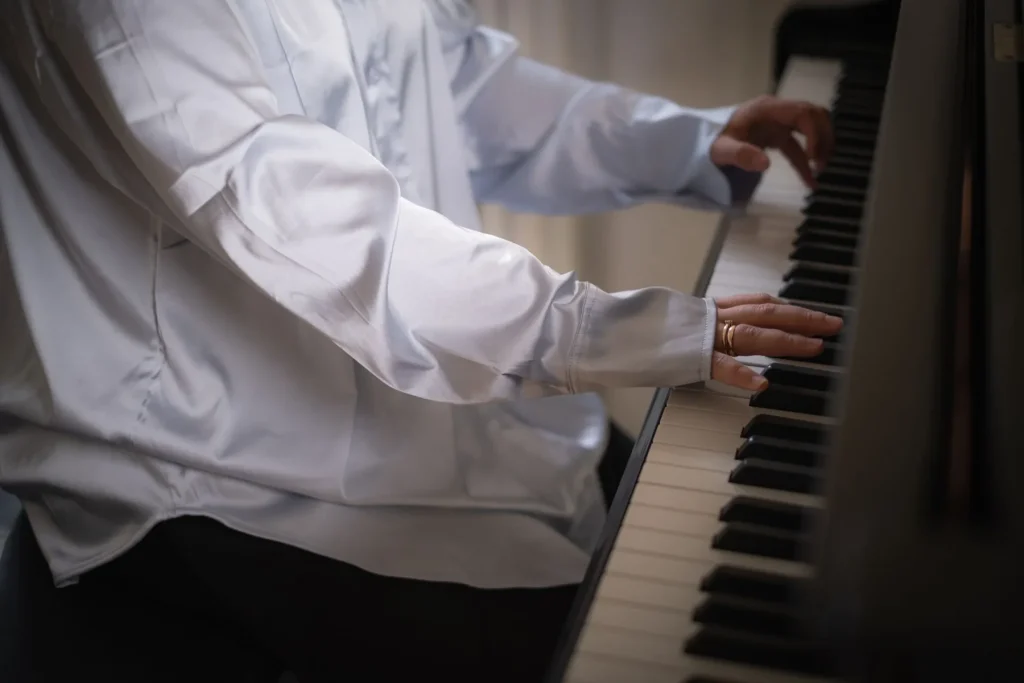
There was a time when you could hardly go a day without touching your keyboard, when every new melody brought a smile to your face… Then, little by little, the urge to play faded. The piano stayed closed more often than open, and everyday life took the place of your musical resolutions. Take heart: it happens to every musician, even the most passionate.
The truth is that motivation does not follow a straight line. It has dips, pauses and fresh starts, rather like a piece of music waiting to be played again with renewed energy.
Why not use this moment to rediscover the pleasure of pressing the keys, without pressure, simply enjoying the sound, the movement and your progress? Here is how to rekindle that musical spark and start moving forward again… one note at a time.
Identify what has held back your motivation
Before moving forward, it helps to understand what caused this musical setback. Losing motivation is no weakness. It is often just a sign that it is time to adjust how you play, practise or approach your passion. Once you see what is holding you back, you can begin to rebuild your motivation.
No clear goal
When you are starting out, every piece feels like a victory. You can see your progress and set simple, rewarding challenges. Then, almost without noticing, you enter a less certain stage. Longer, more complex pieces take time to master. You play for the sake of playing, without a particular aim. That is when motivation begins to fade. Setting a goal, however modest, such as revisiting an old piece, learning a song you love or improving your fingering, gives your playing direction and purpose again.

Settling into a routine
Repeating the same pieces or exercises over and over eventually takes the joy out of playing. If your practice sessions feel like a chore, you may need more variety. Try something new:
- a different style;
- a composition of your own;
- accompanying a singer or another musician;
- or even a few minutes of free improvisation at the end of each session.
The pressure to “play well”
Many pianists become discouraged when they strive for perfection at all costs. In trying to master everything, it is easy to forget the simple pleasure of sound, rhythm and movement. Playing for yourself, without comparisons or the need to impress, can breathe new life into your practice. Remember that even great pianists accept mistakes… because they are part of making music.
And if you want to refine your technique without stress, you could try a few piano lessons that fit your schedule. A teacher can help you enjoy playing well again by correcting small details or exploring particular skills in greater depth.
Too little time or consistency
Music calls for regular practice, but that does not mean practising for hours. Short, frequent sessions keep your interest alive. If you have set the piano aside, it is often because your priorities have changed, not because you are lazy. Sometimes ten minutes a day is enough to rediscover the pleasure of playing.
Playing alone
Playing alone has its advantages, but over time it can feel isolating. Without another perspective, shared experiences or feedback, progress can slow and motivation can suffer. Finding a teacher, joining a community or simply sharing a recording with friends may change how you feel about playing and renew your desire to learn.

Rediscover the joy of piano with new goals
When you lose your way, you may be tempted to force yourself to practise and hope motivation returns on its own. In reality, you can give it a new shape. The best way to bring your playing back to life is to set goals that excite you, ones that revive the childlike pleasure of placing your hands on the keyboard.
Revisit your “why”
Why do you play piano? To relax? To accompany someone? To express how you feel? Remembering your deeper reason reconnects you with what playing means to you. Take time to think about it. Even a simple thought like “I love the sound of the piano filling the house” can be a powerful motivator.
Set realistic, engaging goals
A big project can be discouraging if it feels out of reach. Try smaller, concrete steps instead: learn a new piece each month, revisit a fingering technique or learn to play without looking at your hands. These modest goals bring quick, visible satisfaction… and make you want to continue.
Explore other musical styles
If you always play the same repertoire, your ears may grow tired of it. Why not give yourself permission to explore something different? From jazz to pop, gospel to French chanson, each style brings out another side of your musical expression. A change of repertoire can feel like a breath of fresh air. Sometimes one unexpected piece is enough to restore your momentum!
Give yourself motivating challenges
A small challenge gives you an aim and a deadline without unnecessary pressure:
- play for someone close to you;
- record yourself once a week;
- take part in a small concert or an open session;
- play a piece on a public piano in a station or shopping centre.
These concrete goals support your progress and give you the satisfaction of doing something with your music, instead of playing without a destination in mind.

Refresh the way you learn and practise piano
Sometimes the issue is not motivation itself but how you practise. Going through the same sequence of exercises every day, in the same setting, can dull your enthusiasm. A little novelty in your learning may help you feel eager to play again.
Change your setting or method
If your routine bores you, it may no longer suit you. Try different resources: a new teacher, instructional videos, an interactive learning app or a method focused on your favourite styles. A fresh perspective on your playing can restore your energy and your desire to go further.
Reinvent your piano sessions
Instead of seeing practice as an “obligation,” make it a time for exploration. Start with an enjoyable warm-up, leave room for free improvisation, then return to a more technical passage. Experiment with dynamics, tempo and touch. Each session can become a varied and stimulating journey through sound.
Balance effort and enjoyment
What is the key to lasting progress? Combining discipline with passion. Yes, some technical work is necessary… but if it takes over, you may lose interest. Give yourself time at the piano without a specific goal. Play a piece you love, put a few notes together at random or have fun working out a tune by ear. That freedom can teach you as much as the most demanding exercises.
Create an inspiring space
Your playing space affects how much you want to practise. Make it inviting: a well-tuned piano, soft lighting, a candle and a few carefully chosen scores. Even one small change, such as a new seat, an attractive lamp or a tablet for reading digital sheet music, can change how you feel about practising.
Connect with others and find fresh inspiration
Music is a universal language, and piano playing comes alive when you share it. If you feel alone at the keyboard, this may be the time to connect with others and discover new sources of inspiration. Sharing and curiosity can do wonders for your motivation.
Join a community of pianists
You are not alone! On online forums, in Facebook groups, on Discord and on Instagram, many pianists share their progress, difficulties and small moments of joy. Watching other amateurs improve, exchanging tips and sharing a piece can create an infectious sense of momentum and make you want to keep going.

Attend workshops or masterclasses
You do not have to be a virtuoso to attend a local workshop, an open day or a masterclass. These engaging events, often open to players at every level, let you meet other pianists, listen to inspiring teachers and leave with fresh ideas for your practice.
Listen to great pianists for inspiration
Musical motivation can also come from outside your own practice. Take time to listen to recordings that move you, attend a concert or watch pianists whose playing inspires you. Their interpretations, touch and way of telling a story through notes may make you eager to find your own voice at the piano again.
Give yourself musical rewards
After reaching a goal, treat yourself to something musical: a new piece you adore, an accessory you have been wanting (a pedal unit or a collectible score), or even a recording of your own playing so you can hear your progress. Tangible rewards like these keep your enthusiasm alive and make your efforts feel worthwhile.
Perfect! Here is the conclusion to your article, designed to leave a strong impression and offer a gentle, motivating invitation to act, in the same bright, friendly tone as the rest of the text.
Play again without pressure and rediscover the joy of it
Motivation at the piano does not follow a perfectly straight path. It is a journey of highs, lows and rediscovery. You nurture it one note at a time, in moments when you let your fingers dance across the keys without aiming for perfection, simply enjoying being there with the music.
Every pianist goes through periods of doubt, but what matters is starting again, whether with a new goal, a refreshed method, more connection with others or simply the wish to play for yourself. Your piano is waiting, silent but patient, ready to resonate beneath your hands once more.
So why not give yourself ten minutes of pure musical pleasure today? Open the lid, place your fingers on the keys and let the melody guide you. Progress will follow naturally… one note after another.