

Goal: choose a support that combines comfort, stability and sound quality for your instrument, now and over the long term.
A careful setup improves sound projection and access to the playing areas. It also protects the shell from fine scratches and falls. Precise alignment around the Gu and three contact points on the bottom shell are essential for preserving the tuning.
We present three leading options: an adjustable, stable Metal Sounds multi-position stand; a compact, lockable all-in-one SPand; and a very light retractable tripod (1.6 kg; 112–80–32 cm).
Key point: look for precise adjustments (height and tilt), locking mechanisms and high-quality materials (aluminium, rubber, foam pads and suction cups). This page compares weights, dimensions and locking systems to help you make a lasting choice.
Coming up: comfort and safety, compatibility, features, setup instructions, offers & services. The goal is a quick, confident purchase in France.
The ideal support for your handpan today: playing comfort, safety and design
A good support changes the way you play: greater ease and precision. Prioritise stability to reduce muscle tension and produce consistent strokes.
The Metal Sounds multi-position stand has a wide base and a safety pin that locks the central column. Its natural rubber heads protect the shell and provide grip without damping vibrations.
The SPand combines a locking mechanism, rubber feet and upper supports fitted with foam pads and suction cups. It allows quick, secure setup, ideal for the stage or practice at home.
For travelling musicians, the retractable tripod (1.6 kg) offers an appealing balance of portability and comfort. Some models come with a soft carrying bag for storage and protection.
- Comfort: stable support and more precise strokes.
- Safety: locking mechanism and non-slip feet.
- Design: wide base and careful finishing.
Compatibility and uses: handpan, pantam and steel tongue drum
Your choice of support depends on the instrument and where you use it.
Broad compatibility: the Metal Sounds multi-position stand accommodates most handpans and steel tongue drums, such as the Rav Vast or the Zenko (30 cm). With its foam pads and suction cups, the SPand accommodates instruments with bottom notes, pantams and tongue drums.
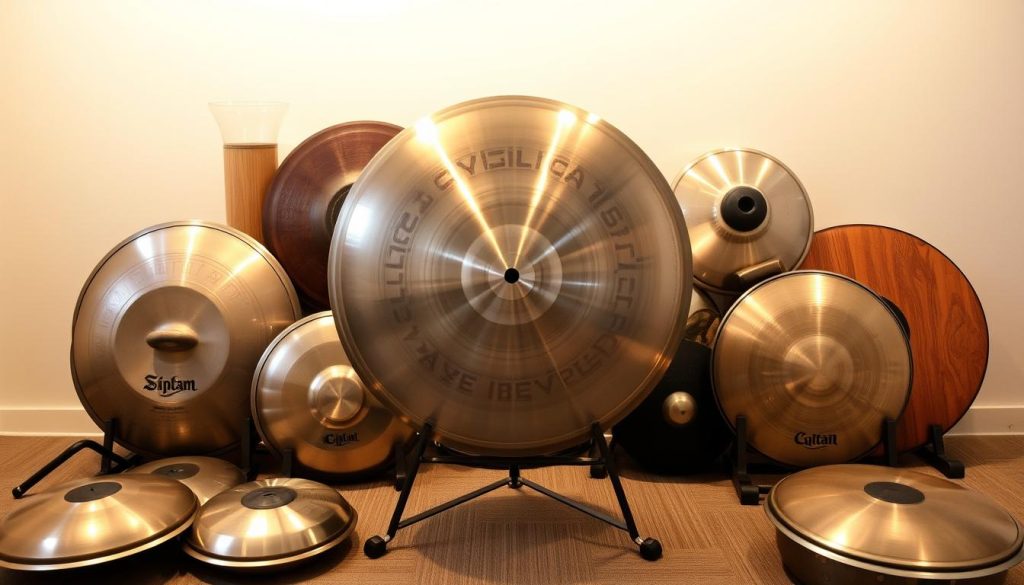
Handpans with bottom notes and access to those notes
The aluminium tubes and rubber heads create three precise support points. Position them between the notes on the bottom shell or around the Gu to keep the central areas accessible.
Controlled rotation: the instrument can rotate and tilt by up to 30° so you can reach distant notes without interrupting your playing.
Playing seated or standing: an ergonomic posture for your height
With a multi-position system or a SPand, adjust the height so your hands fall naturally onto the notes.
Typical settings: SPand from 56 to 99 cm (the ring edge is approximately 10 cm higher); tripod up to 112 cm for standing play.
Dimensions and weight by model: retractable or multi-position
Weight and folded size affect portability. The travel model weighs 1.6 kg and folds down to 32 cm. The SPand weighs 2.4 kg and measures 72 cm when closed. The sturdier stand weighs approximately 4 kg.
| Model | Adjustable height | Weight | Folded size |
|---|---|---|---|
| Metal Sounds multi-position | Fixed → tilt up to 30° | ≈ 4 kg | Varies |
| SPand (all-in-one) | 56–99 cm | 2.4 kg | 72 cm |
| Travel tripod | 80–112 cm | 1.6 kg | 32 cm |
Key features: adjustments, stability and high-quality materials
Precise adjustments improve ergonomics and playing consistency. Height, arm width, tilt of up to 30° and controlled rotation let you align the notes with your natural movements. These adjustments reduce fatigue and encourage consistent strokes.
Mechanical stability: a wide-based tripod that does not vibrate, together with a safety pin that locks the column, helps prevent tipping. Locking mechanisms prevent accidental folding during practice or on stage.
Professional materials: lightweight, rigid aluminium for the frame and natural rubber heads to protect the shell and provide grip. Foam pads and suction cups add support without damping the harmonics.
- Ergonomics: fine adjustments for the studio (multi-position) or quick adjustments (SPand).
- Transport: folding, retractable and dismantlable models, with a carrying bag included for secure transport.
- Maintenance: regularly check screws, rubber tips and suction cups for safety and longevity.
To compare parts and additional accessories, see this guide to parts and hardware. These choices support consistent sound and protect the instrument, especially on tour or during extended recording sessions.
Stand, SPand, tripod: how to set up your handpan
Precise placement of the three contact points optimises resonance and makes playing easier.
First, place the tripod on a level surface and extend its arms, locking each joint.
The aluminium tubes, fitted with natural rubber heads, let you position the support points on the bottom shell, between the notes and around the Gu. Slightly loosening the central screw allows controlled rotation to reposition the playing areas.
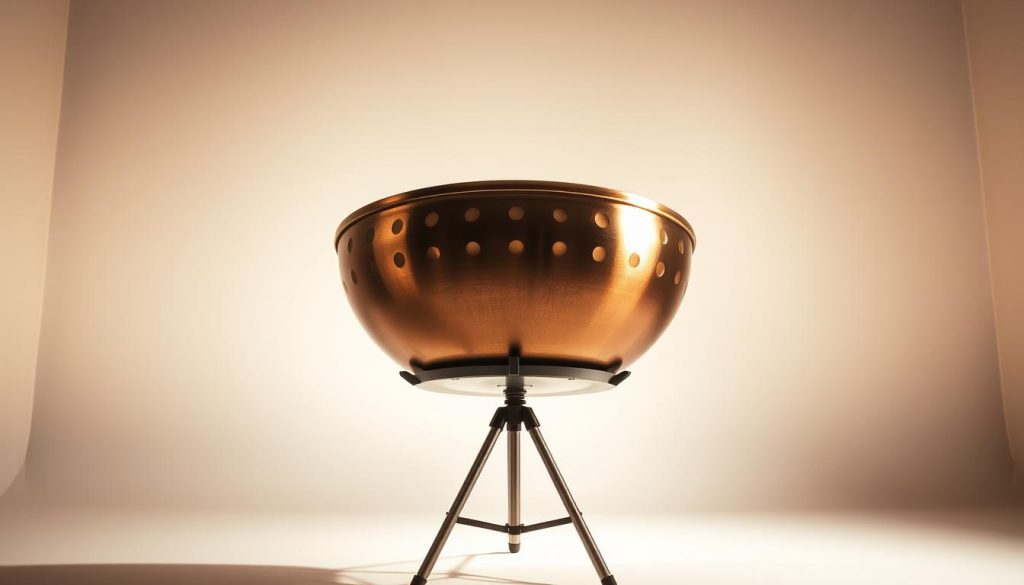
Safety & maintenance
Check the screw threads, safety pin and grip of the tips before each session.
- Adjust the tilt (up to 30°) to align the dome with your posture.
- Check the rubber, foam pads and suction cups to prevent scratches and slipping.
- After playing, wipe the contact areas and store the folded stand in its bag.
| Step | Action | Result |
|---|---|---|
| Position | Extend and lock the support | A stable playing base |
| Contact points | Position three support points on the bottom shell, between the notes | Preserved resonance and secure support |
| Maintenance | Visual inspection and gentle cleaning | Protected tips and longer service life |
Offers & services: prices, delivery, warranties and additional accessories
Compare offers quickly to choose equipment that suits your playing and budget.
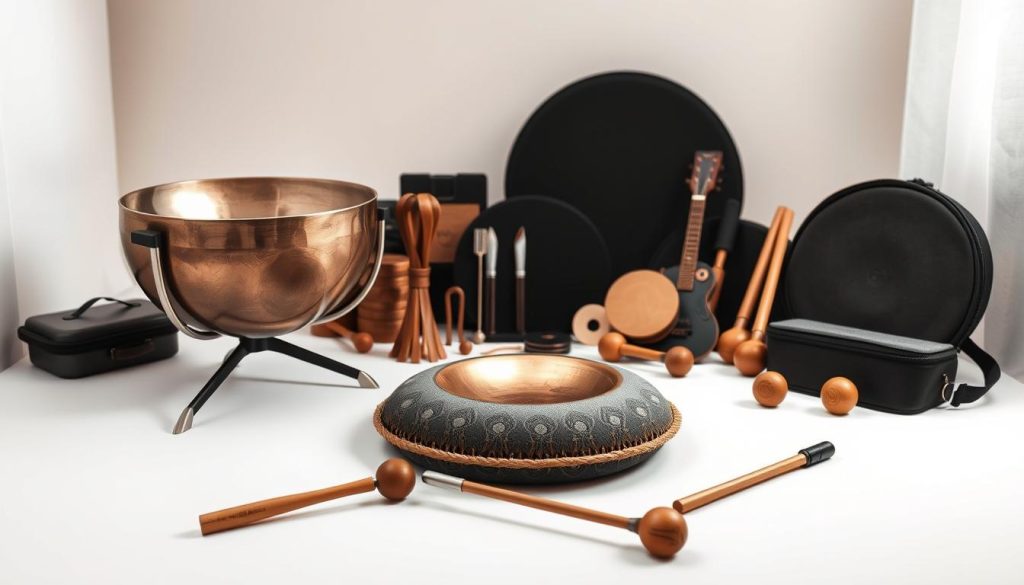
Choosing the right model depends on how you use it: in the studio, on stage or while travelling day to day.
Choose your system
The retractable model is listed at €89.90. Free delivery is advertised, along with a 12-month warranty.
The lightweight SPand (2.4 kg) offers adjustable height, a locking mechanism and supports with foam pads and suction cups.
The Metal Sounds multi-position model (≈ 4 kg) includes a carrying bag, a safety pin and natural rubber heads. For information about this model, see the Metal Sounds multi-position listing.
Useful accessories
- Ischell C2 contact microphone for precise sound capture.
- CAPE COD cloth for polishing and protecting the shell.
- Specialist mallets for varying the tone.
- Baubuche wall mount (made in France) and drum cases.
| Option | Price | Weight | Service |
|---|---|---|---|
| Retractable | €89.90 | 1.6 kg | Free delivery, 12-month warranty |
| All-in-one SPand | Varies | 2.4 kg | Locking mechanism, supports with foam pads and suction cups |
| Metal Sounds multi-position | Higher | ≈ 4 kg | Carrying bag included, multiple adjustments |
Practical tip: choose according to how you will use it. For transport, favour lightweight folding models.
Conclusion
The best option combines precise adjustments, shell protection and easy transport.
For the stage, prioritise the precision and stability of a multi-position stand with a safety pin and carrying bag. For travel, a lightweight tripod (1.6 kg, €89.90) is easier to carry. The lockable, height-adjustable SPand remains a versatile option.
Proper setup protects the instrument, lets the notes on the bottom shell resonate freely and improves playing consistency, whether seated or standing. Check the height range, locking mechanism and rubber tips to protect the finish.
Compare prices according to your needs, and consider a carrying bag and recording accessories. To explore the multi-position model, consult the Metal Sounds multi-position listing and make the most of every note on your handpan.