
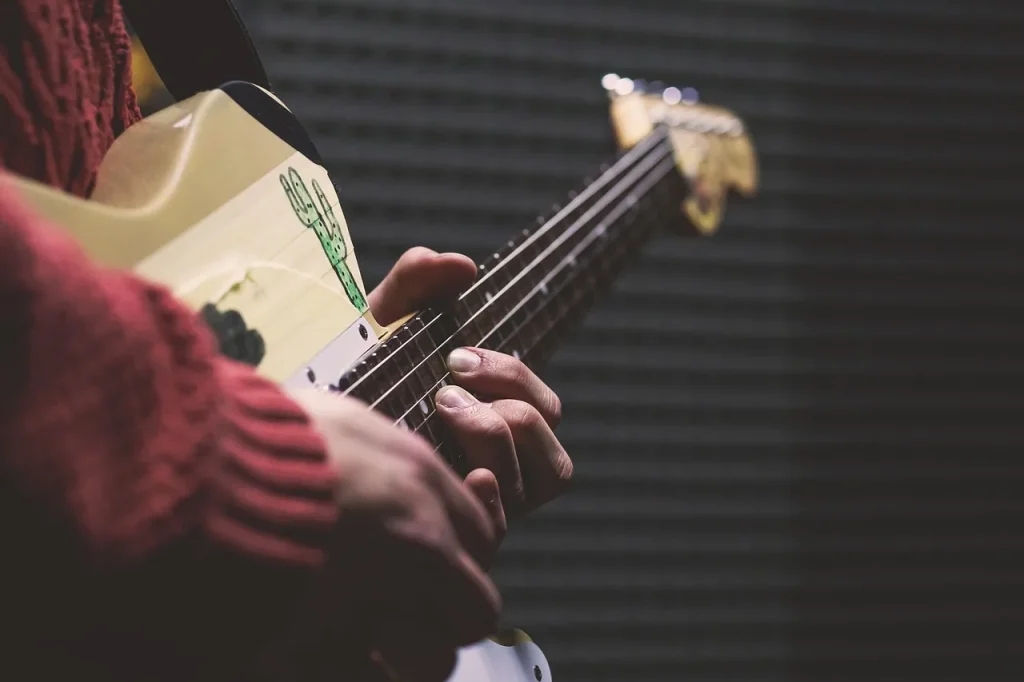
Why this combination works: these two instruments have a natural connection. The handpan’s percussive tone answers the guitar’s strings. Together, they offer a rich palette for contemporary music.
Clear goals: learn to match keys, divide the musical roles, and shape textures. This article offers practical ways to create interlocking rhythmic patterns and melodic accompaniment.
The possibilities range from ambient and world music to modern folk and fusion. A consistent melodic and rhythmic thread guides the listener and keeps the music cohesive onstage and in the studio.
We also address practical questions: which instruments can broaden the sound without weakening the duo’s identity, how to maintain balance, and how to tune the guitar to play with the handpan and open up more creative possibilities.
A practical approach: each section offers concrete advice for turning ideas into pieces you can play now.
Why this combination works today: timbres, textures, and each instrument’s role
The tonal colors of these instruments create a natural dialogue that invites melodic exploration.
Complementary timbres: the handpan has a warm, resonant sound. The guitar adds percussive sounds and harmonics. Together, they leave room for the music to breathe and remain clear.
The roles are easy to define. The handpan often carries the driving notes and short melodies. The guitar strengthens the harmonic foundation, adds countermelodies, and provides subtle rhythmic accents.
Sound quality shapes the arrangement: the handpan’s gentle attacks contrast with the strings’ crisp articulation. Varying texture and density helps avoid repetition.
- Alternate long and short notes to preserve space.
- Answer sustained notes with open guitar chords.
- Favor natural sounds and use effects sparingly to keep each part clear.
Practical tip: tuning the guitar for D minor makes it easier to play as a duo. For more ideas, see this useful resource on instruments that pair well with the handpan.
Handpan and guitar duo: arrangement ideas
Start by choosing a clear key so the instruments can work together. A handpan in D minor makes it easy to tune the guitar, whether you use standard tuning or an open tuning such as DADGAD.
Identify the main notes—D, F, G, A, and C—so you know which to emphasize and which to let ring. Fingerstyle lines can then bring out the natural resonance and create genuine countermelodies.
Assign roles: give one instrument a melodic and rhythmic ostinato and the other harmonic depth. Try i–VII–VI–VII or i–IV–vii° in D minor, using sus2, add9, and quartal chords to leave room for sustained notes.
To bring the rhythm to life, combine steady ostinatos on the beat with muted chord playing or damped notes on the offbeats. Work on attack, silence, and dynamics.

| Element | Approach | Benefit | Tip |
|---|---|---|---|
| Key | D minor / DADGAD | Resonance and easy tuning | Identify D, F, G, A, and C |
| Melodic role | Ostinato and short patterns | Keeps the music moving | Vary the syncopation |
| Harmony | Fingerstyle, open chords | Depth without overcrowding | Inversions and add9 chords |
| Texture | Light delay and reverb | Creates a sense of space | Adapt effects to the room’s acoustics |
Broaden the sound: add other instruments without losing the duo’s identity
To enrich the duo without overwhelming it, add each instrument in small, deliberate touches. Keep the central theme clear while exploring new sounds.
Strings and bows
Cello: use singing legato bass lines to add depth. Avoid routinely doubling the guitar’s bass line; favor contrary motion instead.
Wind instruments and airy melodies
The flute (bansuri or Native American flute) brings an airy sound that suits ambient and world music. Leave space for its melodies to avoid clashes between registers.
Keyboards for harmony
Piano: use the upper registers and light left-hand chords. Electric keyboards can add subtle pads that fill out the sound without obscuring each note’s attack.
A grounding drone
The didgeridoo creates a strong, earthy drone. Centering it on the tonic or dominant helps ground trance and spiritual pieces.
- Introduce other instruments in small touches.
- Keep the low frequencies in check if they become too dense.
- Give each musical voice room to preserve the duo’s identity.
| Instrument | Role | Tip |
|---|---|---|
| Cello | Singing bass line | Legato, contrary motion |
| Flute | Airy melodies | Dorian and Aeolian modes, appoggiaturas |
| Piano / keyboards | Harmonic support | Widely spaced chords, subtle pads |
| Didgeridoo | Deep drone | Center it on D or A; manage breathing |
Rhythm and production: percussion, loop stations, and effects for contemporary performances
To add movement without weighing down the music, make the pulse serve the main pattern. The cajón provides high slaps and low hits that work especially well with the handpan.
Add a pulse: bring in shakers and tambourines on the offbeats. These small percussion instruments add texture without overpowering the main sounds.

Loop stations and control of layers
Start by recording a simple handpan pattern on the beat. Then layer the guitar over it, perhaps using fingerstyle, and keep the number of layers limited.
Creative effects in the studio and onstage
Use tempo-synced delay and short reverb to extend the resonance without blurring the rhythm. Soft synth pads heighten the sense of space for a cinematic feel.
- Complementary groove: the cajón holds the pulse while the handpan plays contrasting rhythms.
- Layer control: set up an immediate mute control so you can stop the loops if the mix becomes too dense.
- Recording: capture the percussion both with and without effects to make studio mixing easier.
| Element | Use | Benefit | Tip |
|---|---|---|---|
| Cajón | Main pulse | Rhythmic clarity | Balance low hits and high slaps |
| Shakers / tambourine | Texture | A light touch | Low volume, offbeats |
| Loop station | Live arrangement building | Flexibility | Limit layers and save presets |
| Effects / pads | Atmosphere | A fuller sound | Short reverb, tempo-synced delay |
In rehearsal, in the studio, and onstage: workflow, placement, and sound balance
Thinking about instrument placement during rehearsals helps preserve a clear sound in the studio and onstage.

Rehearsal: follow a simple routine—warm up, balance your dynamics, and practice transitions at tempo. Record each session to hear the balance between the right and left hands and note what needs improvement.
Stage placement: angle the instruments slightly toward each other. Place the handpan in the center of the sound field and the guitar a little to one side to help maintain visual contact with the audience.
Microphones and preamps: try a pair of condenser microphones (KM184, C414) above the handpan. Add a ribbon microphone (Coles 4038) for warmth and a dynamic microphone (M88) for percussion. Choose Neve or API for color, or Millennia or Studer for transparency, and note your gain settings so you can reproduce the same sound in the studio.
Monitoring and processing: limit how much direct handpan sound you send to stage monitors. Favor in-ear monitors. Compress the guitar lightly, preserve the handpan’s attacks, and apply a gentle high-pass filter to both sources.
| Element | Action | Why | Tip |
|---|---|---|---|
| Workflow | Warm up and record | Track progress precisely | Listen back after each take |
| Placement | Handpan in the center, guitar to one side | Clear sound and visual contact | Play close to the audience if possible |
| Recording setup | KM184/C414 + Coles 4038 + M88 | Transparency and warmth | Document microphones and preamps |
| Set order | Alternate dense and spacious pieces | Preserve headroom | Test dense passages during soundcheck |
Documentation: note which microphones, preamps, and placements work with your handpans. Keep those notes to improve your performances and achieve a consistent sound each time.
Inspiration and references: duos and performances that spark ideas
Watch how some duos turn a concert into a musical conversation.

Percussive dialogue and the energy of live performance
TwinPan illustrates this principle. Born from an improvisation at the Handpan Festival in 2015, the project performs back to back and carries that energy into the studio.
Their approach: write arrangements in which the two instruments answer each other in real time, supported by cajóns and foot percussion without being masked by them.
Paths into fusion and world music
Giolì & Assia show how handpan and piano can come together in a modern, immersive sound. Consider adding a cello for a singing bass line, too.
- Alternate contemplative passages and rhythmic sections around a strong melody.
- Introduce wind instruments, strings, or pads in subtle touches.
- Arrange duo versions for intimate venues.
| Reference | Strength | Practical idea |
|---|---|---|
| TwinPan | Live energy | Organic transitions |
| Giolì & Assia | Modern depth | Piano and percussion textures |
| Handpan and cello | Singing bass line | Contrary motion |
Conclusion
To finish, structure your pieces around a key and a clear role for each instrument. You now have practical starting points: a key (D minor is recommended), ostinatos, open chords, and rhythmic choices for building a strong duo.
Quick recap: support the handpan’s ethereal notes with responsive guitar playing, let the sounds breathe, and use depth in moderation. Bring in flute, piano, or cello occasionally to add color while preserving the two instruments’ identity.
In the studio or onstage, pay attention to microphone placement, instrument positioning, and reverb. Try a 60-minute session: work on one idea per section, record it, and repeat it three times to improve it.
Final thought: keep it simple and focus on the theme. The combination works especially well when you leave space and let rhythm and melody connect with the audience.