

Welcome. This article sets out what you need to know about the cost of this unique instrument and why it is often worth the price. The aim is simple: to help you choose a handpan according to your budget and sound preferences.
In France, prices range from credible entry-level models at around €800–1,200 to custom and prestige models at €3,000–5,000 or more. A good nine-note model with a case typically costs between €1,000 and €2,500. Models under €1,000 are rarely reliable.
The main reasons? Handcrafting, hours of tuning, the choice of metal and the makers’ reputations all affect market prices. This guide explains these factors and offers clear pointers for a considered purchase.
Be careful: very low prices often conceal a risk of poor tuning stability. Follow this guide step by step to assess price, stability and sound quality before buying.
Understanding handpan price differences in France today
The French market still has a wide range of prices, reflecting the instrument’s historical scarcity and the variety of manufacturing methods.
The phrase handpan price reflects this complexity: demand has often outstripped supply, creating waiting lists. Since 2020, Asian production has expanded the range of options and made some models more affordable.
Even so, handpan making in France remains largely artisanal. Each shell is formed and tuned by hand, taking many hours and requiring time and experience. These tasks explain why some workshops charge more.
The contrast between partly industrial production and fully handmade instruments is clear. Industrial production can reduce costs, but tuning consistency and after-sales support are often better with local makers.
- Variable availability: stock levels and timing affect prices.
- Uneven quality: more choice does not always mean better performance.
- Buyer expectations: tuning stability, lead times and after-sales service.
| Type | Advantage | Limitation |
|---|---|---|
| French artisan | Stable tuning, ongoing support | Long lead times, higher cost |
| Asian production | Better availability | Variable quality and consistency |
| Partly industrial production | Lower price | Precise tuning can be difficult to achieve |
For a practical comparison, visit the French Shellopan workshop and assess the differences between its models and services for yourself.
How much does a handpan cost? Price factors explained
From pressing to final tuning: each handpan goes through shell shaping, pressing of the note fields, heat treatments and several rounds of tuning. These repeated steps take hours of patient, precise work.
The choice of metal strongly affects sound and longevity. Nitrided steel remains a standard because it balances sound and durability. Stainless steel and Ember Steel offer greater corrosion resistance and long sustain. Untreated steel produces rich overtones but needs more care.
Tuning is central to the instrument’s value: stabilizing the fundamental and overtones calls for an artisan’s experience. Established makers provide tuning stability and consistency over several years.
Finally, reputation, finishes (patina, engraving), the case and retuning services add to perceived value. Asian production has broadened the market, but local artisans remain important for tuning stability and accuracy.
For more detail, read this analysis of the value of instruments.
Current price ranges: from beginner models to premium instruments
It helps to distinguish three market segments. Each tier reflects tuning time, material choices and the care put into the craft.
Quality entry-level models
Indicative price: €800–1,200. These straightforward models suit beginners. Be aware that below €1,000, tuning stability may be limited.
Mid-range value
Indicative price: €1,200–2,500. Most models with 8–11 notes and decent finishes fall within this range. A case and after-sales service are often included.
Premium and custom models
Indicative price: €3,000–5,000 or more. These are signed pieces made with premium metals and tuned for many hours by an artisan. They aim to offer the best sound quality and durability.
2023–2025 updates
Production from abroad has expanded the range of options, but higher energy and material costs keep European-made instruments at a higher price. To assess what an instrument really costs, consider the average price, tuning stability, tone and after-sales service.

Number of notes and configurations: how they affect the price
Each additional note requires more workshop time and fine adjustments. The number of notes therefore directly affects the instrument’s value.
8–10 notes: the common compromise
These models remain the standard for starting out and improving. Expect to pay around €1,200–2,000 for well-tuned instruments ready to play.
11–15 notes: complexity and range
Additional note fields open up a wider range of scales. Configurations such as a double Ding, off-centre Ding or central high notes take more time and often cost €1,800–3,000.
Bottom notes, Mutant and Master Piece models
Extended ranges add depth but can create interference. These specialized models generally start at €2,000–3,500 and go higher. Technical solutions, such as plugs in the sound hole, help stabilize the sound.
- Direct link between the number of notes and the price: more work means higher costs.
- Advice: 8–10 notes for beginners; experienced musicians may consider 11 or more, depending on their repertoire.
- The role of scales: some rare scales increase the price because they require precise adjustments.
New, used or “cheap”: how to choose wisely
Choosing between new, used and very low-priced offers means weighing the benefits and risks. Your decision affects sound stability and after-sales support.
New handpans: tuning assurance, quality and service
Buying a new handpan gives you confidence in its initial tuning. A case is often included, and the maker may offer retuning.
After-sales service is a real advantage for longevity. This is the best option for anyone who wants a clear record of how the instrument was made.
Used handpans: opportunities and checks
Used instruments can be good deals. Keep an eye on Le Bon Coin, Rakuten, eBay and Facebook groups.
Ask for a recent video, a tuning certificate and details of the model’s origin. Test the stability of the notes and check for rust or dents.
“Cheap” offers and counterfeits: warning signs
Offers below €700–1,000 carry a high risk. The instruments are often poorly tuned or purely decorative.
If the price seems too low, be cautious: choose a reputable platform and ask whether the artisan can retune it.
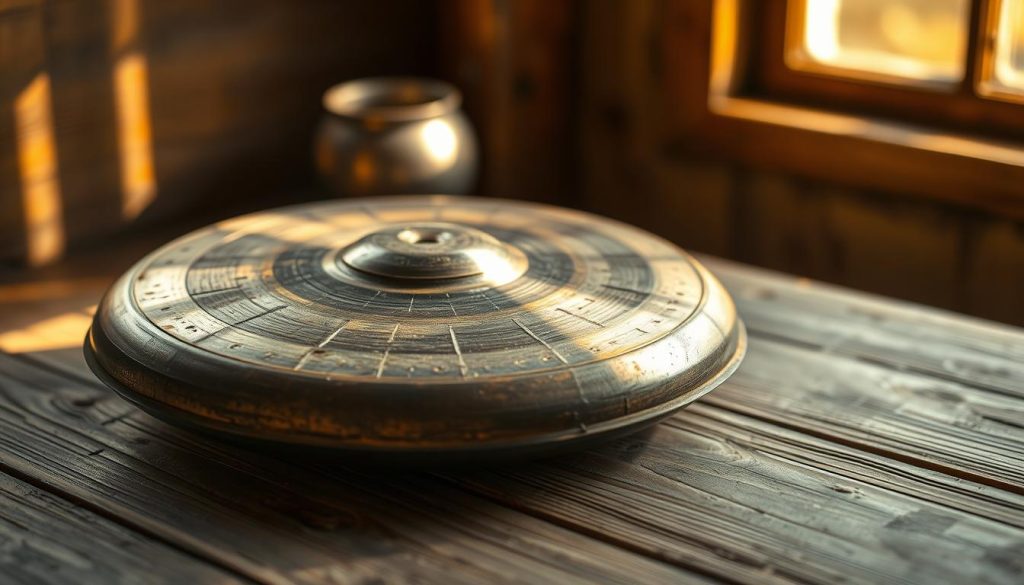
| Option | Advantage | Risk |
|---|---|---|
| New | Guaranteed tuning, after-sales service, case | Higher initial cost |
| Used | Often lower price, availability | Out-of-tune instrument, uncertain origin |
| Very cheap | Affordable | Counterfeits, poor tuning stability |
Where to buy a handpan at a fair price: options and good practices
For the best value, favour sellers that let you try the instrument, provide support and are transparent about its origin.
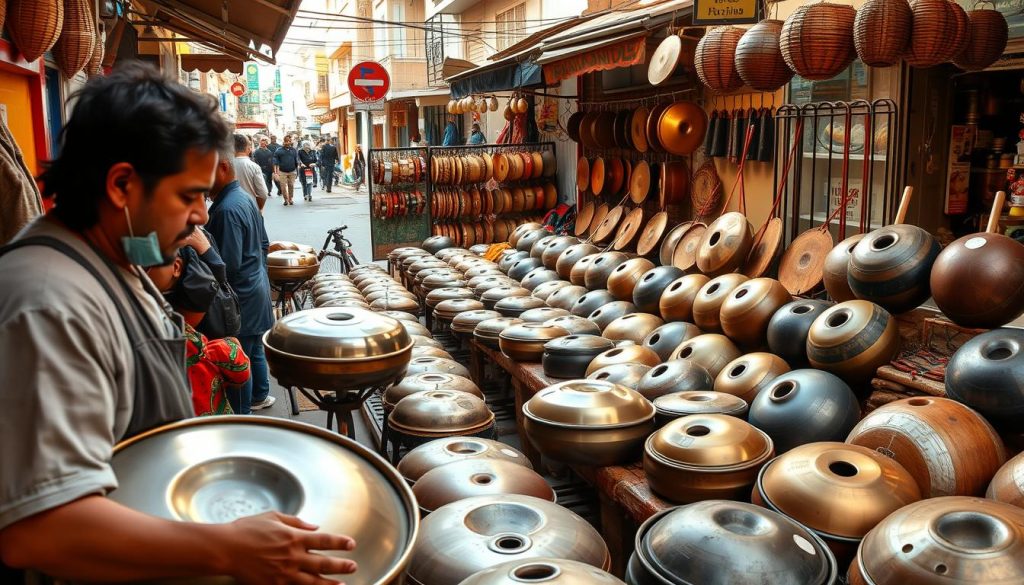
From a maker or artisan
Advantages: personalized advice, workshop trials and genuine after-sales service. Artisans often offer retuning and ongoing support.
Bear in mind: lead times vary; the wait is often worthwhile for stable tuning.
Specialist music stores in France
Useful options include Woodbrass, Percussions du Monde, La Baguetterie (Paris) and Djoliba (Toulouse), where you can try several instruments.
You get in-store guidance and a direct contact for delivery and warranty matters.
Buying online
Choose makers and specialist retailers. Ask for a recent video and a tuning certificate before paying.
Avoid marketplaces offering steep discounts without technical information or service. Compare handpan prices while accounting for delivery and possible retuning costs.
| Channel | Advantage | What to check |
|---|---|---|
| Maker or artisan | Personalized support, retuning | Lead times, initial cost |
| Specialist store | Try before buying, advice | Limited choice, in-store price |
| Online retailer | Wide selection, direct access | Check videos, certificates and reviews |
Good practice: always compare the price with the level of service and warranty. For a confident online purchase, look at this store, for example, to buy a handpan and check its tuning documents.
Making the most of your budget: selection criteria, value and extra costs
To make the most of your budget, start by defining how you intend to use the instrument and what you expect from its sound.
A simple list of requirements makes the choice easier and helps you find the best quality instrument at the right price.
Key criteria
Scale: D Kurd, C-sharp Pygmy and other scales affect tone and cost.
Number of notes: 8–10 for beginners, 11 or more for additional nuance and complexity.
Material: nitrided steel, stainless steel and Ember Steel affect durability and sound quality.
Use: studio, meditation or stage. The model should support your musical development.
Additional costs to plan for
- A reinforced case for transport.
- A suitable stand, especially if the instrument has deep bass notes.
- Corrosion prevention and specialist care products.
- Periodic retuning and delivery charges.
- Check that the retailer provides a video and tuning certificate, as well as warranties and service.
Compare several offers using the same criteria. Assess value for money, then allow for extra expenses so you can buy with confidence.
Conclusion
In short, your choice depends on the scale, the number of notes and tuning stability. ,
To judge what an instrument costs today, keep these ranges in mind: credible entry-level models at €800–1,200, mainstream models at €1,200–2,500 and premium models at €3,000–5,000 or more. Quality depends on the craftsmanship, the chosen steel and the attention given to the overtones.
Before buying a handpan, ask for a video and a tuning certificate. Assess the after-sales service, compare models using the same criteria and account for extra costs such as maintenance, retuning and delivery.
Choose according to your musical needs. Favour established makers and artisans so you can buy with confidence and get the best value for money.