
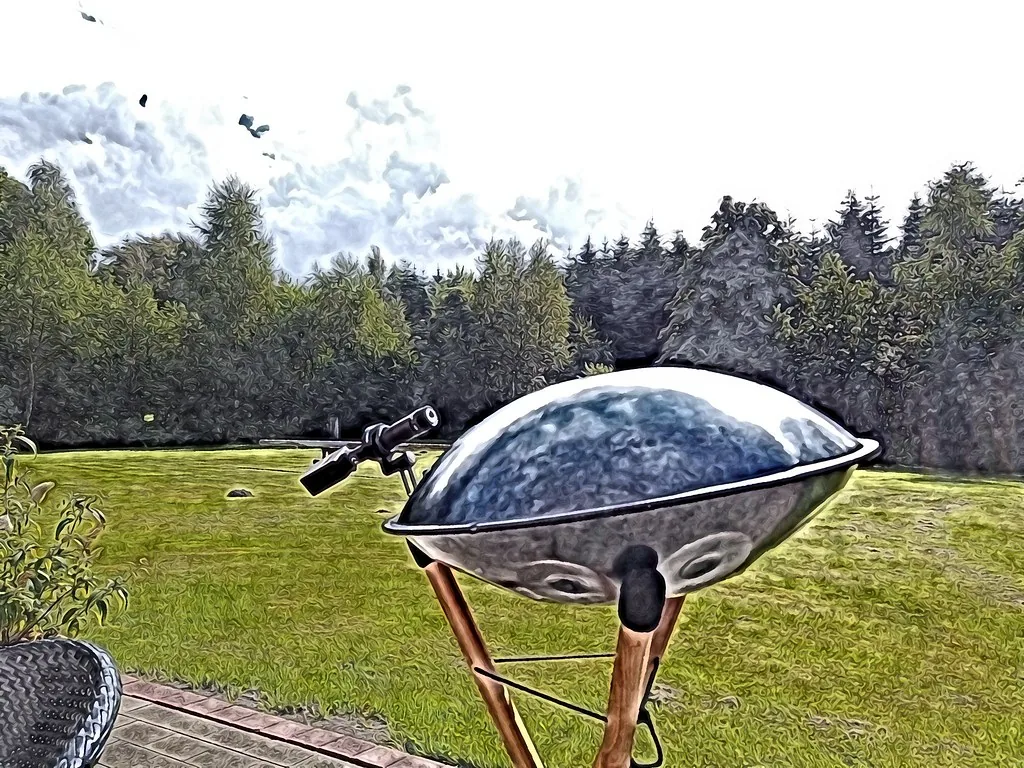
Introduction: this guide sets the stage for gentle practice. The handpan is an instrument made of nitrided steel, with a central note and surrounding notes. Its long resonance and harmonious tones make it an ideal companion for a peaceful transition to sleep.
Goal: to offer a step-by-step method. We show you how to play slowly, as well as how to listen and feel. The aim is to create a sound journey without sudden increases in intensity, accessible to beginners.
This guide covers the physiology of vibrations, preparation, tempo, playing techniques, and resources such as courses or an e-book. What you will learn: practical ways to set the tempo, choose gentle scales, and synchronize breathing with patterns to establish a reassuring evening ritual.
Why the handpan can help you fall asleep and sleep restfully
The instrument’s sustained sounds provide an auditory anchor and help calm the nervous system.
Its structure, made up of tuned membranes and a resonating chamber, produces long-lasting vibrations. These enveloping reverberations can ease hypervigilance. Gentle attacks and low frequencies encourage contemplative listening, similar to meditation.
Vibrations, resonance, and well-being
Regular vibrations can ease physical tension. Sustained notes create a predictable progression of sound. Fewer changes in volume mean fewer surprises and less cognitive effort.
Brain waves and soothing frequencies
Slow, steady sequences may support the relaxed states associated with alpha and theta waves. A simple approach—listen for a few minutes, then play minimal melodies—can help the mind settle toward deep rest.
| Element | Effect | Practical application |
|---|---|---|
| Long vibrations | Reduced hypervigilance | Listen passively for 3 to 5 minutes before playing |
| Low notes | Physical calm | Favor lower scales and sustained notes |
| Sustained resonance | Predictable sound | Simple patterns with few changes |
| Guided lessons | More consistent movements | Learn to sustain resonance without striking hard |
Prepare your space, instrument, and mind before playing
A calm, consistent setting makes it easier to connect your breath, touch, and sound. Before you begin, dim the lights, adjust the temperature, and choose a firm seat. Put phones in airplane mode to reduce distractions and encourage inward listening.

Setting the mood and grounding your breath
Breathing: spend 2 to 3 minutes breathing slowly: inhale for 4 counts and exhale for 6 to 8 counts. This rhythm can help slow your heart rate and prepare your mind to listen.
Setting a slow tempo: metronome and BPM guidelines
Set a metronome between 40 and 60 BPM. This reference helps steady the tempo and creates a reassuring rhythm.
- Place the instrument at a comfortable height to avoid shoulder tension.
- Begin with light strikes to produce long resonances.
- Follow a structured method: online lessons with an overhead view and intuitive notation can make learning feel easier.
- Protect the instrument and store it away from moisture; a case helps preserve its sound quality.
- Practice regularly: 10 to 15 minutes each evening is enough to establish a calming ritual.
“This instrument responds to intention: the calmer the setting, the more fully its resonances unfold.”
Handpan rhythms for sleep: slow, flowing patterns
Measured tempos and simple patterns make room for a calming practice. A slow, steady pulse can reinforce a sense of calm and ease mental restlessness.
Recommended BPM and how the tempo feels
Tip: keep the metronome between 40 and 60 BPM. Below 60 BPM, a steady rhythm may feel reassuring and encourage relaxation.
Repeating patterns, pauses, and resonance
Build short patterns: alternate 2 or 3 predominant low notes. Let the resonance fade before the next strike.
Add deliberate pauses so the vibrations can fill the space. The gradual fading of the sound invites the mind to relax.
Examples of flowing sequences
- Suggested tempo: 40 to 60 BPM, with gentle, widely spaced strikes.
- Minimal pattern: the right hand plays a low note every 2 beats; the left hand plays a middle note every 4 beats.
- Leave the 8th beat silent so you can breathe and listen to the resonance.
- Duration: 8 to 12 minutes; note how you feel after each session.
Begin with two measures of a pattern, add one measure of silence, then repeat with subtle variations.
Playing and striking techniques for softer sounds
A controlled touch protects the tuning while bringing out soothing tones.
Hand placement: place your hands over the playing areas and aim for the “sweet spot,” slightly off-center from each dimple. This produces a clear, discreet attack without striking hard.
Striking and control: keep your fingers slightly curved and relaxed. Make brief contact, then lift away immediately to maximize resonance and reduce unwanted noise.

Touch quality and dynamics
Play quietly and vary the accents only slightly to keep the sound even. Your palm can create muted touches on the central note, the ding, and anchor the pattern.
- Alternate your right and left hands across 2 or 3 notes to establish a steady flow.
- Avoid mallets at night; if needed, choose very soft heads and strike very gently.
- Record short sessions to identify clicks or finger noises and refine your technique.
| Aspect | Tip | Effect |
|---|---|---|
| Hand placement | Slightly off-center sweet spot | Clear attack, less noise |
| Strikes | Curved fingers, brief contact | Better resonance |
| Accessories | Soft gloves if needed; avoid mallets | Helps preserve sound quality and tuning |
Controlled strikes make each note more expressive and support an overall sense of calm.
Choosing a scale and notes for nighttime playing
A suitable scale makes improvisation easier and limits harmonic tension.
The ding serves as an anchor here. Choose a stable, warm central note to give the session structure. Play around it to keep the melodic line simple.
Favor pentatonic scales or gentle modes. These scales reduce dissonance and make improvisation feel more natural.
Reference notes and exploration
Choose 3 or 4 reference notes and build slow, repeating patterns. This avoids the stimulation of sweeping melodic runs.
Listen to each note: its tone, how long it resonates, and how it blends with neighboring notes. Nitrided steel provides long resonance, well suited to calm tempos at the end of the day.
- Favor low and middle notes to create an enveloping atmosphere.
- Use steps and thirds for soothing melodies.
- Finish near the ding for a gentle ending.
| Element | Tip | Expected effect |
|---|---|---|
| Central note, the ding | Choose a stable, warm note | Anchor and structure |
| Scales | Pentatonic scale or gentle modes | Less dissonance, easier improvisation |
| Reference notes | 3 or 4 points of reference | Slow, repeating patterns |
| Exploration | Try each note gradually | Better overall harmony |
“A well-tuned instrument makes it easier to improvise with confidence and calm each evening.”
Frequencies, resonance, and harmony: making the most of soothing sounds
Tuning choices and the instrument’s tone shape the listening experience and the quality of a calming soundscape.
432 Hz or 440 Hz: 440 Hz remains the standard reference pitch in music and makes it easier to play with other instruments. Some listeners perceive 432 Hz as softer. Choose according to your experience and how well it fits your ensemble; try both to see which helps you meditate.

Steel resonance and sustain
The acoustic system—steel, membranes, and chamber opening—shapes the projection and duration of the sound. Good resonance lets the sound waves intertwine without becoming overwhelming.
Synchronizing breathing and patterns
Matching strikes to your breathing can help the nervous system shift toward a restful state. A simple example: inhale for 4 counts, pause, then exhale slowly while placing 1 or 2 widely spaced strikes.
- Play quietly so resonance can carry the music.
- Choose consonant intervals for gentle harmony.
- Try the same sequence with two tunings and note how each affects your relaxation.
Bringing pitch, breath, and harmony together creates a continuous soundscape conducive to inner peace.
Progressive exercises for bringing these rhythms into your bedtime routine
A gradual approach makes it easier to incorporate calm patterns into your evening.
Guided 10-minute routine: 2 minutes of grounding breathwork, 6 to 7 minutes of guided free playing at a very slow tempo, then 1 to 2 minutes of silence as the resonance fades.

Guided routine: grounding, pattern, silence
Begin with your breath: inhale for 4 counts and exhale for 6 to 8 counts. A subtle strike at the start of each exhale helps synchronize breath and touch.
First simple exercise: alternate two low notes over 4 beats. Insert a pause every 8 beats. Keep the volume very soft.
Exploration and variations: each note as a sensory reference
Then add a third, middle note every 4 measures to enrich the pattern without making it stimulating. Listen to the texture and duration of each note, and feel its vibration on your skin.
Record a short session to check the steadiness of your tempo. Add a body scan: relax your shoulders, jaw, and wrists at each pause.
- Goal: consistency rather than performance.
- Recommendation: follow progressive lessons and use an e-book to structure your learning.
- Access across devices makes practice and progress tracking easier.
| Step | Duration | Expected effect |
|---|---|---|
| Grounding breathwork | 2 minutes | Slow the heart rate |
| Guided pattern | 6 to 7 minutes | Establish an evening routine |
| Final silence | 1 to 2 minutes | Let the fading resonance reinforce the calm |
| Progress tracking | Regular recordings | Improve playing consistency |
“Aim for consistency: a short, calm ritual is better than a long, stimulating session.”
Tools and resources for steady progress
Suitable resources can turn practice into a simple, lasting ritual.
Intuitive notation: a visual system of symbols and color codes makes slow patterns easier to read and sequences easier to remember. Left- and right-hand cues on the screen match the movements you need to make, reducing confusion.
Notation, e-book, and progress tracking
A printable exercise e-book accompanies each lesson. It includes practice sheets, progressive exercises, and space to record your progress evening after evening.
Online courses, access across devices, and community
Video lessons offer an immersive overhead view. This makes it easy to follow the movements on a computer, tablet, or phone.
Private community: live workshops, challenges, and coaching can help you practice regularly. Discussions and feedback can help you soften your strikes and play more consistently.
Tip: schedule two short sessions each week using the same lesson to establish the ritual.
| Resource | Benefit | Consideration |
|---|---|---|
| Intuitive notation | Easier learning | Ideal for beginners |
| E-book | Offline exercises | Printable resource |
| Online courses | Immersive view | Access across devices |
| Private community | Coaching and workshops | Helps sustain regular practice |
Prices and guarantees: compare lifetime course access with a subscription based on how often you expect to use it. A 14-day money-back guarantee lets you try an offering and see whether it suits your relaxation goals.
Instrument care, protection, and sound quality
Protecting and caring for your instrument helps preserve the purity of its notes and the life of its steel. Regular maintenance preserves its tone and helps prevent oxidation.
Cleaning: wipe it with a soft cloth after each session. Use products specifically compatible with nitrided steel and dry the surface completely.
Storage: place the instrument on a flat surface, away from sunlight and moisture. Choose a padded case for travel and overnight storage.
Playing precautions: avoid hard strikes and do not hit outside the intended playing areas. Poorly controlled blows can put the instrument out of tune.
- Try gloves and mallets: they change how the instrument feels and sounds.
- Check the chamber and surface: remove particles to prevent a muffled sound.
- Investing in a good case and suitable care products reduces repair costs; their price pays off over time.
| Item | Tip | Effect |
|---|---|---|
| Padded case | Choose one that fits the instrument | Protection during transport |
| Cleaning | Soft cloth and compatible product | Preserves tone and sound quality |
| Storage | Dry place, flat surface, and shade | Preserves the steel’s resonance |
| Accessories | Gloves or very soft mallets | Adjust the tone without damaging the instrument |
A well-maintained instrument produces the long, gentle sounds essential to a calm practice.
Conclusion
Turn each session into a simple ritual that invites calm.
Summary: use very slow rhythms, a light touch, and attentive listening to make the instrument an evening companion. This guide aims to make the practice accessible and safe.
Each session becomes a personal journey. Exploration deepens the experience over time. A short daily session can have a cumulative effect on well-being.
Connect breath, resonance, and a simple melody to find inner harmony. Small technical adjustments can make a substantial difference to the quality of your rest.
To progress, choose clear resources: lessons, notation, and a community offer a structured way to learn. Begin with gentle approaches, then choose options priced to suit your needs.
Final intention: make your handpan a tool for evening meditation. Let each pattern be another step toward restful sleep.