

Purpose: this article offers a structured, useful review of an Italian maker active since 2007.
Here you will find a clear introduction to the brand and what sets it apart: a focus on 432 Hz tuning, handmade production, careful finishes and acoustic innovations such as a flexible-membrane Ding and notes beneath the shell.
Our assessment covers the series, materials, sound quality, prices (from about €1,400 to more than €4,000) and customer feedback.
Positioning: premium handcrafted instruments, made in Italy and recognized worldwide for their distinctive sound.
We also look at official accessories (cases, stands and wall mounts), merchandise and more affordable tongue drums.
Finally, the article considers limitations and credible alternatives, then offers practical advice for choosing an instrument that suits the way you play.
Why review Battiloro Handpan now? Context and purpose
Renewed interest in 432 Hz tuning is the reason for this article today. This article aims to help musicians seeking a reliable instrument make an informed choice.
The debate between 432 Hz and 440 Hz affects the position of some makers. In music therapy, 432 Hz is often perceived as calming, but it can create difficulties when playing with an ensemble.
Our aim: to provide a reasoned, current and transparent review. We assess strengths, limitations and alternatives so that your investment enriches your musical life.
Practical points:
- Stock levels and seasonal releases (especially in August) can affect lead times.
- Retailers offer quick access to instruments; you can also try them in person at the maker’s Italian workshops.
- Testimonials and feedback strengthen this established maker’s credibility.
By the end of this section, you will have a clear view of availability at the workshop and through retailers, along with advice on choosing a musical instrument suited to your plans.
Battiloro Handpan, a recognized Italian maker in the handpan world
Since 2007, the brand has made a name for itself through entirely manual production and a distinctive sound.
The maker has chosen 432 Hz as its signature. Combined with careful finishes and innovations — notably a flexible-membrane Ding and notes beneath the shell — this choice clearly distinguishes its instruments.
Craftspeople tune and check each piece carefully. This meticulous work helps explain the tuning stability, deep sustain and accurate intonation often mentioned in customer feedback.
Positioning: premium handcrafted instruments designed for demanding players. Their build quality is apparent in both their appearance and their musicality.
In the handpan world, this workshop occupies a place between renowned large workshops and small local makers. Its 432 Hz specialty has raised its profile and prompted considerable discussion among musicians.
The next section examines materials, ranges and series to explain the offering in greater detail.
Handmade in Italy: materials, stainless steel and quality
The choice of alloys and the maker’s craftsmanship determine the voice and sustain of each note. Craftspeople shape every instrument by hand, adjusting the domes with care. They check the notes precisely to ensure accurate tuning and balanced partials.
Craftsmanship, precision and note checks
The stages are slow and precise: hammering, shaping, annealing and then tuning. The craftspeople check that the harmonics are present and balanced.
Stainless steel, Ember Steel and their effects on sound
The use of stainless steel supports generous sustain and a stable sound. Silver and bronze finishes also affect the appearance and patina.
Some versions use Ember Steel (Perseide Ember Steel, for example). This choice extends sustain and gives the tone a richer resonance.
- Material → sound: the alloy and its treatment alter tone, projection and note sustain.
- Finish: a surface treatment that contributes to visual identity and protection.
- Durability: products designed to last with proper care.
| Feature | Stainless steel | Ember Steel |
|---|---|---|
| Sustain | Generous and stable | Longer and more resonant |
| Tone | Clear, with distinct projection | Warm and rich in harmonics |
| Common finish | Silver or bronze | A darker patina is possible |
| Recommended use | Solo playing and stage performance | Recording and longer pieces |
In short, the relationship between material, finish and intended use helps guide the technical choice. Thanks to this careful craftsmanship, players can feel differences in attack, response and tone between alloys.
432 Hz versus 440 Hz tuning: Battiloro’s specialty and musical uses
The reference pitch often shapes an instrument’s sonic identity. The 440 Hz standard remains the reference for playing in groups. It makes it easier to play in tune with a piano, guitar or orchestra.
432 Hz is perceived as softer and more soothing. It is often used for meditation, music therapy and solo performances. This tuning colors the scale and lends the notes a relaxed feel.
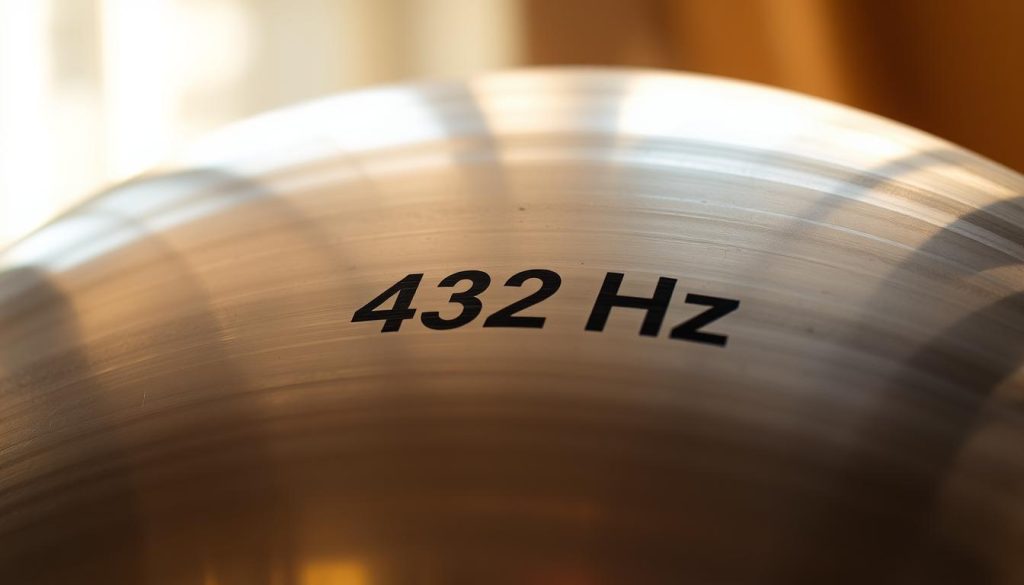
Choose according to how you will use it
If your priority is sound-based care, meditative playing or intimate recording, 432 Hz is an excellent choice.
However, when playing in an ensemble with other instruments tuned to 440 Hz, this reference pitch may cause intonation problems.
| Criterion | 432 Hz | 440 Hz |
|---|---|---|
| Recommended use | Meditation, solo playing, well-being | Ensemble playing, mixed-instrument concerts |
| Tone | Soft, relaxing | Neutral, standardized |
| Compatibility | Limited with standard-tuned instruments | Broad compatibility |
- Positioning: among handpan makers, Battiloro is known for its command of 432 Hz tuning.
- Before buying, listen to examples to compare the notes and overall sound.
- Consider whether you play solo or in an ensemble to refine your choice and assess value for money.
Scales, notes and sounds: the Battiloro signature
The choice of scales directly affects each model’s character and musical uses. C-sharp minor, D minor, E minor and F minor each have a very different color.
The arrangement of notes on the upper dome creates specific harmonic interactions. Each struck area resonates with its partials and shapes the overall sound.
The alloy and treatment of the steel alter response, sustain and projection. Some instruments therefore have deep, dark tones (Koray, Luna), while others sound more crystalline and bright (Sélène).
Modal scales such as Celtic and Pygmy broaden the instrument’s musical life. They guide playing toward meditation or performance, thanks to melancholy (D minor) or serene (D major) moods.
| Scale | Character | Recommended use |
|---|---|---|
| D minor | Melancholy, deep | Meditation, solo playing |
| D major | Clear, serene | Stage, ensemble |
| E minor | Warm | Recording, longer pieces |
| G-sharp minor | Low, powerful | Expressive performance |
Practical advice: try several models before buying to hear differences in articulation and assess compatibility with other instruments, especially in a 432 Hz setting.
Battiloro series and models to know
Let’s look through the series and leading models to better understand the range. This overview will help you choose according to scale and use.
Entry and midrange models
Yang (about $1,623) and Vega (about $1,740) provide a good starting point. They are tuned to 432 Hz and offer excellent value for tighter budgets.
Moon Series (stainless steel)
Koray, Sina, Sélène, Arianrhod and Perseide stand out for their tones: Koray is deep, Sélène crystalline and Arianrhod Celtic in character. Prices are around $2,200 to $2,560.
Advanced and flagship models
Chandra, Polyphemus, Noreia and Hathor add expressive possibilities (notes beneath the Ding and modal colors).
The 12- to 20-note series (Argus, Rhiver, Shedar, Persephone, Janam, Lilah and Kami) increase in technical complexity and price.
| Category | Example | Indicative price | Feature |
|---|---|---|---|
| Entry and midrange | Yang / Vega | $1,600 to $1,750 | 432 Hz, simplicity |
| Moon Series | Koray / Sélène | $2,200 to $2,560 | Stainless steel, sustain |
| Flagship models | Shandi / Kya | $4,300 to $4,660 | 20 notes, extended configurations |
Tip: base your choice on the complexity of your arrangements and your musical aims. The handpans often have mythological names and careful finishes that give them a distinctive look and sound.
Innovations: the central note and notes beneath the shell
Engineering applied to the Ding and inner notes opens up new musical possibilities. Two key innovations change the soundscape here: a flexible-membrane central note (Ding) and notes placed beneath the shell.
A flexible-membrane Ding for deep bass notes
The central note uses a flexible membrane designed to produce a deeper, more enveloping register.
This design creates a powerful rhythmic foundation, useful for meditative playing and percussive passages.
With stainless steel, the Ding becomes more stable and the low partials remain clear.
Additional notes beneath the shell: melodic possibilities
The notes beneath the shell extend the range and allow richer interplay between the right and left hands.
Models such as Chandra, Polyphemus, Shedar, Persephone, Shandi, Kya and Rhonan include these options.
Thanks to this configuration, musicians gain more scope for modulation and can create denser arrangements and broader melodic lines.
- Benefit: a better balance of sustain between low and high notes.
- Use: more expressive performances, compositions and solo sessions.
- Tip: try the instrument in person to feel its response and how naturally you can reach the lower notes.
Finishes and design: a work of art as well as an instrument
An instrument’s appearance matters as much as its tone and affects the player’s attachment to it.
Signature finishes: iridescent silver, warm bronze and elegant gold distinguish the models. Koray combines silver and bronze, Sélène has iridescent silver, Perseide favors bronze, and Rhonan features gold.
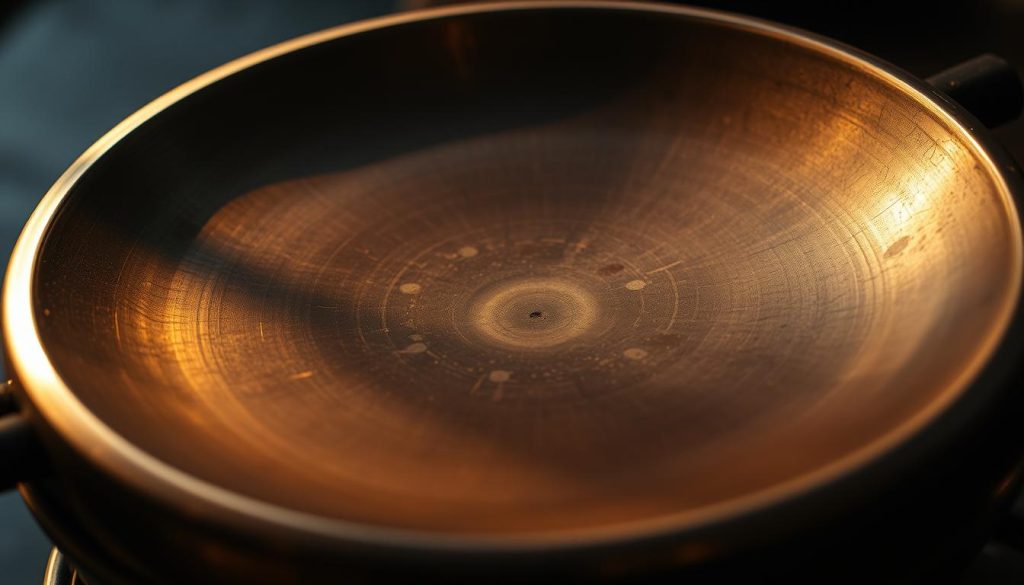
The visual design matches each model’s voice: a lunar atmosphere, Celtic color or Eastern accents. This link between form and sound reinforces the object’s name and identity.
The treatment of the steel and the care given to the domes improve sound quality and ergonomics. The surface feels pleasant and makes the instrument easy to handle.
- Lasting appearance: robust treatments help preserve the patina over time.
- Display: wall mounts and stands present the instrument as a work of art.
- Practical choice: choose a finish that inspires you every day; the object gains meaning and life.
These products belong equally well on stage and in a living room. Designed to last, they combine appearance and function to support your musical practice.
Battiloro handpan prices and value for money
Prices reflect both the technical work and the musical intention behind each instrument.
The observed range runs from about €1,400 to €4,660, depending on the series and configuration.
What explains the price difference?
More notes mean more tuning time and therefore a higher cost.
Materials (stainless steel or Ember Steel) and finish also have a strong effect on price.
Value and buying strategy
The range and the complexity of the arrangements explain why advanced models cost more.
To spend wisely, decide how you will use the instrument and set your budget before buying a handpan.
“A well-maintained instrument retains its value and provides years of musical use.”
| Category | Example (USD) | Price range (€) |
|---|---|---|
| Entry and midrange | Yang / Vega | about 1,400 to 1,700 |
| Moon / Ember | Koray / Perseide | about 2,000 to 2,600 |
| Flagship models | Shandi / Kya | about 3,000 to 4,660 |
- Tip: compare the playing experience of models within the same budget.
- Allow for accessories (a case and stand) to protect your investment.
- Makers generally set consistent prices, while retailers may offer promotions.
Availability, stock and lead times: how to buy a Battiloro handpan
Availability often affects the final choice: workshop, retailer or custom order.
Buying directly in Italy: visiting the maker’s workshops lets you try several models and feel the differences between scales.
You can compare their sounds, feel and response there before buying a handpan.
Production lead times: handcrafted production takes time. If the model is out of stock, plan to order ahead.
Retailers and quicker options
Retailers often have instruments in stock for prompt delivery.
They sometimes offer promotions and provide clear information about prices and availability.
“Always contact the seller to confirm stock status and warranties.”
- Workshops: firsthand experience, testing and customization.
- Retailers: immediate stock, shipping and promotions.
- Check invoices, warranties and return terms.
| Channel | Advantage | Drawback |
|---|---|---|
| Workshop (Italy) | Try it on site, get advice | Production lead times |
| Retailer | Fast delivery, promotions | Fewer opportunities to try it |
| Advance order | Customization | Waiting time |
Practical advice: contact the seller before visiting and try several of their handpans if possible.
For more information about makers and places to buy, consult a buying guide such as this one on handpan makers. It provides a useful overview before you decide.
Accessories and merchandise: protect, play and display
The right accessories extend your instrument’s life and improve every session. They protect the finish, make transport easier and let you display the instrument as a unique piece.
Cases, stands and mounts
Soft case: €105.12 — lightweight for everyday transport.
Semi-rigid case: €210.25 — reinforced padding around the Ding for targeted protection.
Wooden stand: €110.96 — ideal for seated playing; stable and warm-looking.
Wall mount: €105.12 — lets you display and secure the instrument while preserving its finish.
Modular supports and merchandise
Floor or combination stands: €151.84 and €280.33, depending on the configuration. These modular solutions protect their handpans and meet stage needs.
| Accessory | Indicative price | Purpose |
|---|---|---|
| Soft case | €105.12 | Lightweight transport |
| Semi-rigid case | €210.25 | Extra Ding protection |
| Wooden stand | €110.96 | Seated playing, stability |
Merchandise: a Nebra necklace at €87.60 and a hoodie at €87.60 (sold out). These products add an aesthetic and community dimension for musicians.
Practical advice: choose a case that fits your model to preserve the finish and extend the life of your instruments.
Tongue drums and related instruments: more affordable alternatives
Tongue drums are an excellent entry point for exploring sounds similar to a handpan without spending as much. They reproduce some meditative sounds and offer extended sustain.
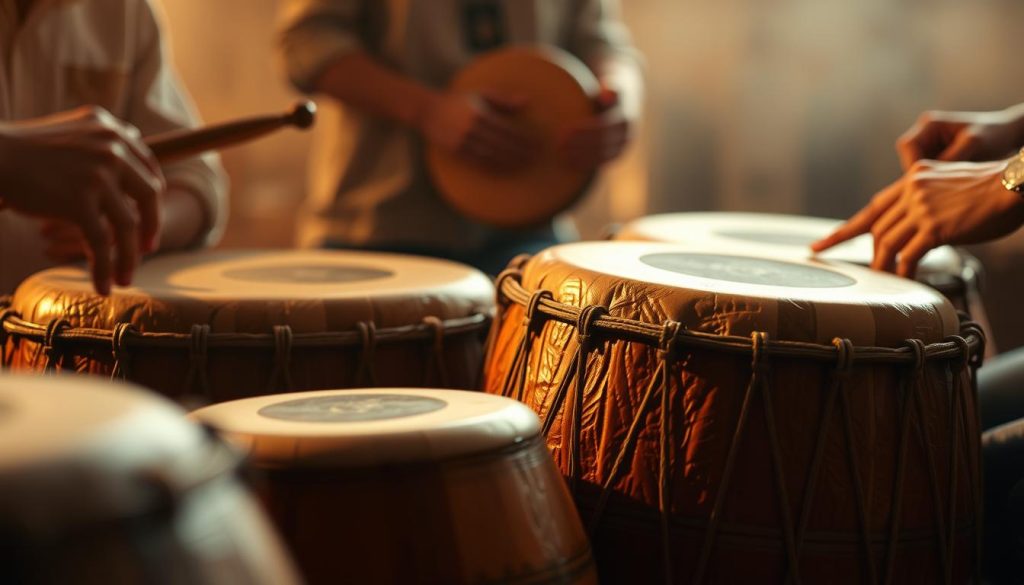
Zen options include the Hank Pan Zen (about $1,039.55 — A minor, 432 Hz), the Steel Tongue Zen I (about $689.14 — D minor, 432 Hz) and the Tank Drum Zen II (about $292.01 — D major, 432 Hz, sold out).
These models share 432 Hz tuning and produce warm notes. Their rounded tone and long sustain suit relaxation, beginners and wellness workshops.
Playing methods: fingers and hands for tank versions; mallets are supplied or can be used, depending on the model. Mallets give a stronger attack and greater projection.
Compared with the best handpans, this instrument has fewer notes and less expressive range. It is nonetheless a practical way to discover a scale and its sounds while staying within your planned budget.
Tip: listen and try before buying to judge the similarity of the tones and the response of the notes. This article aims to put these alternatives in context alongside fuller-featured models.
Who are Battiloro handpans for?
These instruments suit people seeking long-lasting tones and an introspective playing style.
Recommended players: musicians drawn to 432 Hz, meditation and music therapy will find them comfortable to play. Sound practitioners and ambient music creators benefit from enveloping notes and generous sustain.
Everyday use: if you want an instrument that stays with you and continues to inspire you, this choice offers consistent quality that often justifies its price.
- Ideal for solo musicians, sound therapists and composers of musical soundscapes.
- Limitation: reduced ensemble compatibility if your partners play at 440 Hz.
- Solutions: play solo, record in layers or build an ensemble consistently tuned to 432 Hz.
Practical advice: take part in workshops in Italy to get started and improve. The brand’s place in this field is evident in both its finish and its sonic identity: choose a model according to its scale and the complexity you expect to play.
Battiloro handpan: review of the Italian brand
Here is a focused assessment of the sound qualities and practical limitations worth knowing.
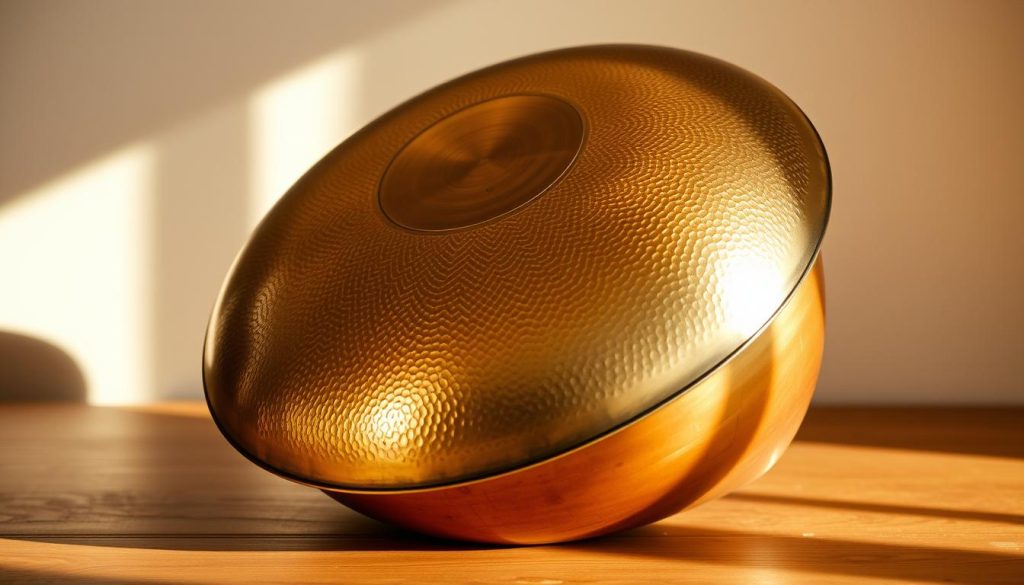
Strengths: according to customer reviews, its command of 432 Hz tuning is remarkable and consistent. Its build quality brings tuning stability, generous sustain and notes rich in harmonics.
The finish and design create a strong visual identity. Depending on the model, tones range from deep to crystalline while retaining a precise, singing quality.
Points to consider
Compatibility: 432 Hz tuning can cause problems in group playing if the other instruments are tuned to 440 Hz.
Workshops: educational sessions are available in Italy, but some knowledge of Italian is often needed to get the most from the discussions.
“Customer feedback highlights a comfortable playing experience and a much-appreciated Ding response.”
Recommendation
For admirers of 432 Hz and beautiful finishes, a purchase is strongly recommended, provided you try the instrument first.
| Criterion | Strength | Note |
|---|---|---|
| Quality | Precise note checks | Stability in use |
| Finish | Careful visual design | Premium materials |
| Sound | From deep to crystalline | Predominantly 432 Hz |
- Practical advice: try instruments in person to find the model that suits your style.
- Read customer reviews to check whether quality is consistent between individual instruments.
Customer reviews, reputation and the brand’s place among the best handpans
Players’ testimonials show why this workshop holds a distinctive place among makers. Customer feedback emphasizes stable intonation, generous sustain and careful aesthetics.
Consistent quality across the series strengthens its reputation. Many describe a dependable instrument built to last and to accompany everyday musical life.
Compared with the best handpans, this brand holds its own through its frequent use of 432 Hz tuning, carefully chosen materials and innovations (notes beneath the shell and a modified Ding).
- Satisfaction: intonation and sustain are often praised.
- Reputation: strong recognition in player communities.
- Experience: service, personal contact and official accessories round out the purchase.
“A companion for musical life, stable and enjoyable to play.”
Conclusion: customer reviews confirm consistent quality. Trying one is still advisable to make sure the instrument suits you.
Credible alternatives from other handpan makers
Various makers offer appealing technical features and prices for different uses. Here are European and international options to consider according to your budget and needs.
Sela Percussion and Schlagwerk: German expertise
Sela offers a broad range (about €800 to €2,000) with consistent quality and varied designs. It is a good option for anyone seeking value for money.
Schlagwerk aims for a superior finish, stable sound and powerful projection. Its instruments suit stage use and demanding players.
Patera: effective simplicity
Patera (Austria) offers stainless steel models tunable to 432 or 440 Hz. Average price: €900 to €2,000. They feature handcrafted construction and cotton cord for a natural response.
Metal Sounds and Meinl: craftsmanship and projection
Metal Sounds (France) has a handcrafted character and offers 432 or 440 Hz tuning (about €1,000 to €3,000).
Meinl offers modern design and a dual sound hole to improve projection (about €1,000 to €2,500), which is useful on stage.
| Maker | Indicative price | Strength |
|---|---|---|
| Sela | €800 to €2,000 | Varied budgets, consistency |
| Patera | €900 to €2,000 | Stainless steel, 432 or 440 Hz |
| Meinl | €1,000 to €2,500 | Stage projection |
Tip: listen to demonstrations and compare models before buying a handpan. Stainless steel is often chosen for its reliable sustain. Choose according to your use: discovery, performance, meditation or ensemble playing.
Avoiding scams and choosing where to buy
Protecting your investment begins with a few simple checks. This short guide sets out warning signs and criteria for choosing between a maker and a retailer.
Warning signs
- An unusually low price with no technical explanation.
- Vague descriptions or no information about materials and note checks.
- No verifiable customer reviews, generic photos or nonexistent customer service.
Maker or retailer: which should you choose?
Buying from the maker offers customization and follow-up support. Expect a wait, but benefit from adjustments made for you.
Retailers often have stock, offer promotions and provide fast delivery. They suit buyers who want an instrument quickly.
| Criterion | Maker | Retailer |
|---|---|---|
| Lead time | Long (custom-made) | Short (in stock) |
| Customization | Extensive | Limited |
| Warranty & after-sales service | Direct, detailed | Through an intermediary |
Practical tips: ask for audio or video samples, insist on clear return guarantees and check the quality of the materials. Specify your needs (scale, use and budget) before buying a handpan.
“A considered purchase protects your musical life: patience and checks are worthwhile.”
Conclusion
Battiloro handpan offers a clear sonic identity built on 432 Hz tuning, hand production by skilled craftspeople and careful finishes. Its innovations (a flexible Ding and notes beneath the shell) give it genuine originality.
The catalog covers several levels, with indicative prices from €1,400 to €4,660. Its value for money rests on the craftsmanship and sound quality.
For a player drawn to 432 Hz, a Battiloro handpan deserves your close attention. Try one at a workshop or retailer, protect your purchase with suitable accessories and compare models if you plan to play at 440 Hz.
Thank you for reading this article: listen, try and choose the instrument that will serve your plans over the long term.