
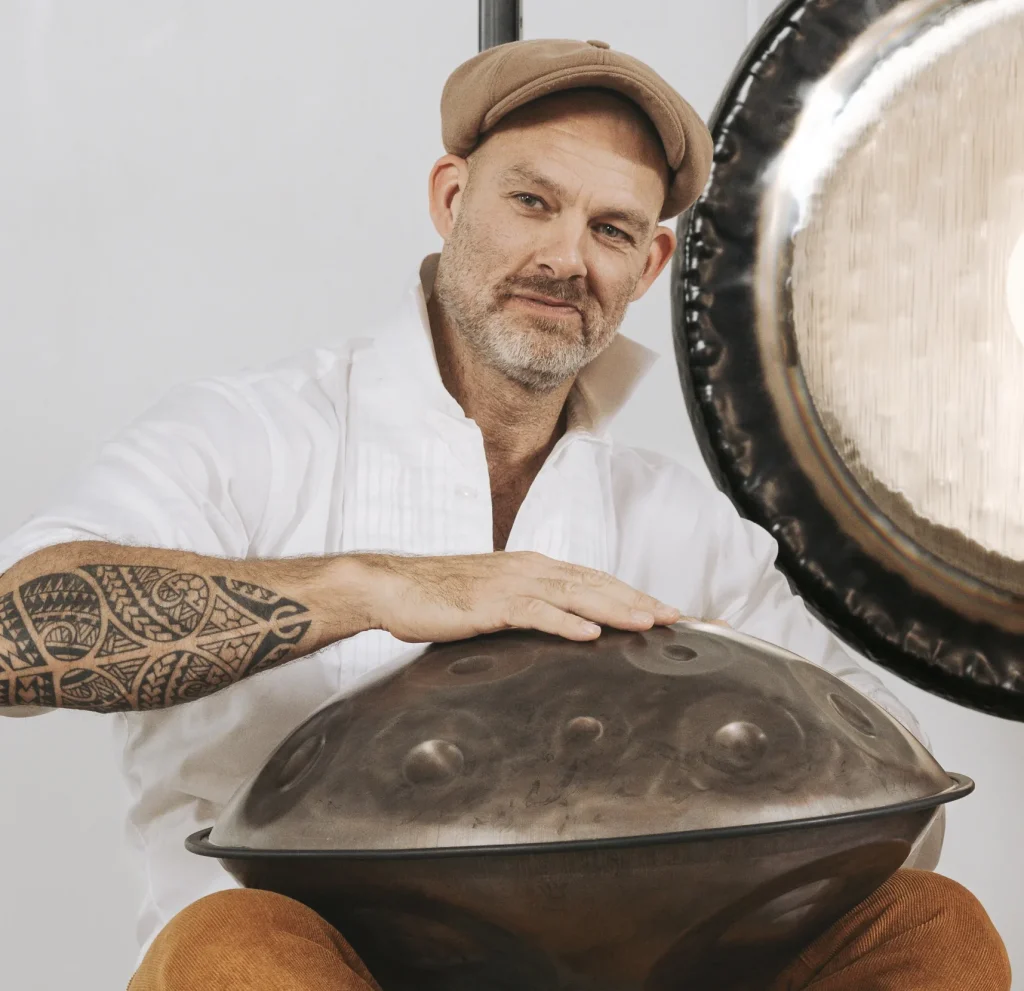
This guide gives you a clear overview of the options available today for learning to play this instrument. It brings together options ranging from on-demand videos to private lessons.
Distance learning has grown rapidly in France: round-the-clock access, level-based learning paths and structured material for every ability. Specialist sites such as Master The Handpan have thousands of students and offer complete courses.
Our goal is simple: to help you compare prices, formats, the quality of student feedback and the availability of instruments at workshops. We also explain how to choose a course based on your budget, your time and what you want to play on the handpan.
To learn more about hands-on learning and workshops in France, see this comprehensive guide.
Why learn the handpan online in France today?
For many people, digital access to handpan lessons opens up new possibilities. In France, in-person options remain limited outside major cities. Learning online gives you access to varied lessons whenever you need them.
Practical benefits: prices are often lower than for in-person lessons, there is a wide choice of material, and you can watch at your own pace and revisit lessons easily. These benefits suit people with limited time or few local options.
Limits to bear in mind: feedback is often delayed, and you need self-discipline. Immediate interaction is missing, although communities and scheduled sessions often help fill that gap.
- Progress at a distance: rewatch videos, repeat movements and strengthen the basics without pressure.
- Early rewards: the instrument produces encouraging sounds from the first few sessions.
- A starting point: online learning can be enough to explore the instrument or prepare for performances before taking in-person lessons.
| Goal | Online benefit | When to move to in-person lessons |
|---|---|---|
| Exploration | Low cost, immediate access | When you want more interaction |
| Improvement | Unlimited review | When you need corrections to your technique |
| Performance | Inspiration from around the world | For personalised coaching |
Online handpan lessons: platforms and methods
A carefully chosen set of resources can turn occasional practice into lasting progress.
Master The Handpan presents itself as a leading option: more than 80 videos, lifetime access, courses for beginners, intermediate players and experts, masterclasses with other artists, and 14 days to change your mind.
David Charrier has taught nearly 11,000 students and received 500 reviews, with a 5/5 rating that reflects the quality of his teaching of this percussion instrument.

General platforms and fully digital methods
Udemy and similar sites offer varied tutorials at appealing prices. They can be useful for trying a style or technique.
Handpan Dojo and Handpan Courses offer progressive paths focused on technique, step-by-step lessons and video resources.
Strengths and limits
Strengths: flexibility, unlimited viewing and the ability to fit lessons into busy days.
Limits: delayed feedback, the need to film yourself and the need to organise a practice plan.
If you are a beginner, start with a structured course, then add focused tutorials to reinforce what you have learned. For more guidance, find out how to learn to play the handpan.
Learning in person to progress faster: private teachers, group lessons and workshops
In-person teaching offers an intensity that is difficult to reproduce at a distance. An experienced teacher can adjust your posture, striking technique and tone as you play. Immediate feedback corrects errors before they become habits.
Superprof lists several dozen profiles in France, some offering webcam lessons. Average rates are around €30–40 per hour. Reviews and verified profiles help you choose according to availability and the quality you want.
Private teacher
One-to-one lessons allow precise corrections to your technique and can be adapted to your instrument. Their strengths are extensive personalisation and added motivation. Their drawbacks are cost and scheduling constraints.
Group lessons at schools or associations
A welcoming atmosphere, a shared pace and shared costs make this an appealing way to play with others. The drawbacks are limited individual attention and a pace set by the group.
Workshops and intensive courses
Spend half a day or a weekend immersed in playing, often with instruments provided. For example, Metal Sounds offers its “handpan Sundays” for all levels: three-hour sessions with the option to borrow an instrument.
“In-person learning speeds up progress when you want corrections, direct contact and a shared experience.”
| Format | Main benefit | Indicative price |
|---|---|---|
| Private lesson | Personalisation and immediate corrections | €30–40 per hour |
| Group lesson | Atmosphere and shared costs | €15–30 per hour |
| Workshop or intensive course | Immersion and instruments provided | €30–120 per session |
Tip for combining formats: take lessons with a teacher to correct your technique, then join workshops to develop your musicality and play in a group.
Additional resources for learning and improving
Explore additional resources that help you progress without overloading your schedule. Combine free and paid formats to stay motivated and strengthen the basics.

YouTube tutorials
YouTube has many tutorials that can help you discover techniques, rhythms and your first melodies for free. Choose established creators and compare their advice with structured courses.
Books and sheet music
Step-by-step methods often include QR codes linking to videos and as many as 25 pieces of sheet music. Artists such as Hang Massive and Sam Maher provide a useful repertoire for developing reading skills and creativity.
Podcasts and audio content
Podcasts share the experiences of players around the world. They offer practical advice and deepen your understanding of the musical culture around this percussion instrument.
Instrument rental
Rental options remain uncommon, but they are valuable: they let you try the instrument before buying it. A week or a month is often enough to decide.
- Start with tutorials to learn to play for free, then reinforce your skills with books and sheet music.
- Take part in masterclasses and events found through HelloAsso to meet other players.
- Check instrument availability with makers, stores or associations, or try a specialist rental service.
“Combining videos, reading and hands-on practice remains one of the most reliable ways to improve while enjoying yourself.”
How to choose a platform and method for your level and goals
Choosing the right platform directly affects your musical progress. First, define your level and goal: exploring the instrument, improving your playing or preparing for the stage.
Key criteria
Format: on-demand videos for reviewing lessons, live classes for feedback. Language: choose English if you want explanations you can follow clearly.
Feedback: in-person lessons allow immediate corrections; for distance learning, check whether personalised exchanges are available.
Community: an active group helps players share recordings and feedback.
A typical path
Beginners: a structured introductory module followed by short technical lessons.
Intermediate players: add focused masterclasses and recorded accompaniments to develop your musicality.
Advanced players: strengthen your skills in a workshop or live session where you can correct your technique.
| Goal | Recommended format | Main benefit |
|---|---|---|
| Exploration | On-demand video and free preview | Low cost and flexibility |
| Technique | Live lessons | Precise feedback and adjustments |
| Performance | In-person workshop | Practical experience and personalised guidance |
Try an inexpensive introductory module, then choose a format and level of teaching that suit your needs.
Budget, prices and value for your time: what to expect
Planning for the real cost of learning music helps you avoid surprises. For in-person lessons, expect to pay around €30–40 per hour. Real progress takes dozens of hours, so the cost can rise quickly if you take regular lessons.
Online options are generally more economical over time. Some charge once for lifetime access; others use a monthly subscription. These plans provide access to extensive content libraries and updates.

Value for your time: being able to rewatch videos without limit supports effective learning. In-person teaching, however, lets you correct faults immediately. Combining the two offers a useful balance.
- Make your budget go further: learn the basics online, then book a few in-person sessions to work on technical points.
- Try a course with less risk: use free previews or a 14-day trial period when a platform offers one.
- Instruments: renting one for a week or a month can help you decide whether to buy.
| Option | Indicative cost | Benefit |
|---|---|---|
| Mostly online | €50–200 per quarter | Lower cost and flexibility |
| Mostly in person | €300–600 per quarter | Immediate feedback |
| A combination of both formats (recommended) | €150–350 per quarter | Faster progress with a managed budget |
Use this article as a guide to choosing according to cost, availability and your artistic goals.
Practical tips for improving: technique, rhythm and the pleasure of playing the handpan
Progress takes time used well, a clear routine and regular feedback. Combining structured practice with playful exploration helps you improve while keeping the pleasure of playing.
Build a routine
A realistic weekly plan: three 20-minute sessions rather than one long session. Practise your timing with a metronome and record yourself to track your progress.
Set modest goals: one rhythmic pattern each week, a short piece every two weeks, then a recording once a month. These steps motivate beginners and give learning a structure.

Try different experiences
Combine online lessons for learning techniques with in-person workshops to correct your posture and refine your touch. Short sessions such as Metal Sounds’ “handpan Sundays” can be especially effective.
Playing with other people develops listening skills and creativity. Share rhythmic roles, work on dynamics and build textures to enrich your melodies.
- Focused exercises: hand independence, precise fingering and accents to shape the sound.
- Build a repertoire: choose two or three pieces that motivate you, practise them slowly, then increase the speed.
- Document your practice: keep a journal, make a list of inspiring pieces and review your progress monthly to adjust your technical priorities.
“Enjoyment keeps you going: vary your exercises, improvise and celebrate every step forward.”
To develop your approach and choose a suitable path, read this comprehensive guide for useful advice on learning to play and improving.
Conclusion
In summary, you now have many ways to structure your handpan learning. Tutorials and courses cover exploration, technique and performance, from on-demand material to personalised lessons.
Combine a solid online method with a few in-person sessions to correct your technique and broaden your musical experience. Consider workshops, intensive courses, festivals and rental options to try an instrument before buying one.
Take the next step: choose a handpan course to try this week, perhaps using this practical guide, schedule a short practice session and track your progress regularly.
For more options and a detailed selection, see our guide to handpan lessons.