
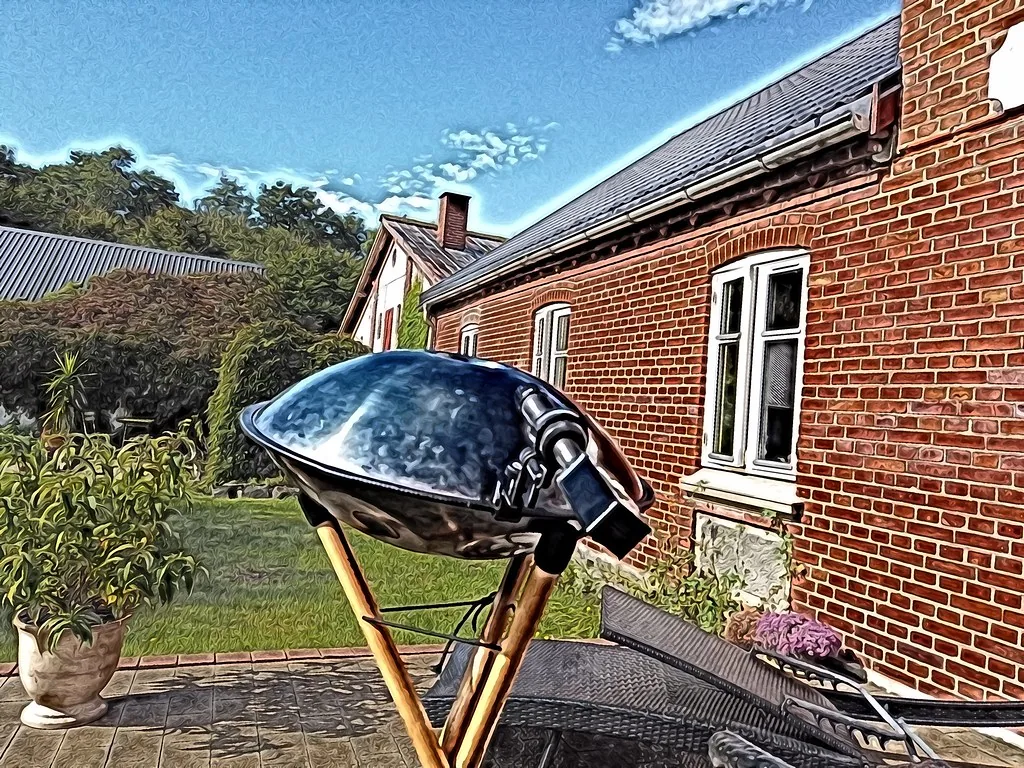
This guide offers practical buying advice. A gathering provides a rare opportunity to see, hear and touch handpans on stage and backstage. This makes your choice and purchasing decision easier.
We will compare the key criteria: scales, notes, sustain, materials, tuning frequency, prices in 2025 and makers’ services. You will learn how to match each criterion to your goals: exploration, performance, meditation or group playing.
A quick reminder: the handpan is a steel idiophone with a central ding and tuned notes. Designed for intuitive playing, it appeals to beginners and experienced musicians alike.
Use your time at the event to listen to and try several notes and configurations. This is your chance to assess sound quality in real conditions and consider lead times, trial options and retuning services.
2025 price guide: budgets for new handmade instruments range from about €1,000 to €3,500, depending on the number of notes and the finish. By the time you leave the festival, you could have the right instrument and a care and practice plan to make it last.
Why a handpan festival is the ideal place to choose an instrument
A dedicated gathering offers a unique opportunity to hear and compare several instruments in one day.
Many stands in one place: you can hear different scales, test how well the notes balance and assess sustain without waiting for instruments to be shipped. It saves time when making a considered purchase.
Listening in real conditions: background noise and stage reverberation reveal how well a handpan projects. Demonstrations let you compare two similar models, for example, and hear subtle differences in tone.
Meet the makers: discuss lead times, retuning options and care advice. These conversations can reassure you and clarify warranty terms.
- Quick test: play softly, then loudly, and strike intervals to detect crosstalk.
- Watch the price: compare an attractive price with tuning stability and the quality of the finish.
- Write down your impressions (time, stand and a keyword describing the sound) so you can keep track.
Handpan festival: how to choose an instrument and prepare well
Knowing why you are buying changes how you approach your visit.
Stage performance: look for good projection and controlled sustain. For outdoor playing, nitrided steel often carries further.
Meditation: look for a warm tone; tuning around 432 Hz may suit you better.
Group playing: choose 440 Hz to make it easier to play with other instruments.
A practical checklist before testing
- Define your main goal (exploration, performance, meditation or group playing).
- Allow time at each stand to test the key notes of scales that interest you.
- Bring a case, cloths, gloves or mallets for a clean, safe test.
- Record your impressions, the price and the maker’s model so you can return to it later.
| Goal | Criterion | Recommendation |
|---|---|---|
| Stage | Projection and sustain | Nitrided steel, controllable sustain, test at high volume |
| Meditation | Tone and tuning frequency | Warm sound; consider 432 Hz |
| Group playing | Compatibility | Prefer 440 Hz; check the tuning |
| Beginner | Ergonomics and number of notes | Nine-note D minor: a good compromise |
Plan your budget: set a realistic range (€1,000 to €3,500). Do not compare only the number of notes; also examine quality and the maker’s warranty.
Manage your time: schedule your trials, shortlist two instruments and return to test them before deciding. This will help you confirm their sound and how comfortable they are to play.
The handpan at a glance: notes, ding, gu and intuitive playing
Understanding its structure helps you listen carefully to a handpan.
The upper dome carries the ding, the low central note. Around it, tuned areas form the other notes of the same scale.
Underneath, the gu is the resonating opening that enriches the sound. Its shape affects sustain and harmonic character.
Playing with your hands produces a warm tone and long sustain. Gloves or mallets give a sharper attack and a narrower dynamic range.
- Example sequence: gently strike the ding, then a neighbouring note and another positioned symmetrically. You will hear how they work together melodically.
- Test each note very softly, then more firmly, to assess its dynamic range and sensitivity.
“The diatonic layout makes improvisation accessible: each note is designed to sound good with the others.”
| Element | Effect | Tip |
|---|---|---|
| Ding | Tonal centre and depth | Check how easily you can move to the other notes |
| Gu | Resonance and sustain | Listen to the length and character of the sound |
| Steel and shape | Response to touch | Try light strikes, slaps and rubbing techniques |
Ergonomics: you should be able to reach the playing areas comfortably, whether seated or using a stand.
Briefly trying several handpans helps you notice how each note responds on different instruments. Record how they feel so you can compare them later.
Materials and sound quality: nitrided or stainless steel
The choice of metal substantially affects an instrument’s sound and how it performs on stage or outdoors.
Nitrided steel (DC04)
A precise attack, a relatively dry tone and shorter sustain. This steel projects sound well, making it useful for rhythmic patterns and open spaces.
However, nitrided steel is less resistant to moisture. Wiping it down after every use and applying wax are recommended to preserve its condition.
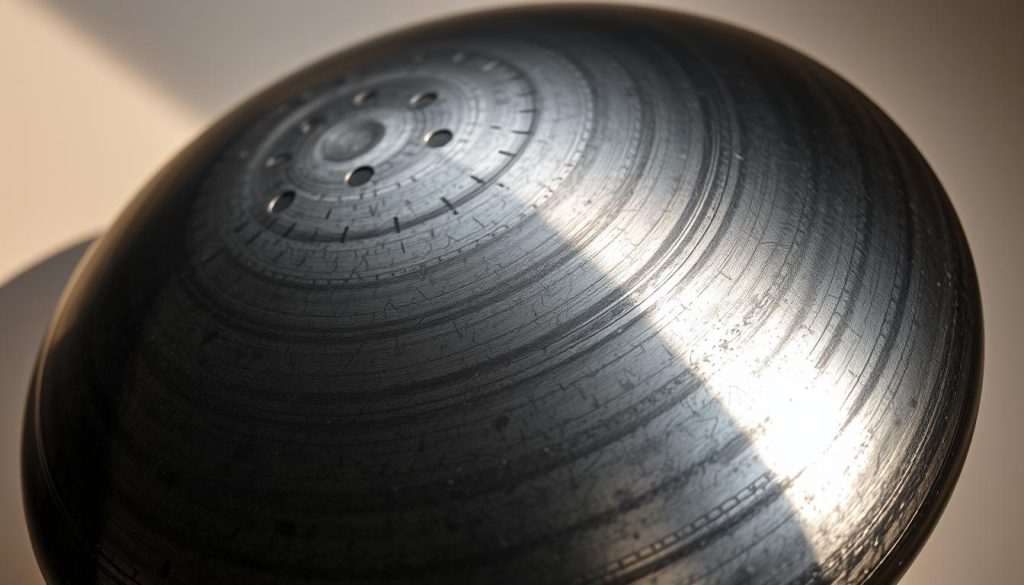
Stainless steel (4XX)
A warmer sound, rich in harmonics and with long sustain. Stainless steel resists corrosion better and needs less maintenance.
Regular wiping is often enough, making stainless steel well suited to long days when you have little time for maintenance.
How materials affect durability and use
The material influences note stability and sustain. Test low and high notes on both materials to hear the difference.
| Material | Characteristic | Recommended use |
|---|---|---|
| Nitrided steel (DC04) | Clear attack, short sustain | Outdoor projection, clear rhythms |
| Stainless steel (4XX) | Rich harmonics, long sustain | Meditation, enveloping sound |
| Care | Nitrided steel: waxing; stainless steel: wiping | Watch for the effects of skin contact, sweat and dust |
Ask the maker about the treatment applied and the price to assess durability. Choose the material that best suits your main use.
Scales, moods and audiences: choosing a musical character
The scale you choose shapes the atmosphere and the emotions your audience experiences.
Major scales: bright and uplifting. They suit festive audiences and energetic concerts.
Minor scales: deeper and suited to introspection and quiet passages.
Eastern-inspired scales (Hijaz, Akebono): they suggest a sense of travel and create a distinctive character.
Putting it into practice and listening actively
At the stand, alternate between listening in the room and through headphones to compare sound quality.
Test key notes to assess sustain and clarity. The same model made from different materials often sounds quite different.
- Beginners: the D minor scale remains an excellent compromise for learning.
- Check that the number of notes covers the scale without awkward melodic gaps.
- Ask about tuning frequency if you play with other musicians.
“After comparing the key notes, let the instrument you love most guide your choice.”
| Family | Mood | Tip |
|---|---|---|
| Major | Joy | Projection, energy |
| Minor | Introspection | Controlled sustain |
| Eastern-inspired | Escape | Rich textures |
Tuning frequency: 432 Hz or 440 Hz for your needs
Your chosen pitch standard determines the musical setting in which your instrument fits best. Tuning frequency affects compatibility with other musicians and the character of the notes.
Playing in a group and compatibility with other instruments
440 Hz is the modern standard. A handpan tuned to 440 Hz is easier to use in workshops, ensembles and festival sessions.
Practical advantage: you can play with guitars, pianos or orchestras without a pitch mismatch.
Holistic settings and meditative solo playing
432 Hz appeals to some solo players and people in holistic settings. Many find this tuning gentler and more soothing.
However, expect less compatibility if the other instruments are tuned to 440 Hz.
Tip: test the notes around the ding at the stand to assess their character and tuning stability.
- Check that notes hold their pitch when struck both firmly and softly.
- Ask makers whether they offer retuning after purchase.
- Consider your main use, whether group classes or solo sessions, before deciding.
“Tuning frequency is only one factor: material, scale and sustain matter too.”
| Frequency | Advantage | Consideration |
|---|---|---|
| 440 Hz | Compatibility with other players | Suited to ensembles and stages |
| 432 Hz | Soothing atmosphere | Less compatible in groups |
| Tuning quality | Stable pitch | Test every note |
Number of notes and playing level: 9, 10 or more
The number of notes directly affects the scale, ergonomics and a musician’s progress.
Note-count convention: a nine-note handpan generally has eight note fields around the central ding. Always check the maker’s convention before buying.
Beginners: nine notes in D minor, a versatile choice
For beginners, a nine-note D minor handpan has a straightforward layout. The intervals are easy to reach. Its range is sufficient for patterns, accompaniment and continued learning.
Ten notes and beyond: greater range and technical demands
Beyond nine notes, the range expands and melodic possibilities grow. Playing also demands more precise movements and hand placement.
- More notes can create crosstalk; test whether the harmonics remain coherent.
- Check sustain and volume across every note field, not just your favourites.
- Prices tend to rise with the number of notes; assess how you will actually use the instrument (solo playing, performance or composition).
Practical tip: a well-tuned nine-note instrument is often better than a poorly balanced twelve-note one. Think ahead, too: adding a second instrument or changing scales may offer better value.
| Number | Suggested players | Key point |
|---|---|---|
| 9 | Beginners | Ergonomics, versatility |
| 10 to 12 | Intermediate players | Wider range, greater technical demands |
| 13 or more | Experienced players | Acoustic complexity, risk of crosstalk |
“An instrument suited to your level supports progress and confidence on stage.”
Testing quality: sustain, note balance and crosstalk
Your ears and a few simple tools are enough to assess how well an instrument performs.
A quick listening routine
Strike each note very softly, then more firmly. This reveals pitch stability, attack and sustain.
- Listen for clear harmonics and the absence of metallic buzzing.
- Alternate between playing with your hands, mallets and gloves to hear how the steel and construction respond.
- Use a tuner if background noise makes listening difficult.
Checking consistency around the ding
Play intervals near the ding to detect beating or unwanted vibrato.
A good handpan has notes that are balanced in volume and sustain.
Controlled crosstalk and a final check
Strike one note on its own and listen for excessive resonance from the others. Crosstalk should remain controlled.
Ask the maker about their retuning policy and inspect the finish: symmetry, adhesive joints and carefully made note fields.
| Criterion | What to check | Expected result |
|---|---|---|
| Stability | Use a tuner after a soft strike, then a firm one | Stable pitch without drift |
| Crosstalk | Strike one note and listen for other resonances | Controlled resonance without buzzing |
| Sound quality | Clear harmonics without unwanted noise | Pure notes and even sustain |
“Trust your ears: if something bothers you, try the next instrument.”
Budget, prices and value for money in 2025
Understanding typical prices helps you set expectations before buying. In 2025, expect to pay around €1,000 to €2,000 for a reliable nine-note instrument. Models with 10 to 13 notes generally cost between €1,300 and €3,500. Some exceptional instruments exceed this range.
New or used: opportunities and precautions
A used instrument can offer good value, but you should test it in person. Check its tuning and ask for receipts and a service history. Prefer a seller who offers after-sales support or retuning.
Warning signs and warranties to request
Beware of offers that seem too cheap, fake reviews and unclear origins. Ask for the seller’s legal details, SIRET registration number where applicable, and return terms.
- Include extra costs: case, stand and microphone.
- Account for the material (nitrided or stainless steel) and finish when comparing prices.
- Ask about an accessory bundle at a trade show or from a reliable maker.
| Budget | Type | What to check |
|---|---|---|
| €1,000 to €2,000 | Nine notes, reliable maker | Sustain, finish, warranty |
| €1,300 to €3,500 | Ten or more notes, more elaborate finish | Harmonic balance, retuning |
| Over €3,500 | Exceptional instrument | Provenance, after-sales support |
In short: seek the best value for your needs rather than the lowest price. A good instrument backed by reliable after-sales support will remain worthwhile in the long term.
Where to buy in France and online: makers, shops and festivals
For a confident purchase, favour trying instruments in a shop or buying from established makers who provide clear information.
The options differ: buying directly from the craftsperson, purchasing online or trying an instrument in a shop. Established makers often provide follow-up support, retuning and clear information about lead times.
Established makers and lead times
Waiting lists are common. Some makers hold occasional sales or have instruments in stock. Sign up for newsletters to receive announcements and recent sound samples.
Shops in France: try and compare
Try instruments in a shop to check their tuning and handpan quality. In France, Woodbrass, La Baguetterie in Paris, Percussions du Monde and Djoliba in Toulouse offer opportunities to play and compare scales and note counts.
- Ask for unedited recordings filmed in real conditions.
- Check that prices and return policies are clear.
- Compare materials: nitrided steel or stainless steel, according to your needs.
“Choose reliable people to deal with: a good maker or retailer makes care easier and helps your instrument last.”
| Channel | Advantage | What to check |
|---|---|---|
| Maker | Follow-up support, possible retuning | Lead times, waiting lists |
| Shop | In-person trial, advice | Tuning, local after-sales support |
| Online | Wide choice, prices | Clear information, recordings, guaranteed returns |
Before making your final handpan choice, ask about the instrument: request a sound sample and check the finish, steel, edges and tuning consistency. This helps avoid unpleasant surprises after purchase.
Preparing for a festival: transport, protection and weather
Planning the practical details reduces the risk of damage to your instrument while travelling.
Bags, cases and impact protection
Choose a reinforced bag or a semi-rigid case (such as Evatek). These protect against impacts and help prevent the instrument’s rim from being distorted.
Flights and travel
If possible, carry the handpan in the cabin. Check the airline’s permitted dimensions and arrange suitable travel insurance.
Tip: ask the airport for written confirmation to reduce problems at the check-in desk.
Heat, humidity and dust at the venue
Avoid direct sunlight: heat can affect tuning. Always allow the instrument time to adjust to its surroundings before playing.
Wipe it down after playing, air the case and protect it from dust. Stainless steel may be more forgiving, but regular care is still necessary.
| Risk | Action | Suggested equipment |
|---|---|---|
| Impacts | Use a reinforced bag | Semi-rigid case (Evatek) |
| Moisture | Dry immediately; wax if needed | Soft cloths, suitable wax |
| Dust | Wipe frequently | Gloves, microfibre cloth |
In short, plan how you will transport the instrument and pack cloths, gloves and a protective case. These precautions help preserve its notes, sound quality and lifespan.
Essential accessories and setting up on stage
A simple, stable setup maximises sound quality while reducing fatigue for the player.
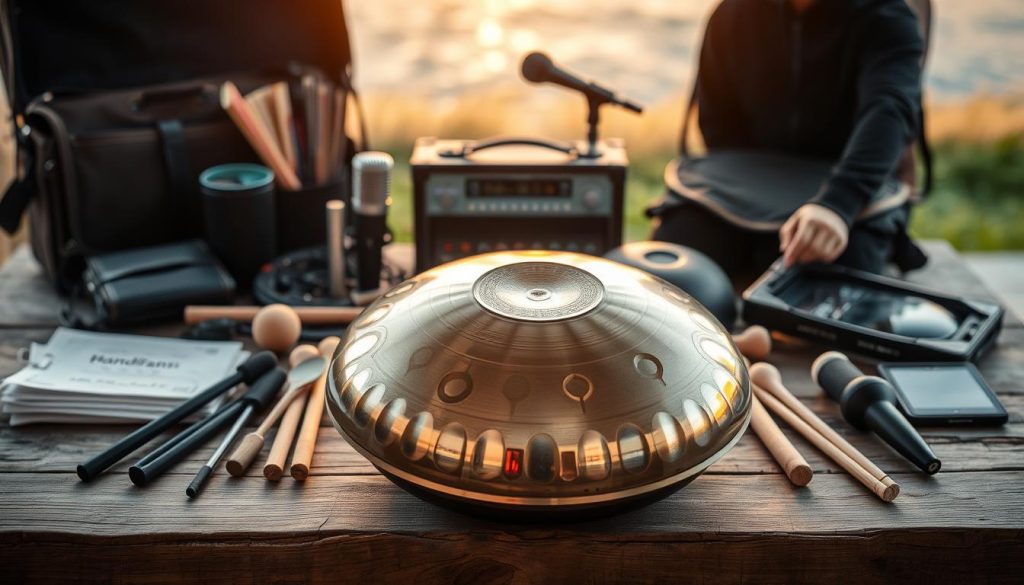
Stands, gloves, cloths and care products
Key accessories: a stable stand, suitable gloves or mallets, microfibre cloths, and wax or sprays compatible with the steel.
Choose an adjustable stand that positions the instrument around torso height. This makes the notes easy to reach and reduces shoulder strain.
Microphones and amplification
For amplification, aim for clarity and controlled sustain. Avoid excessive gain, which emphasises crosstalk between notes.
One possible placement is a microphone above the instrument, centred on the ding, or a stereo pair to capture the full range of harmonics without overemphasising room sound.
| Item | Purpose | Practical tip |
|---|---|---|
| Stand | Stability & ergonomics | Adjustable height, heavy base |
| Gloves and mallets | Attack control | Mallets for a clear attack, hands for a warm sound |
| Microphone | Faithful sound capture | Above and centred, or a pair 20 to 40 cm away; test the balance |
“A simple, tidy and consistent setup serves the music and helps it reach the audience.”
Before the soundcheck, provide a reference audio sample to speed up adjustments. Playing cleanly helps the sound engineer reproduce your dynamics without amplifying unwanted resonances.
Care and retuning: before, during and after the event
A few simple steps prevent oxidation and preserve sound quality. Brief care after each session reduces deterioration and the need for specialist repairs.
Cleaning, drying and waxing: a routine against oxidation
Wipe the instrument after every use. Dry the underside carefully near the gu to prevent moisture from collecting there.
Stainless steel tolerates moisture better but still needs regular wiping. Nitrided steel can be more sensitive; apply a suitable wax more often to limit oxidation.
Use only products compatible with the material to avoid unwanted reactions on the surface.
Planning a retuning with the maker
Arrange a check after a long tour or an impact. A tuned handpan remains stable when handled and stored carefully.
After major temperature changes, let the instrument return to a suitable temperature before playing. Avoid impacts to the rim and always transport it in a suitable case between performances.
| Action | Frequency | Reason |
|---|---|---|
| Wiping | After every session | Prevents corrosion and preserves quality |
| Waxing | According to material (more often for nitrided steel) | Protection against moisture |
| Tuning check | After tours or impacts | Maintains the handpan’s tuning stability |
| Adjustment time | After temperature changes | Helps preserve stable pitch |
“A simple care routine extends a handpan’s life and reduces how often it needs retuning.”
Practice plan and setlist for a successful festival
A clear practice plan turns a selection of pieces into a coherent musical journey. Build your concert around your chosen scale and the moods you want to create.
Structuring a concert: moods, transitions and space in the music
Open with an atmospheric piece, gradually move into rhythmic passages, then create a moment of calm before an evocative finale.
Work on controlling sustain: vary your attacks and leave silences so each pattern remains clear.
Playing with other instruments: tempos, compatible scales and 440 Hz
For group playing, favour a tuning frequency of 440 Hz to stay in tune with guitarists or keyboard players. Matching tempos and modes avoids harmonic clashes.
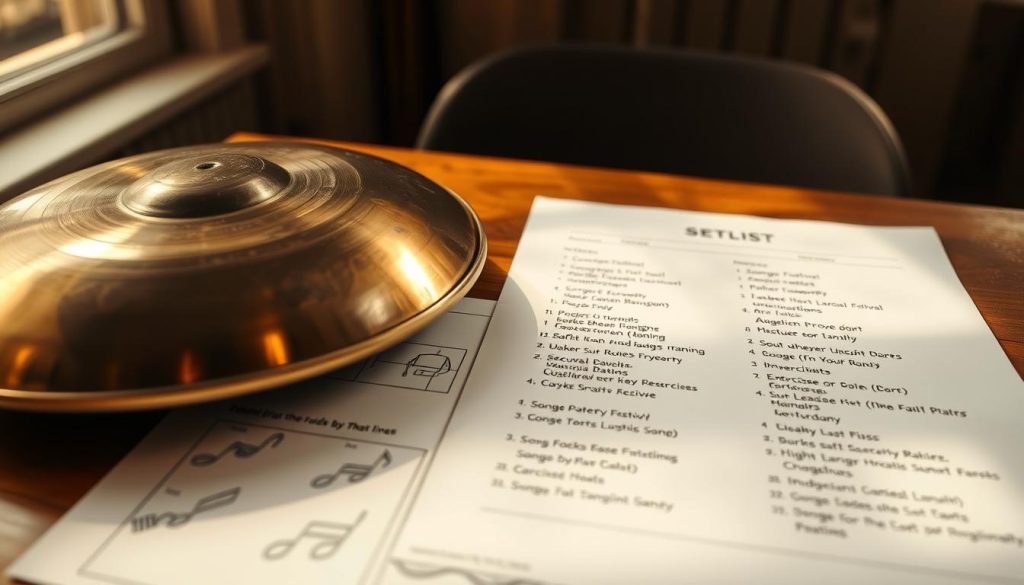
Beginners: put together a short setlist for a nine-note D minor handpan. Alternate slow pieces and rhythmic sections to vary the textures and hold the audience’s attention.
Work on transitions using pivot notes and rehearse short phrases. Listen to each note on its own, then in simple chords, to refine your dynamics on stage.
Professional tip: allow a dedicated microphone soundcheck to control crosstalk, and prepare a simpler backup setup if the acoustics prove too reverberant.
“Focused practice tailored to your scale and tuning frequency maximises your impact on stage.”
Conclusion
, in summary, here is a clear path to finding the instrument that suits you.
First, make your choice according to your intended use (stage, meditation or group playing). Test several scales and assess note stability, sustain and overall sound quality.
For a first purchase in 2025, a nine-note D minor handpan remains a dependable option. Choose 440 Hz if you play in a group. Nitrided steel projects well; stainless steel offers warmth and needs less maintenance.
Plan a budget of €1,000 to €3,500 and approach established makers or retailers. Record your impressions, compare two finalists and let your ears decide.
This approach helps you choose a handpan methodically: consider its price, number of notes and handpan quality. A festival remains an ideal place to discover handpans, try them and take home one that feels right for you.