
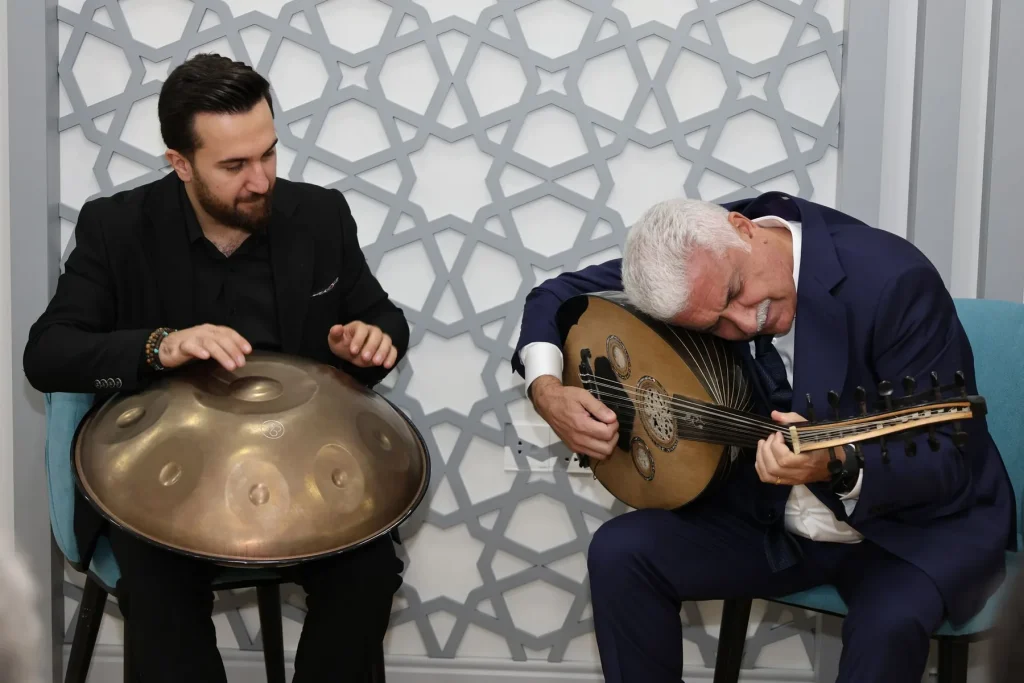
Quick introduction: This article sets out how to choose a scale for this instrument. The scale determines which notes are available and shapes the music you can create.
A scale is an ordered sequence of notes defined by intervals. A handpan generally has nine or ten notes, far fewer than a piano’s 88.
Your initial choice is crucial and often irreversible. It shapes your melodies, chords, and improvisations. That is why choosing carefully matters.
We introduce three well-known scale families: D Kurd, Amara, and Hijaz, and explain how their names offer clues to their sound. This practical guide also suggests criteria for choosing: mood, intended use, compatibility, and tuning reference.
To learn more about their definitions and typical notes, see this practical guide to these scales.
Why the scale shapes your instrument, playing, and emotions
An instrument’s range of notes directly shapes how you play and the moods you create. Your choice of scale influences the tone, warmth, and character of the pieces you play.
Scales and emotions
Some notes and intervals sound brighter; others sound more introspective. Minor scales are often perceived as melancholy, major scales as joyful, and some modes lend a more Middle Eastern character.
Perception remains subjective: the same sequence can affect listeners differently depending on how it is played, its pitch, the material, or the room’s acoustics.
A choice that is hard to change
Once a handpan has been shaped and tuned, you cannot simply change its scale. If the scale does not suit you, you need another instrument.
- Playing: the note layout guides your movements and patterns.
- Active listening: compare recordings from several makers before buying.
- Character: particular semitones or expressive notes give a scale a strong identity; make sure you like it.
Scales, notes, and keys: the basics to know before buying
Choosing a scale means selecting the sound palette available on your instrument. On a handpan, you choose from about ten notes, compared with 88 on a piano. That difference changes everything: each note carries more weight and shapes the music you can play.

Definition and construction through intervals
A scale is a sequence of notes linked by specific intervals, or whole and half steps. These intervals create tension and release and define the musical character.
The effect of having fewer notes
With so few notes, every pitch matters. Adding or removing a semitone can radically change a handpan scale’s identity. Makers therefore choose notes that work well together.
| Feature | Handpan | Piano |
|---|---|---|
| Number of notes | ≈ 9–10 | 88 |
| Selection | Chosen by the maker | Full range |
| Result | Strong stylistic direction | Broad flexibility |
Before buying, identify the octave, third, and fourth in the note list. This will help you compare scales and make an informed choice.
Understanding handpan scales: D Kurd, Amara, Hijaz
Each scale has its own sound and guides your first movements on the instrument. Here are three common profiles to help you choose.
D Kurd (D minor) — a balanced reference point
Sound: balanced and flowing, ideal for beginners. Typical notes: D3, A3, Bb3, C4, D4, E4, F4, G4, A4.
What roles do these notes play? D provides an anchor, Bb adds a darker color, C helps melodies move forward, and E adds brightness, while F and G give the whole scale stability.
Amara (Celtic minor) — lightness and versatility
Close to the previous scale, it makes one key substitution: Bb → C5. An example note list is D3, A3, C4, D4, E4, F4, G4, A4, C5.
This change extends the upper range and creates an airy lift. Smooth transitions make this scale versatile and suitable for several moods.
Hijaz — Middle Eastern character and variations
This more distinctive mode is often offered in D: D3, C4, D4, Eb4, F4, Gb4, A4, Bb4, C5. Makers offer many variations.
Note: its melodic contours call for good rhythmic and melodic control. Always check the handpan’s exact note list before buying and compare how different versions sound.
D Kurd and Amara: comparing notes, positions, and how they feel to play
Comparing two closely related scales reveals how much one note can change your playing. These versions share eight of their nine notes; the key difference changes the range and sound.
Eight shared notes and one key difference
What they share: eight notes are common to both, and the structure remains the same. Only the ninth differs: a lower Bb in one and a higher C5 in the other.
Effect: C5 opens up the upper register. It supports singing phrases and bright ornamental notes. By contrast, Bb strengthens the lower range and foundation, giving the scale a more grounded, introspective character.
Note layout, neighboring chords, and “mirrors”
On the shell, the placement of the tone fields creates “mirrors”: some notes face one another and balance neighboring chords. Swapping Bb for C5 changes these spatial relationships.
- For example, playing A and C sounds harmonious with C5.
- On the other version, the same position gives you A and B-flat, a more tense combination: a dissonance you can use creatively.
- As a result, patterns, arpeggios, and transitions change with the available range.
Tip: try both options, repeat short rhythmic patterns, and listen to how the notes respond to one another. To compare recordings and makers, see the selection at Shellopan – scales.
How to choose a scale in practice: a short step-by-step guide for beginners

Listen first
Compare several recordings of the same scale made by different makers. This helps you distinguish the character of the scale from the maker’s particular sound.
Intended use
First, define your goal: relaxation, meditation, free improvisation, accompanying a voice, or playing with other instruments.
Each use points toward a choice: some scales lend themselves to meditation, while others work well with other musicians.
Experience and progress
For beginners, the balanced character of a D minor scale remains a good starting point. It offers simple transitions and a stable palette that supports learning.
Explore different moods
If you want airier melodic lines, choose a related version with a higher range. For a more Middle Eastern character, explore a scale with more pronounced intervals.
- Write down your impressions during a trial and record a few simple patterns.
- Check that the keys are compatible before playing with other instruments.
- Try several handpans in the same scale: tone varies by maker.
Final tip: start with an approachable option, then widen your search as your playing and tastes develop.
Tuning references, compatibility, and group playing: 440 Hz, 432 Hz, and other instruments
The tuning reference often determines how well instruments sound together. 440 Hz is the common Western reference and makes it easier to play with piano, guitar, and other modern instruments. It also makes tuning together easier in rehearsals and on stage.
432 Hz is chosen by some players for a softer sound they enjoy in meditation and sound therapy. It may create a more immersive atmosphere, but makes playing in unison with instruments tuned to 440 Hz harder.

In practice, check which notes two instruments share. Only some scale families naturally fit together; around 70% of handpans are in D minor, which makes group compatibility easier.
Quick tips:
- If you often play with other musicians, favor 440 Hz and common keys such as D minor.
- Before a jam session, list everyone’s scales and notes to avoid clashes.
- Test compatibility by layering recordings or arranging a trial session.
“In a group, tuning shapes the sound; plan it ahead to save rehearsal time.”
Pre-purchase checklist: makers, scale names, variations, and sound
A good purchase rests on three simple checks: the notes, the range, and a playing test.

Commercial names and musical reality
Common names such as Kurd, Hijaz, Amara, and Annaziska help players identify scales. They do not replace the actual note list.
Check the notes and range
Ask for the handpan’s exact note list and tuning reference (440 or 432 Hz). Compare whether it has a particularly high or low note.
Try before you buy
Try the instrument in a quiet room. Listen to its resonance and projection, and inspect its finish.
- Check the variations each maker offers.
- Favor a seller that offers at least a two-year warranty and a retuning service.
- Record the details of your purchase: scale name, note list, and tuning reference.
| Criterion | What to check | Why it matters |
|---|---|---|
| Note list | Exact notes and octaves | Defines the musical character |
| Range | Presence of a low or high note | Affects melodic lines |
| Variations | Versions offered by different makers | Can change the sound’s character |
| Service | Warranty and retuning | Protects your investment |
To compare options and makers, consult this dedicated resource.
Conclusion
Your choice of scale immediately shapes how you play and the sound you create.
In short, the scale defines your notes, your instrument’s character, and the direction of your playing. For a first purchase, D minor remains the most widely recommended scale; most makers offer it.
Before buying, listen, compare note lists, test the resonance, and think about how you will use the instrument: solo, in a group, or for meditation.
If you want to explore further, try more singing or more Middle Eastern-sounding variations. For playing with other musicians, favor 440 Hz; choose 432 Hz if it suits your preferred setting.
Always record your instrument’s configuration: notes, scale, and tuning reference. To explore further, consult this practical selection of scales.