
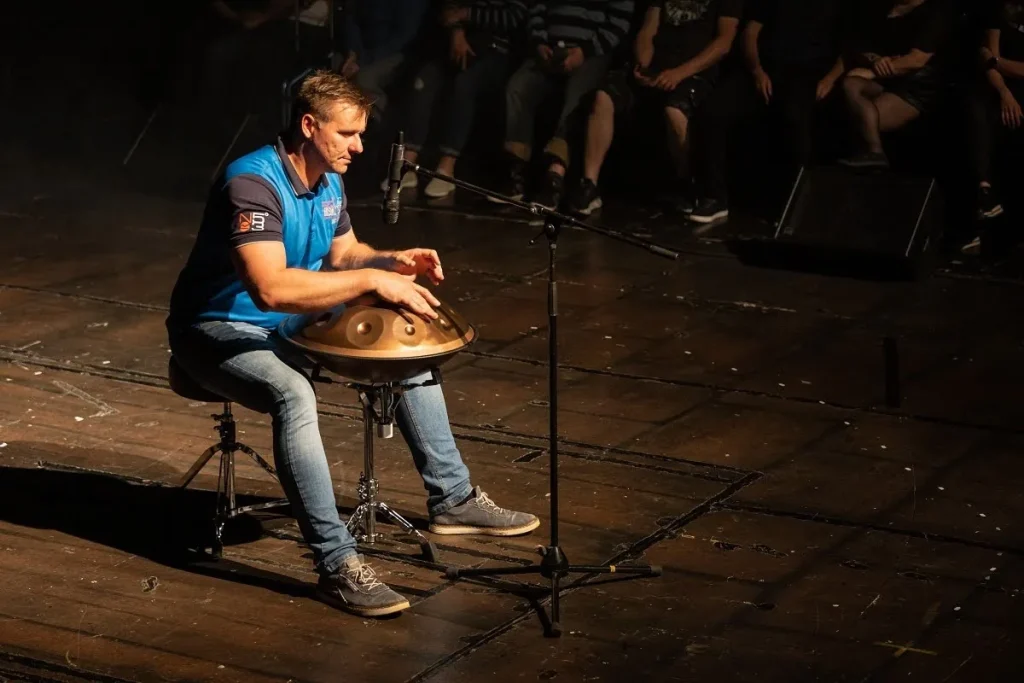
Buying a secondhand handpan can cut the cost by up to 50% and give you immediate access to an instrument instead of waiting several months for a new one.
This guide helps you make the most of your budget without sacrificing quality. It follows a clear process: understand the market, check the sound and appearance, assess the price, choose a reliable seller, protect the transaction and plan for maintenance.
Disputes mostly concern note tuning. Bring a chromatic tuner and test the instrument carefully. A UV lamp can help reveal hidden defects and touch-ups.
Your assessment should go beyond dents: check note stability, crosstalk, sustain, corrosion and hairline cracks. Professional retuning generally costs €150 to €400, depending on the severity of the problem.
In this active market, a reasonable secondhand price is often 40% to 70% of the new price. Ask for clear photos, playing videos and seller references to reduce the risks of buying online.
Goal: provide practical advice for making a safe, informed choice, from your initial search through ongoing care.
Why buy a used handpan today?
Buying secondhand can turn a musical dream into a realistic, immediate purchase.
Savings and availability. In the French market, buying used can reduce the cost by up to 50% and avoid a 6- to 18-month wait for a new instrument. It can give you quick access to high-quality models.
Access to sought-after models. Instruments from respected makers sometimes disappear from the market. Buying used remains a way to find rare or discontinued models.
An active market and plenty of opportunities. New listings appear regularly; watching specialist platforms improves your chances of finding a good deal.
Before contacting a seller, decide on your budget, preferred scale and musical needs. Trying the instrument or watching a video can help you choose with confidence.
Trust and safety. Cross-checks, reviews and video evidence make a purchase safer. For a guide to typical prices, see the average price of a good instrument.
Understand the market, prices and value
Price often reflects quality, workmanship and rarity. Understanding these factors is essential.
Price ranges in France: a new instrument generally costs between €800 and €3,500, depending on craftsmanship, treatment (nitriding) and materials. For a used instrument, a practical rule of thumb is 40% to 70% of the new price, depending on its condition, age and accessories.
What increases value: the maker’s reputation, limited editions and stable tuning all play a key role. Careful workmanship and precise tuning justify a higher price and help preserve resale value.
Materials and quality levels
Stainless steel: corrosion resistance and a lasting appearance. Nitrided steel: better tuning stability and sustain. Ember steel: a warmer sound, but maintenance needs and stability vary.
“Limited editions and instruments from recognized makers retain their market value better.”
Practical benchmarks
- The number of notes and the coherence of the scale affect the price.
- Appearance, included accessories and year of manufacture affect value.
- Comparing similar models helps support your negotiations.
| Factor | Effect on price | Price benchmark |
|---|---|---|
| Build quality | Large increase | New: €1,200 to €3,500 |
| Materials | Moderate to large | Stainless / nitrided / Ember steel |
| Rarity and maker | Very large | Limited editions: higher price |
| Condition and accessories | Variable | Used: 40% to 70% of the new price |
Used handpan: check its tuning and condition
Before buying, systematically test every note with a chromatic tuner. Set the reference to 440 Hz (or 432 Hz if specified), then record each note’s pitch and stability. Some 63% of disputes concern this issue: a simple tuner can prevent many disappointments.

Inspection procedure
Gently play each note with a consistent touch. Check the tuner reading, then repeat the test after 30 seconds to confirm stability.
What to listen for
Listen for crosstalk, sustain and the balance of the partials. If notes fade quickly or drift, sound quality is compromised.
Visual inspection and warning signs
Examine the rim, edges and tone fields. A UV lamp or flashlight may reveal hairline cracks and touch-ups. Look for rust or paint that could conceal impact damage.
When to budget for retuning
If several notes drift, allow about €150 to €400 for professional retuning by cold hammering. Record your measurements and observations so you can negotiate the price or request a repair before buying.
For a complete guide to inspection before purchase, read this practical guide.
Test sound quality without being an expert
With a basic microphone and a little attention, you can assess stability and tone in a few minutes.
A simple listening procedure: start with the low notes, then work up to the high ones. Note the clarity, sustain and coherence of the scale each time.
Make a quick comparison recording
Keep the microphone at the same distance for every take. Record a short passage of the same piece twice and save the files for comparison.
Compare your recordings with a reference video of a respected instrument in the same scale. If needed, use an analysis app to assess note stability.
Video, an in-person trial and a second opinion
Ask the seller for an unedited video showing each note close up, played first softly and then at a moderate volume. If possible, arrange to try the instrument in person.
Practical tip: bring an experienced musician for a second opinion. Another listener may quickly spot crosstalk and dynamic problems you might miss alone.
- Choose a quiet setting to minimize recording artifacts.
- Repeat recordings at different times to check consistency.
- Ask the seller when the instrument was last serviced and how it behaves after transport.
For more information about these instruments, see the handpan instrument page.
Age, history and provenance: assess reliability
Before buying, gather documents that trace the instrument’s history. Ask for its date of manufacture, original invoice and maker’s certificate. These documents help confirm its origin and assess the asking price.

Manufacture, nitriding and documented maintenance
Ask how it was made and whether it uses stainless steel, nitrided steel or Ember steel. Modern nitriding improves corrosion resistance and helps notes retain their tuning.
Older production runs may have used less stable processes. Request details of all servicing: dates, workshops and work performed.
Essential questions for the seller and evidence to request
- What are the manufacture date and serial number?
- Are there invoices or certificates to support its history?
- What work has been done on it (adjustments or repairs)?
- How has the instrument been stored and transported?
“Choose sellers who are open with information: evasive answers are often a warning sign.”
Practical tip: cross-check information online, investigate the maker’s reputation and include all these factors in the total cost (repairs, maintenance and transport).
Assess the price of a used handpan and negotiate well
Assessing a fair price takes a methodical approach: compare, calculate and document. Start by examining comparable listings to put the asking price in context.

Key price benchmarks
Use 40% to 70% of the new price as a guide, depending on condition, age and accessories. Factor in possible retuning costs (about €150 to €400).
Comparison table
| Factor | Effect on price | Price benchmark |
|---|---|---|
| Cosmetic condition | Moderate to large | Dents and scratches: 5% to 20% reduction |
| Acoustic condition | Large | Unstable notes: 15% to 40% reduction, plus adjustment costs |
| Accessories and history | Small to moderate | Cover, case and invoices: 5% to 10% increase |
Negotiation strategies
- Gather comparable listings and a selection of similar models.
- Support every request with evidence: photos, tuner readings and service history.
- Allow room to negotiate by 10% to 15%, and explain your offer without applying pressure.
Confirm the agreement in writing: final price, stated condition, listed accessories, handover and shipping arrangements. This helps protect the purchase.
Where to buy with confidence in France
Finding a reliable instrument in France starts with established sources and straightforward checks.
Specialist platforms: Zikinf, Greenmusicians and Audiofanzine offer filters for scale, brand and condition. These sites often display reviews and ratings that can help you assess sellers.

General marketplaces
Leboncoin and eBay have many listings, but require care. Ask for high-resolution photos from every angle, proof of authenticity and an unedited video.
Groups and shops
Facebook groups such as French Handpan Connection can help you find rare models and hear about other buyers’ experiences. Local shops and workshops offer a key advantage: you can test the instrument on site and have it serviced before the sale.
- Check how promptly the seller responds and review their sales history.
- Try the instrument in person whenever possible.
- Favor sellers with complete profiles and verified ratings.
| Channel | Advantage | Precaution |
|---|---|---|
| Specialist platforms | Filters, reviews and detailed listings | Check ratings and photos |
| Marketplaces (Leboncoin, eBay) | Many listings and competitive prices | Request videos and proof of authenticity |
| Groups and shops | Advice, in-person trials and servicing | Ask for invoices and history |
Protect the transaction and delivery
Holding the funds through an escrow service offers strong protection for an online purchase. Providers such as PayEscrow or MusiProtect hold the payment until the instrument has been received and inspected, with a very low fraud rate. That delay lets you check the instrument before payment is released.
Protected payments and seller checks
Read reviews and examine the seller’s history. Ask for supporting documents: an invoice, identification and dated photos. A seller who provides clear information inspires confidence and reduces the risk of a dispute.
Packaging, insurance and returns
Insist on sturdy packaging: a double box, dense padding and protection for the dome and edges. Request dated photos of the sealed package before dispatch.
- Require shipping insurance and a tracking number.
- Document the instrument’s condition on arrival with photos and a video.
- Clarify the return policy in writing: deadlines, conditions and who pays the costs.
Tip: choose an in-person handover whenever possible. Trying the instrument on site and obtaining a signed receipt describing its condition and accessories make any later claim easier.
Pitfalls and warning signs
In an active market, a few clues can help distinguish a bargain from a trap. Nearly 15% of online transactions run into problems, such as stolen photos, hidden defects or incomplete listings.
Very low prices, blurry photos and no proof of authenticity
Warning signs: an unusually low price without explanation, blurry photos or photos from only one angle, and no certificate or invoice.
Always request detailed images and a complete, unedited playing video. Ask the seller for proof of origin.
Recognize substandard or counterfeit instruments
Check the finish, the consistency of the edges, the logos and whether the instrument matches the stated maker. Visible makeshift repairs and an inconsistent sound often point to a problem.
- Reject offers that lack transparency.
- Compare market prices to spot anomalies.
- If in doubt, ask an accredited workshop for a quick metallurgical assessment.
Tip: a certificate of authenticity and clear photos save time and help prevent disputes.
Care for your used handpan after purchase
Cleaning, rust-preventive oils and storage
Wipe the instrument with a microfiber cloth after each session to remove sweat and marks. Avoid harsh products that could damage the metal’s finish.
Apply a suitable rust-preventive oil periodically, especially to the edges and rim. Store the instrument in a dry place at a stable temperature.
Put silica gel packets in the case to limit moisture. Avoid direct sunlight and sudden temperature changes.
Retuning frequency and signs of drift
Plan for professional retuning every 1 to 2 years, depending on use. Monitor sound quality: shorter resonance, dissonance or drifting notes are warning signs.
Use a tuning app to track stability over time and record any drift before arranging a repair.
Transport: padded bag, hard case and protection
A padded bag is enough for short journeys. For frequent travel, choose a hard case with internal protection for the rim and edges.
Ask whether the shop offers maintenance or a limited warranty after purchase. For a guide to buying an affordable handpan, compare the available models and services as well.
Conclusion
To finish, remember the key steps that protect your musical investment.
Understand the market, test each note’s pitch, inspect the instrument’s appearance and request its history. Always compare the asking price with the new price to assess its true value.
Follow a method: use checklists, comparison recordings and second opinions. Request detailed photos and unedited videos, and try the instrument in person whenever possible.
Practical advice: protect the payment, require sturdy packaging and insure the shipment. Quality comes first: plan for maintenance and adjustments to preserve the sound.
The secondhand market offers excellent opportunities if you remain alert. For more help, see our inspection guide.