

The kalimba, also known as the thumb piano, is a captivating musical instrument. Its popularity has soared in recent years, thanks in part to viral videos on social media. It is ideal for beginners because it is quick and easy to learn.
In this article, you will discover how to choose the right kalimba for you. We will guide you through the essential considerations, including the number of tines, the material, and the accessories you need. Whether you are an adult looking to relax or a parent hoping to introduce a child to music, this guide is for you.
We will also recommend models suited to different players. Our aim is to help you make an informed choice so your kalimba can become a lasting musical companion.
Understanding the kalimba: an appealing, accessible instrument
Originating in Africa, the kalimba is a captivating musical instrument. Also known as the mbira or sanza, it was traditionally made by peoples of the Zambezi Valley. Its popularity has grown considerably, particularly through viral videos on platforms such as YouTube and Instagram.
The kalimba is an instrument known for its simplicity. It is most often tuned to C major, giving it a gentle, harmonious sound. Beginners can therefore practice without worrying too much about wrong notes. Each tine produces a specific note, and the number of tines affects how complex the instrument is to play.
Remarkably, even notes played at random tend to sound harmonious together. That encourages players to keep learning and enjoying themselves.
- The kalimba has roots in Africa’s Zambezi Valley, where it was made by hand long before social media introduced it to a wider Western audience.
- Today, the instrument appeals to a wide range of people, from children and adults to piano teachers who want to introduce their students to a new melodic instrument.
- Viral kalimba videos on YouTube and Instagram have helped bring this small instrument and its soothing, enchanting sound to a much wider audience.
- The kalimba works on a simple principle: metal tines attached to a wooden or acrylic body are plucked with the thumbs to produce notes.
- Each tine corresponds to a specific note, and the symmetrical arrangement of the keys makes them easy to find by sight and touch, helping you play smoothly and intuitively.
- The kalimba is often compared to a miniature piano held in the hands. Its nickname, thumb piano, captures its distinctive playing method.
- Its rich sound often surprises newcomers: despite its small size, it produces warm overtones reminiscent of a harp or chime.
Understanding the kalimba’s history and basic workings will help you appreciate the buying criteria covered in the following sections. Whether you want to make music for pleasure or develop your technique, the kalimba offers an accessible and deeply satisfying introduction to musical instruments.
Essential factors when choosing a kalimba
Choosing a musical instrument is an important step for any player, beginner or experienced. The kalimba, with its lovely sound and simplicity, is no exception. Several factors will help you make the right choice.
Number of tines: how much complexity suits your level?
The number of tines has a major effect on how complex the instrument is to play. A kalimba with five or eight tines is ideal for children or anyone discovering the instrument. A 17-tine model, on the other hand, is often recommended for more sustained learning.
For adult beginners, a kalimba with 10 to 17 tines offers a good balance between ease of use and the range of music you can play. Models with 21 or more tines are intended for experienced players who already understand music notation.
Material: wood or acrylic?
The material has a strong influence on sound quality. Mahogany, for example, produces warm, gentle tones. Acrylic offers a clearer, more crystalline sound but can be heavier to hold.
Try both materials if you can to find out which best suits your preferred sound and playing comfort.
Sound box: hollow or solid?
The body plays a key role in amplifying the sound. A hollow kalimba naturally amplifies its notes and lets you change the sound by covering its holes with your fingers. A solid-body, or flat, kalimba is lighter and quieter, making it well suited to calm environments.
Ergonomics and a design that fits your hands
Ergonomics are often overlooked, but they matter. The kalimba should be narrow enough for you to reach the central tines easily without straining your thumbs. A well-designed instrument will remain comfortable during longer playing sessions.
Its appearance can also affect your motivation. You are more likely to play a kalimba regularly if you like how it looks.
| Factor | Options | Effect |
|---|---|---|
| Number of tines | 5 to 8, 10 to 17, 21 or more | Playing complexity |
| Material | Mahogany, acrylic | Sound quality |
| Body | Hollow, solid | Sound amplification |
| Ergonomics | Width, design | Playing comfort |
In short, taking time to consider these factors before choosing a kalimba can help you avoid disappointment. An informed choice makes for a more rewarding musical experience.
Which kalimba should you buy for your skill level and budget?
The right kalimba depends on several factors, particularly your musical experience. Whether you are new to music or an accomplished player, there are models suited to you.
Kalimbas for beginners: simplicity and immediate enjoyment
To get started, a kalimba with no more than nine tines is recommended. This type of instrument is ideal for discovering the basics of music. A classic model tuned to a pentatonic scale is a good starting point.
A mahogany kalimba is a good choice because the wood provides a resonant body. An instrument with 10 to 17 tines is easy to learn on while giving you room to progress.
If you mainly want to play for fun, an entry-level kalimba costing between €30 and €50 should be enough. Check its build quality before buying.
Kalimbas for intermediate players: a balance of complexity and quality
For intermediate players, a kalimba with 15 or 17 tines is recommended. Brands such as Gecko and Hluru offer solid mahogany models that support the next stage of technical progress. These instruments have a wider range and better resonance.
Intermediate players will also appreciate being able to explore more complex pieces thanks to the higher sound quality of these kalimbas.
Kalimbas for advanced players: rich sound and precision
Advanced players may prefer premium kalimbas with 21, 24, or even 34 tines. Models such as the Sela SE 246 and the 26-note AMI Hugh Tracey Alto Chromatic offer exceptional tonal richness.
A chromatic kalimba lets you play in different keys, which can justify a larger investment. Whatever your level, choose an instrument that makes you want to play every day.
| Player level | Number of tines | Approximate price |
|---|---|---|
| Beginner | 10 to 17 | €30 to €50 |
| Intermediate | 15 to 17 | €50 to €100 |
| Advanced | 21 to 34 | €100 to €200 |
In short, your kalimba should reflect your skill level and musical goals. A good instrument fits your hands and playing style while offering a rewarding musical experience.
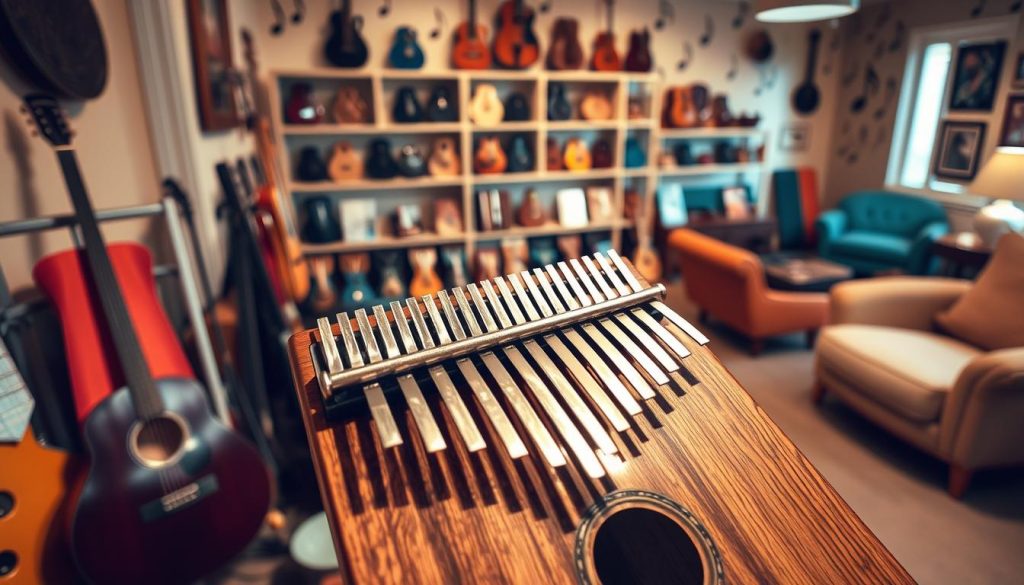
Essential accessories for getting started
A few accessories can help you get the most from your instrument. They make learning easier and improve your playing. Here are the main items to consider when you begin.
Tuning hammer and sound adjustments
A tuning hammer is the most important accessory for a kalimba player. The tines can drift out of tune over time or with changes in temperature, so you may need to adjust them regularly.
Without this tool, you risk playing an out-of-tune instrument, which can hinder your ear training. A good hammer, such as those made by Hokema, allows fine adjustments and helps extend the life of the tines.
Note stickers and instruction booklets
Colored note stickers go directly on the steel tines. They help beginners find notes such as C and G. These visual guides can speed up learning.
A good instruction booklet, often included in starter kits, provides simplified sheet music. It can help you play your first pieces within minutes. Some kits even include QR codes linking to online video tutorials, making learning more interactive.
Protecting and carrying your kalimba
A carrying case is essential for protecting your instrument. It cushions the tines against knocks and keeps dust out of the sound box. Brands such as Kaces and Gator offer quality cases suited to players’ needs.
A soft cloth is also useful for cleaning the tines after each use. This helps your kalimba last longer and preserves the sound quality of its steel keys.
Consider buying a complete kit with the kalimba and these essential accessories. The extra cost is small compared with the added convenience. Their inclusion can also be a useful sign of a seller’s care and the overall quality of the product.
| Accessory | Purpose | Importance |
|---|---|---|
| Tuning hammer | Pitch adjustments | Essential |
| Note stickers | Finding notes | Very useful |
| Instruction booklet | Simplified sheet music | Recommended |
| Protective case | Transport and protection | Essential |
| Cleaning cloth | Tine care | Advisable |
Comparing materials: advantages and disadvantages
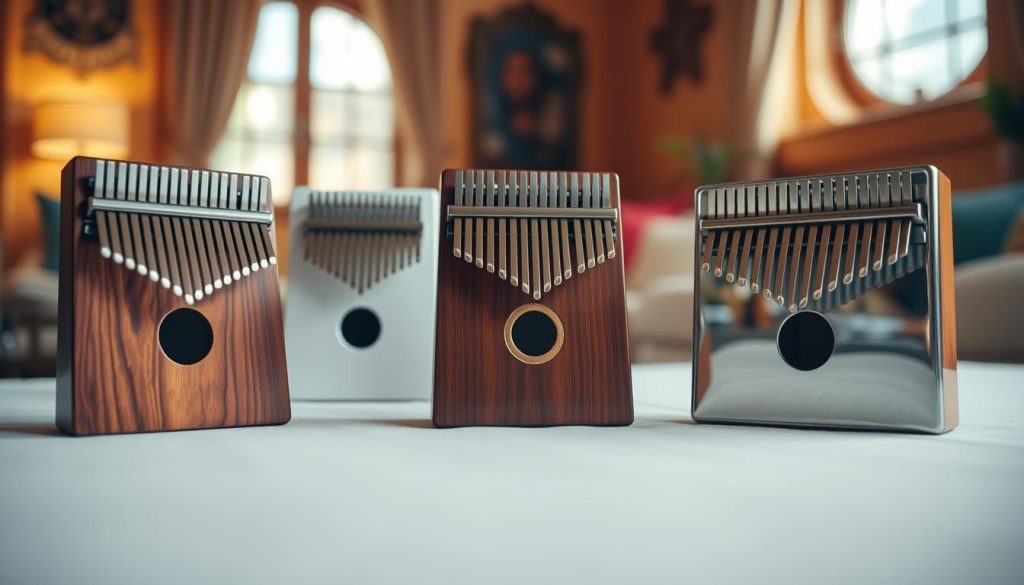
An instrument’s material is an important consideration. For kalimbas, two common choices are mahogany and acrylic. Each affects the instrument’s sound, comfort, and durability.
Mahogany: warm sound and light weight
Mahogany is perhaps the most common material for beginner kalimbas. It produces a rounded, gentle sound, with enough sustain for each note to ring clearly. It is also lightweight, so you can hold the instrument longer without tiring your wrists.
Established brands such as Gecko and Hluru offer mahogany models whose finish and build quality make them suitable first purchases. Mahogany kalimbas produce rich overtones reminiscent of a small harp or gentle chime, along with pleasing natural resonance.
- Mahogany is light, making longer playing sessions less tiring.
- Mahogany kalimbas are known for their warm, pleasant sound.
- They are often affordably priced, which suits beginners.
Acrylic: appearance and weight
Clear or colorful acrylic kalimbas immediately catch the eye. Their brighter, more crystalline sound may appeal to some players. Acrylic is generally heavier than mahogany, however, and you may notice the difference after a few minutes of playing.
For a beginner, the extra weight and sometimes very smooth surface can make the instrument less secure in the hands. Wood absorbs and transmits the tines’ vibrations in a more organic way, offering a different playing experience.
- The modern appearance of acrylic kalimbas can be an aesthetic advantage.
- They produce a sharper tone, though one that is less warm than wood.
- Their greater weight can make playing tiring sooner.
For a first purchase, mahogany is a sensible choice. You could consider acrylic as a second instrument once you have mastered the basics of the thumb piano. Listening to recordings that compare mahogany and acrylic models may help you decide which sound you prefer.
| Material | Advantages | Disadvantages |
|---|---|---|
| Mahogany | Warm sound, light weight, rich overtones | Less variety in appearance |
| Acrylic | Modern appearance, bright sound | Heavier, less secure in the hands |
How your budget affects your kalimba choice
Your choice of kalimba often depends on how much you are willing to spend. Models are available at a range of prices to suit different needs.
If you mainly want to play for fun, an entry-level kalimba should be enough. A budget of no more than €50 is reasonable, and you can find good kalimbas for around €30 to €40.
If you want to develop your technique, consider a mid-range or premium model. Be cautious with instruments costing less than €20, as their quality is often poor. They may discourage a beginner and leave a bad impression of the instrument.
Entry level: accessible quality and price
In the €30 to €50 range, you can find mahogany kalimbas of respectable quality. These instruments let you play simple melodies and follow online tutorials. They offer real musical enjoyment without a large investment.
Mid-range and premium: investing in progress
If you plan to make steady progress, it can make sense to invest in a mid-range or premium kalimba from the start. Models often priced between €50 and €100 tend to have a better finish and may use woods such as walnut or koa.
Premium kalimbas costing more than €100 may stand out for their craftsmanship and wider musical possibilities. Some even include an output jack for recording your performances, a useful feature for dedicated players.
Overall, value for money matters. A well-made €40 kalimba could serve you for years, while a poorly made €15 model may soon end up in a drawer.
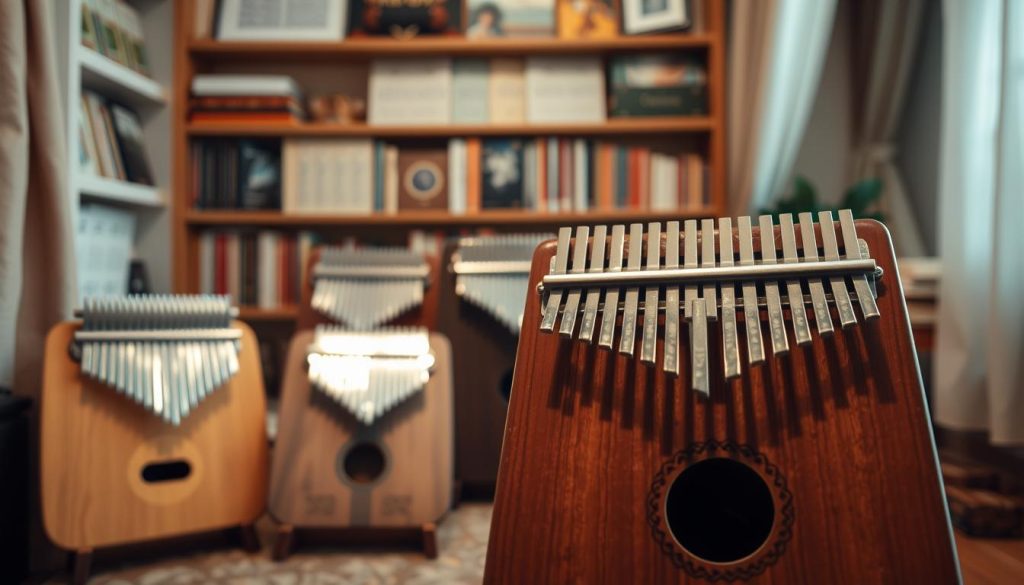
Recommended brands and models for different players
Choosing a kalimba can seem complicated. Every player, from beginner to expert, has different needs. Here is a selection of models suited to each level of experience.
Kalimbas for beginners
For those just starting out, Meinl makes the five-tine KA5S. This sturdy, easy-to-use instrument is well suited to complete beginners.
Another good choice is the seven-tine Hokema B7. Its distinctive shape and comfortable feel make it suitable for a first encounter with the kalimba.
For adult beginners, a standard 17-tine kalimba from a brand such as Gecko or Hluru offers good value, generally costing around €35 to €45.
Models for intermediate and advanced players
For intermediate players, the 10-tine Meinl KL1008H Sonic Energy is a noteworthy option. Made from mahogany, this melodic instrument lets you play harmonious notes.
The 15-note AMI Hugh Tracey Alto, handmade in South Africa from kiaat wood, offers a rich sound and impressive vibrato effects.
For advanced players, the 17-tine Sela SE 246 is a quality instrument. Tuned to C major, it produces a clear, warm sound suited to advanced performances.
Finally, the 26-note AMI Hugh Tracey Alto Chromatic kalimba is designed for experienced musicians. Its two rows of tines let you explore more complex music.
Lingting and Hluru also stand out in the premium kalimba market for their careful finishing and selection of woods.
Whatever model you choose, look for brands that provide customer support and spare parts. Both can help you keep your instrument in good playing condition for longer.
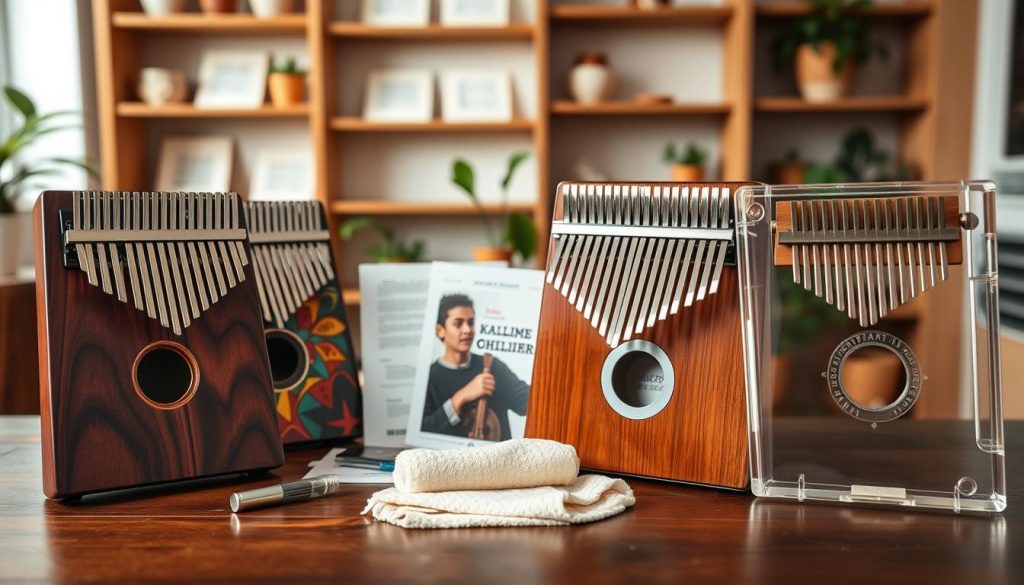
Practical tips for buying in France
Choosing a good kalimba can seem complicated, but a few practical tips will help. Look for an instrument made with quality materials, such as wood and stainless steel, that suits your needs and how you intend to play.
You do not need a premium brand for your first kalimba. If you are unsure whether you will enjoy the instrument, consider a beginner kit instead. Many unbranded kits have worked well for buyers, as their positive reviews show.
If you buy online, take time to listen to sellers’ audio samples. They will give you an idea of the instrument’s sound. In a shop, hold several kalimbas for a few minutes each to compare their comfort.
Where can you buy a kalimba?
In France, you can buy a kalimba from several places:
- Specialist musical instrument shops, where you may be able to try it before buying.
- General online marketplaces such as Amazon, which offer a wide selection at different prices. Read customer reviews carefully to judge the product’s quality.
- Specialist online shops such as Instruments du Monde, which offer well-made models.
Assessing quality and reliability
To assess an online seller, check for the following:
- Responsive customer service and a clear returns policy.
- A substantial number of detailed, positive product reviews.
- Well-aligned stainless steel tines and a wooden body free of cracks or chips.
- Accurate C-major tuning straight out of the box.
Be wary of deals that seem too good to be true. A kalimba costing less than €20 may be made from poor-quality materials that detract from your playing experience.
Beginner kits containing a kalimba, tuning hammer, stickers, and case often offer the best value for a first purchase. Brands such as Gecko and Hluru also offer quality models at reasonable prices, balancing quality and budget.
Finally, compare several models and sellers before buying. That way, you can weigh the price, included accessories, and shipping costs.
A considered purchase in France can give you a quality kalimba that supports your musical learning for years, whether you play for pleasure or want to improve your technique.
| Assessment criteria | What to check | Why it matters |
|---|---|---|
| Materials | Mahogany, stainless steel | Sound quality |
| Seller | Customer service, returns policy | Reliability |
| Ratings | Customer reviews | Confidence in the product |
| Accessories | Beginner kits | Value for money |
Playing and improving: your first steps with the kalimba
When you start playing, get to know the instrument’s particular features. Many online resources can help you learn the kalimba, improve your playing, and learn your favorite pieces.
Over time, you can explore other scales, such as minor scales, to broaden your musical experience. One of the kalimba’s greatest strengths is how intuitive it feels. It remains approachable even when you change its tuning.
Some models arrive already tuned, but a small tuner is still useful. A tuning hammer lets you adjust the tines by gently tapping the bases of the keys, somewhat like a simplified version of tuning a piano.
Online tutorials and resources
Once you have your kalimba, begin by learning the arrangement of its tines. Use the supplied stickers to identify the notes of the C-major scale.
- Video tutorials on YouTube are a valuable way to learn. Many creators offer free lessons, visual notation, and arrangements of popular songs.
- Kalimba mobile apps offer progressive exercises, tuning tools, and even ways to compose your own melodies on your phone.
- To improve steadily, spend at least ten minutes a day with your kalimba. Regular practice is more effective than occasional long sessions.
Tuning and care
Regular tuning is important. Over time, the tines can drift slightly out of tune and may need a tap with the hammer to restore the correct notes.
- A small electronic tuner or a tuning app on your phone can help you check each tine’s pitch.
- Regular care includes wiping the tines with a soft cloth to prevent dust from building up.
- Always put your kalimba in its protective case after playing. The case helps protect it from knocks, moisture, and temperature changes that can affect the wood and tuning.
Try different styles of music on your kalimba, from film scores and popular songs to classical melodies and your own compositions. Joining an online community of players can help you exchange tips, share your progress, and find inspiration to keep learning.
Conclusion: choosing a kalimba you will enjoy for years
Choosing an instrument is personal. Your choice depends on your experience, the sounds you want to make, and how you plan to use it. A well-chosen kalimba can bring daily satisfaction and enjoyment to you and those around you.
Keep the essential factors in mind: a number of tines that suits your level, lightweight mahogany for its warm sound, and a resonant body for a fuller tone. Remember accessories such as a tuning hammer and note stickers, which can make learning easier.
The French market offers a wide range of models, from affordable options to more refined instruments. Compare your choices, listen to sound samples, and read other players’ reviews. The best kalimba is the one that makes you want to play every day.
With proper care and good learning resources, your instrument can serve you for years. Whether you are a curious beginner or an experienced musician, the kalimba promises a rewarding musical experience.
Use this guide to make your choice and begin your kalimba journey. You will be glad you discovered its enchanting notes.