
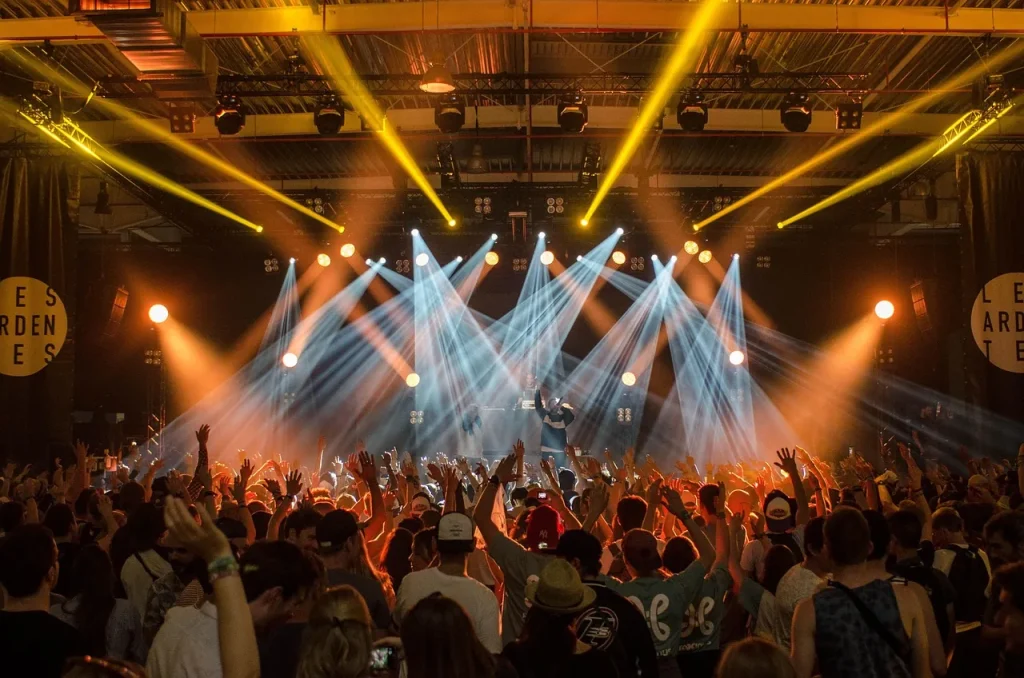
Music festivals have always been laboratories for creativity, where genres mix and evolve. But few fusions have generated as much excitement as the meeting of reggaeton and electronic music. This explosive pairing is transforming dance floors around the world and creating a new form of artistic expression that redefines what a celebration can be.
When two worlds meet
Reggaeton, born in the neighborhoods of Puerto Rico in the 1990s, and European electronic music seemed destined to meet. On one side were reggaeton’s hard-hitting flow and heavy bass; on the other, EDM’s futuristic synths and electrifying drops. This fusion is no accident: it answers festivalgoers’ growing appetite for more intense, danceable sounds.
Pioneers such as Diplo quickly recognized the potential of this blend. His collaborations with artists such as J Balvin paved the way for a new generation of producers willing to draw from both worlds. The result? Tracks that set festivals alight by combining Latin sensuality with electronic energy.
How production has evolved
This fusion has transformed production techniques. Producers now weave traditional reggaeton elements—the signature dembow rhythm, Latin brass and digitally processed vocals—into complex electronic arrangements. The technical challenge is considerable: how do you bring together different tempos and contrasting aesthetics while preserving the character of each genre?
The answer often lies in creative use of effects. Producers use low-pass filters to build tension, reverb to add depth to reggaeton vocals and delay to create rhythmic echoes that unite the two styles. This approach even shapes live performances, as artists adapt their sets in real time.
Live performance reinvented
Onstage, this fusion changes the festival experience. Artists do more than rap over prerecorded backing tracks; they bring in live instruments that enrich their performances. Some, like Bad Bunny during his appearances at European festivals, call on guitarists to add a rock dimension to their reggaeton hits.
This shift is prompting musicians to rethink their technical approach. Guitarists accompanying these artists need to master distinctive sounds: heavy distortion for rock passages, clean tones for melodic arpeggios and modulation effects that blend with the synths. Versatile modern guitar effects become essential when a song moves from pure reggaeton to electronic rock in just a few bars.
Festivals as catalysts
Festivals play a crucial role in this evolution. Tomorrowland, Ultra and Latin festivals such as Lollapalooza Buenos Aires have become spaces where these fusions are tested live. Organizers increasingly book reggaeton artists on electronic stages, creating unexpected moments of shared excitement.
This approach leads to spontaneous collaborations. Audiences have seen Marshmello invite Farruko onstage and David Guetta mix live with reggaeton vocal lines. These moments, impossible to reproduce in a studio, enrich the festival experience and fuel artists’ creativity.
The influence on new generations
This fusion has a profound influence on young Latin American and European producers. A new generation is emerging, including artists such as Tainy, who produces for both Bad Bunny and international electronic DJs. These artists break down genre boundaries and create a musical language that crosses cultural divides.
Festivals are becoming places of discovery where audiences develop more eclectic tastes. Someone who comes for electronic music discovers reggaeton, and vice versa. This openness encourages new subgenres such as “reggaeton house” and “electro dembow.”
Toward a new musical era
The fusion of reggaeton and electronic music may offer a glimpse of the future of festival music. It shows how genres can enrich one another without losing their identities. Reggaeton brings sensuality and an authentic urban character; electronic music brings power and technological innovation.
Festivals that embrace this evolution create distinctive experiences in which cultural diversity is a strength. They anticipate the tastes of a connected global audience that refuses to be confined by traditional musical boundaries.
The art of a successful fusion
The success of this fusion depends on respecting the conventions of each genre. The best collaborations do not dilute reggaeton’s identity in electronic music, or the reverse. Instead, they create a dialogue in which every element has its place.
This approach inspires other blends: reggaeton-trap, reggaeton-pop and even reggaeton-rock. Festivals become spaces for creative freedom, where experimentation is encouraged and artists can take risks.
This musical revolution is only beginning. With reggaeton’s worldwide rise and the constant evolution of electronic music, festivals will continue to offer a front-row view of the connection between two musical worlds that may seem opposed but ultimately complement each other.