

The handpan is an instrument made from two steel shells, with a central dome called the ding and a ring of hand-tuned notes. Its rich harmonics produce vibrations that can be felt in the body.
During yoga and meditation, these enveloping sounds encourage relaxation, ease stress, and help with concentration. They fit naturally into Savasana or sound baths, when their resonance fills the space around the body.
This article sets out how handpan music can immediately create an atmosphere conducive to refocusing. We will explore the relationship between breathing, resonance, and the mind-body connection.
Coming up: practical advice on using this accompaniment in different sessions and its potential benefits for well-being. To learn more about its use in sound baths, read this guide.
Why the handpan appeals to yoga and meditation practitioners
The instrument’s warm tones invite presence and relaxation.
An instrument with captivating, harmonious sounds: its finely tuned notes offer a rich harmonic range. These harmonics create a calming sensation and help listeners settle into a meditative state.
The resonance can be felt in the body and helps release tension. This subtle vibration strengthens grounding and the connection between movement and breath.
From relaxation to overall well-being
Practitioners appreciate the gentle musical phrases because they support the mental transition into practice.
These sounds help leave everyday concerns at the edge of the mat and bring awareness to the present moment. The silence between notes is just as valuable: it allows time to absorb the experience and listen inwardly.
“Music becomes a quiet guide that brings the mind back to the breath.”
- Support: encourages relaxation without distraction.
- Connection: strengthens the mind-body connection.
- Experience: offers a sense of safety and well-being.
Handpan and yoga: creating a gentle soundscape
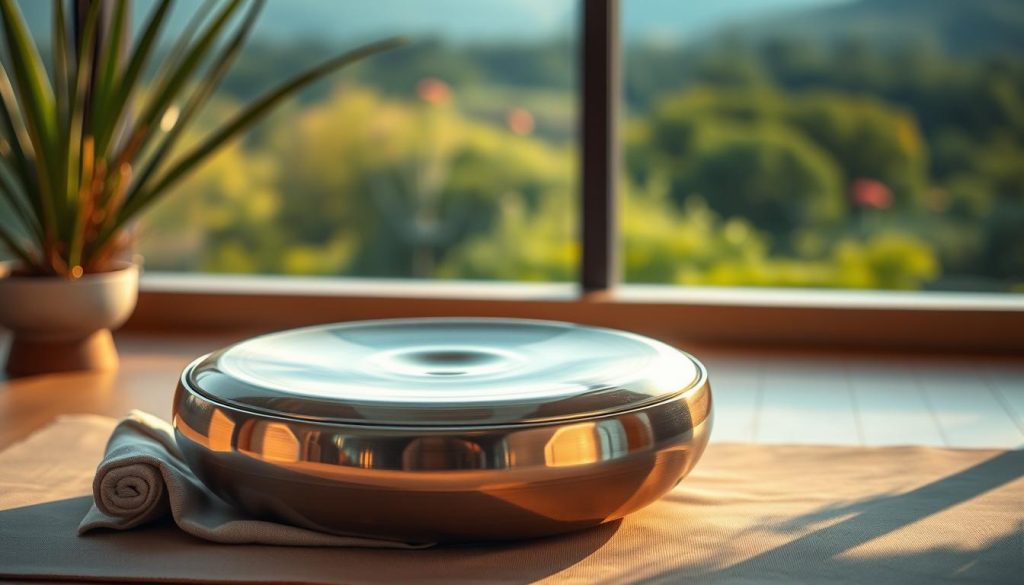
Slow patterns aligned with the breath help steady attention during practice.
Breathing, rhythm, and awareness of the present moment
Matching short musical phrases to each inhale and exhale encourages deep, steady breathing.
A measured rhythm played at low volume supports concentration and strengthens the mind-body connection.
Reducing stress and finding deep relaxation during the session
Slow tempos and gentle dynamics can ease perceived stress and encourage gradual relaxation.
In a sound bath, participants lying down can enjoy resonances that calm the mind and help release tension.
Creating a calming space for a rewarding practice
- Play a few short sounds at the start to help the group refocus.
- Leave space between musical phrases during poses to avoid overwhelming listeners.
- Use more continuous phrases during Savasana to encourage deep relaxation.
“Fewer, better-chosen notes: attentive listening matters more than quantity.”
| When to play | Effect | Tip |
|---|---|---|
| Start of the session | Refocusing | Short phrases aligned with breathing |
| During movement | Subtle support | Intentional silences, low volume |
| Savasana / sound bath | Deep relaxation | Continuous resonance, playing close to the floor |
To explore how to incorporate this accompaniment into a session, read this guide to playing during a session, which covers techniques and timing.
Understanding handpan vibrations and their effect on the nervous system
A rich, sustained tone turns notes into resonance that can be felt physically.
The two precisely tuned steel shells create a field of harmonics that spreads through the air and can be felt in the body. These partials help explain why some notes seem to be felt as well as heard.
Notes, harmonics, and bodily resonance
Partials and harmonics create consistent sound textures. They produce vibrations that may resonate with the body’s tissues and cavities.
Midrange and low notes often feel more enveloping. Sustained notes, gentle ostinatos, and carefully placed silences heighten this sensation.
Calming the nervous system and releasing tension
This vibrational effect can encourage a calmer state. Soft, regular strikes limit overstimulation and help ease stress.
In a sound bath, overlapping harmonics surround the listener and can help release superficial muscle tension. The aim is to focus on the quality of the sound rather than on performance.
To explore the therapeutic aspect further, read this article on therapeutic effects.
Bringing the handpan into everyday yoga practice
A few well-placed sounds can improve the quality of each session.
Key moments: opening, transitions, Savasana
Opening: play a few spaced notes to anchor attention, followed by a short pattern aligned with the breath.
Transitions: play occasional quiet notes that support movement without breaking concentration.
Savasana: play soft layers of sound with gentle strikes to encourage relaxation and a sense of safety.
Guiding the breath and supporting concentration
Offer a simple cue: inhale for 4 counts and exhale for 6. Matching this rhythm to a regular pattern helps steady concentration.
Mind-body connection and presence
Introducing the handpan gradually, for a few minutes per session, can strengthen the mind-body connection and improve the experience.
Live music or recordings: which should you choose?
Live playing brings physical vibrations and a greater sense of presence; recordings offer consistent volume and a wider variety of tones. Depending on your goal, alternate between the two to enrich the practice.
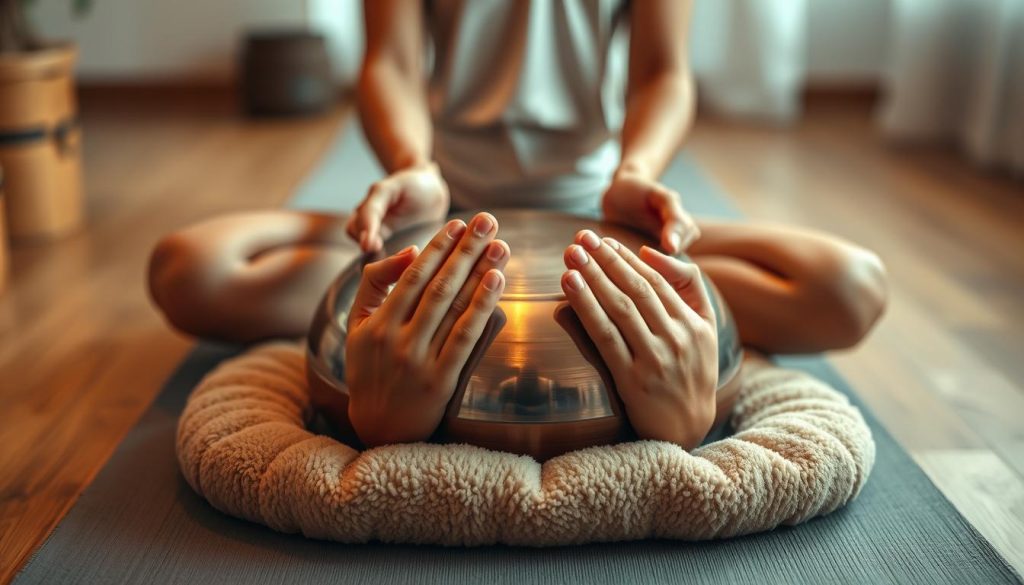
| Moment | Effect | Practical tip |
|---|---|---|
| Opening | Refocusing | 3 to 5 spaced notes, a breathing pattern |
| Transitions | Continuity | An occasional note at low volume |
| Savasana | Deep relaxation | Continuous layers of sound at low intensity |
To find resources and quality recordings, explore suitable tracks.
Meditation, sound journeys, and handpan sound baths
Immersing yourself in sound can turn meditation into an inner journey.
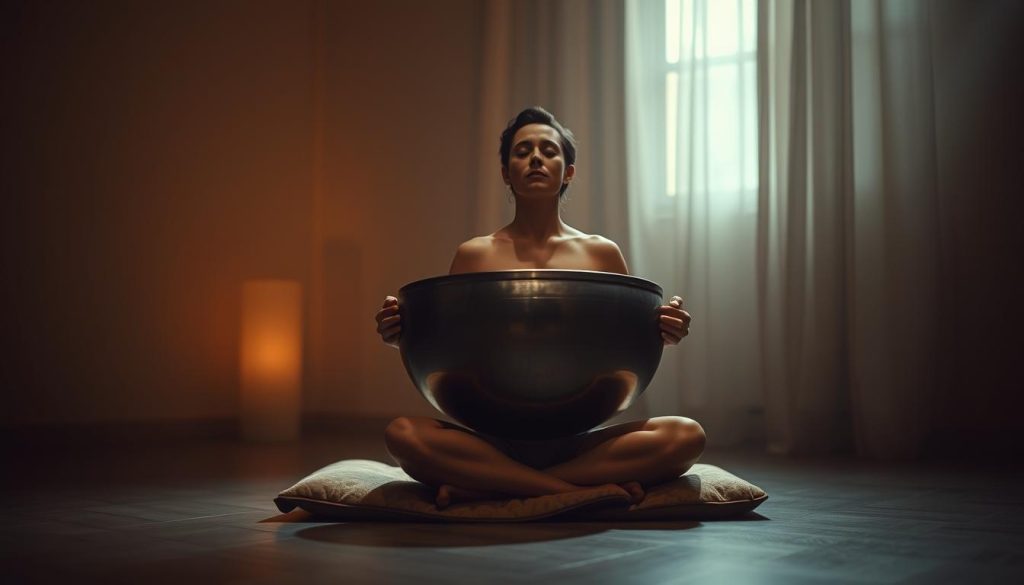
The sound bath: participants lie down and let the handpan’s layers of harmonics surround them. These vibrations calm the mind and encourage deep relaxation.
The sound bath: an immersive experience for the mind
Settle into a comfortable position under soft lighting and focus on the sounds. Keep the volume low so it does not scatter your attention.
The vibrations can ease mental strain and support a sense of inner peace. A few minutes are often enough to notice a change.
A simple handpan meditation, step by step
- Sit or lie down comfortably.
- Play softly and match your breathing to the patterns.
- Follow the sounds and imagine waves or ripples.
- Allow relaxation to deepen and stay in this position for as long as it remains comfortable.
- Finish by letting the music fade slowly.
“Music becomes a map for an inner journey and a return to the present moment.”
Adapting the handpan to different styles of yoga
Each style of session calls for a different approach to sound. Adjusting the notes, duration, and rhythm helps support the group’s intention and energy.
Yin: long notes and release
Choose sustained, widely spaced notes. A gentle touch helps practitioners release tension in long-held poses.
Sustained tones encourage the release of tension in the tissues and prolonged inward listening.
Vinyasa: rhythm, fluidity, and flow
Choose moderate patterns aligned with the breath to accompany movement through the asanas.
Light, repeating phrases ease transitions without dominating the practice.
Kundalini: awakening and rising energy
Use ascending sequences and subtle accents. The dynamics should support a sense of energy moving along the spine.
Keep the volume measured so it does not overpower the exercise.
Yoga nidra: expanded awareness and deep relaxation
Play close to silence, using very short phrases. These faint resonances guide listeners toward a state of deep relaxation.
The overall sound should serve the experience and the mind-body connection.
- Adjustments: choose notes, density, and dynamics to suit the group.
- Reminder: music serves the practice; avoid overloading it with sound.
For more on approaches suited to each style, read this practical guide to incorporating sound into a session.
Practical tips for a harmonious experience
Attentive listening begins with a well-tuned instrument and a suitable space.
Choosing an instrument and assessing sound quality
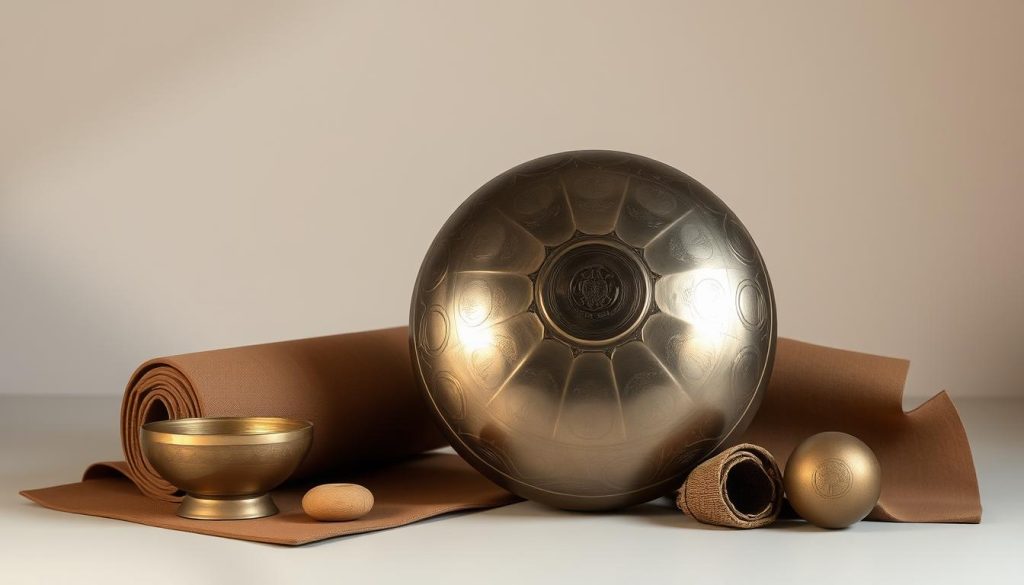
Choose an instrument with stable, reliable tuning. The richness of its harmonics directly affects listening comfort.
Test the instrument at low volume in a quiet room. Check how its sound carries, how long the notes sustain, and the clarity of its harmonics.
Volume, placement, and room acoustics
Keep the volume low to moderate to encourage relaxation and help participants feel less stressed.
Position the musician close to the floor and aim for even sound throughout the room to avoid acoustic “hot spots”.
Mistakes to avoid when preserving a meditative state
Avoid fast passages, abrupt changes, and sharp strikes that disrupt attention.
Reminder: every musical choice should help ease tension and calm the nervous system.
- Choose warm tones and reliable tuning.
- Test the instrument at low volume before the session.
- Limit changes in volume and play with intention.
“Music should support the practice, never dominate it.”
Conclusion
Conclusion
In short, music played with intention can help slow the pace and calm the nervous system.
This instrument produces enveloping sounds that support breathing, concentration, and presence during practice. Its vibrations can be felt in the body and encourage gradual relaxation.
With carefully chosen notes, measured volume, and spacious phrasing, the practice gains depth without becoming overwhelmed. This accompaniment can be used for meditation, a sound journey, or transitions.
Introduce it gradually and adapt it to the group’s preferences. To learn more about its qualities and use in sound baths, explore the benefits of the handpan.