

The kalimba, often called a thumb piano, is a fascinating musical instrument. Each tine produces a distinct note, making it appealing to beginners and experienced musicians alike. There is no perfect model for everyone, though. The right choice depends on each player’s musical interests and abilities.
Models with fewer than 10 tines are generally considered pocket instruments. They are very compact, measuring less than about 10 centimeters. Although convenient, they offer limited musical possibilities. Models with 10 to 15 tines, on the other hand, offer a wider range and a more rewarding playing experience.
In this article, we will explore the three main options: 7, 8, and 10 tines. We will help you decide which kalimba best suits the way you play. Beyond the number of tines, an instrument’s quality also depends on its materials and construction.
Why the Number of Tines on a Kalimba Matters
This wonderful instrument, loved by musicians, is made up of vibrating tines. Each tine produces a distinct note, like a piano key. The number of tines therefore determines the range of notes available. The more tines a kalimba has, the more varied the melodies it can play.
However, more tines also make the instrument more complex. It may become heavier and bulkier, too. The aim is to find a good balance between portability and musical potential. Too many tines can be frustrating, while too few may become boring.
Choose the number of tines carefully. It has no direct bearing on the instrument’s quality. Most kalimbas are tuned in C or G. A lower tuning requires longer tines and produces notes that ring for longer.
Effect on Sound and Musical Range
The number of tines directly affects the variety of melodies you can play. An instrument with more tines lets you explore more notes. This expands your musical possibilities and opens the door to more complex compositions.
Effect on Handling and Playability
A model with too many tines may intimidate a beginner. Conversely, an overly simple model may limit your playing over time. Learning time also varies: you can get comfortable with a 7-tine instrument in minutes, while a 10-tine model takes a little more practice.
Ultimately, no tine count is inherently better than another. Each arrangement suits different uses and skill levels. Think about your relationship with music. Do you want simplicity, or would you like to explore more complex melodies? Understanding why tine count matters is the first step toward choosing the model you will enjoy most.
| Number of tines | Portability | Complexity | Melodic range |
|---|---|---|---|
| 7 | High | Low | Limited |
| 8 | Medium | Medium | Moderate |
| 10 | Low | High | Broad |
7-Tine Kalimbas: Simplicity and Portability
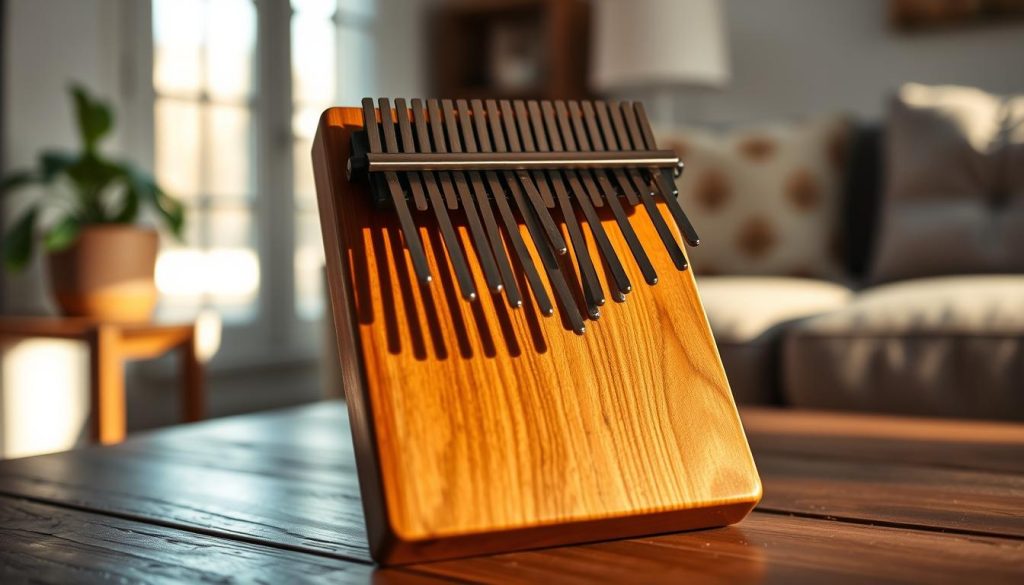
Seven-tine kalimbas stand out for their simplicity and light weight. This type of instrument is easy to pick up and helps beginners become familiar with making music quickly.
Compact and light, this kalimba slips easily into a pocket or bag. It is an ideal companion for travelers and people on the move. Its low weight means it takes up very little space.
With fewer tines, children and new musicians can play without feeling overwhelmed. The melodies available on a 7-note kalimba are simple, but they are enough for early music education and learning basic rhythm.
These models are generally very affordable, making them an economical first instrument or gift. Most 7-tine kalimbas also come without a tuning hammer because their tuning is often fixed and requires little maintenance.
Ease of use is a major advantage. Even without musical knowledge, you can play simple tunes in just a few minutes. This type of thumb piano is often used in schools and introductory music workshops to introduce children to musical instruments.
Still, it is important to recognize this model’s limits. Its small number of notes prevents players from performing complex melodies, which may frustrate more experienced musicians over time.
In short, a 7-tine kalimba is an excellent choice if simplicity, portability, and a gentle introduction to the instrument are your priorities.
| Features | Details |
|---|---|
| Portability | High |
| Complexity | Low |
| Accessibility | Ideal for beginners |
| Price | Affordable |
| Use | Early music education |
8-Tine Kalimbas: A Balance with More Possibilities
The 8-tine model is a natural step up from the 7-tine kalimba. Its extra note broadens the musical possibilities. You can play a wider variety of melodies and explore the instrument further.
This format offers an excellent balance between the simplicity of instruments with few tines and the range of fuller models. Beginners particularly appreciate it because it remains accessible while allowing them to play more elaborate melodies.
The learning curve is short. Even without musical experience, you can master the basics in a few hours. That accessibility is a major advantage for anyone who wants to start making music.
The extra tine lets you play slightly more complex pieces and reduces the chance of getting bored with an overly simple model. Although there are fewer 8-tine models than 17-tine kalimbas, there is still a worthwhile selection available.
This type of kalimba suits children and adults who want to discover the instrument without choosing an overly complex model. It remains highly portable and is only slightly larger than a 7-tine version.
In short, the 8-tine kalimba is ideal if you want a balance between ease of use and wider musical possibilities. For more information about the different models, see our article on the number of tines.
10-Tine Kalimbas: Richer Playing and a Fuller Sound
The 10-tine model is often considered the most capable of the smaller formats. It offers a richer musical experience than the 7- and 8-tine versions.
This format lets you play many familiar melodies with greater accuracy. Playing can therefore feel more rewarding. A 10-tine kalimba can produce fuller, more harmonious music thanks to its wider range.
This model recalls the early kalimbas developed by Hugh Tracey in the 1950s, which already had enough tines for sustained musical playing. Motivated beginners can certainly start with one: it is approachable while leaving plenty of room to improve.
With 10 notes, playing becomes more expressive. You can explore more nuanced melodies and try simple compositions. Although 10-tine models are less common than 17-tine kalimbas, many well-made options are available.
This format resembles a medium-sized thumb piano and suits players who want a substantial instrument without the complexity of larger models. It remains fairly compact and portable, although it is slightly bigger than 7- and 8-tine versions.
In short, a 10-tine kalimba is a versatile choice for anyone who wants to play beautiful melodies on an instrument that remains easy to learn.
| Features | Details |
|---|---|
| Number of tines | 10 |
| Portability | Good |
| Complexity | Medium |
| Accessibility | Ideal for motivated beginners |
| Use | Musical exploration and composition |
Essential Factors When Choosing a Kalimba
Several factors matter when you are considering a kalimba. Each aspect affects both its sound and your playing experience. Here are the main points to consider so you can make an informed choice.
Materials and Wood Quality
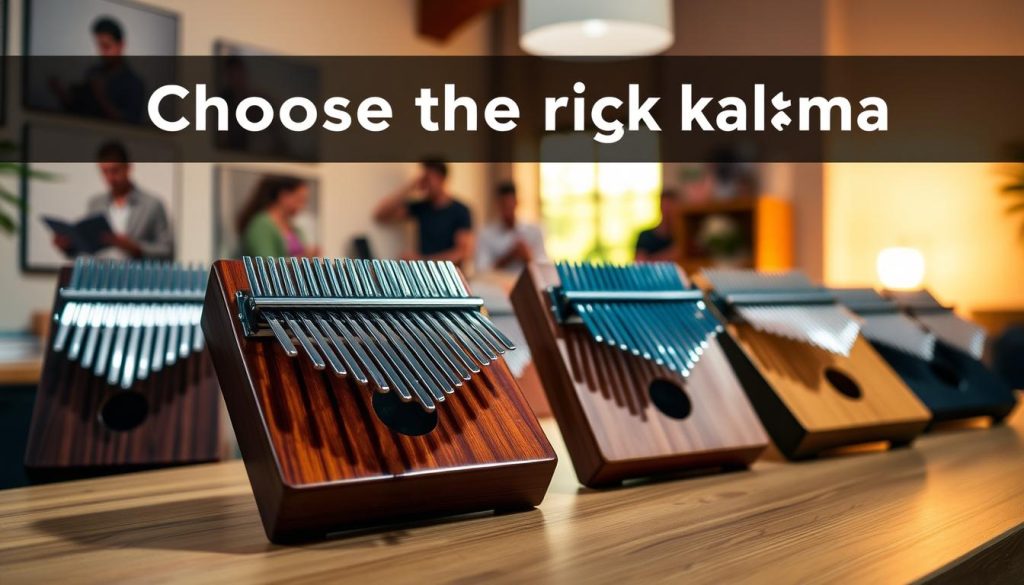
Materials are crucial to how a musical instrument is made. Wood directly affects sound quality and durability. Mahogany is particularly valued for its rich, bright tone. Its density helps it project sound well.
Other materials include koa, bamboo, spruce, and sandalwood. Each contributes a distinctive tone and adds to the playing experience.
A well-made solid-wood instrument can last for years without losing its acoustic qualities. That makes good construction an investment in durability. For the best sound, choose a kalimba made from quality materials.
Tuning and Musical Scale
Tuning is another important factor. Most kalimbas are tuned in C or G, though other scales are possible. Tuning affects the instrument’s range. Longer tines produce lower notes, which may be especially appealing for meditation.
Most models come with a tuning hammer to adjust individual tines. It lets you set the scale you want and explore different keys. Learning to tune your instrument will help you get the most from your kalimba.
Design and Ergonomics
Design and ergonomics affect playing comfort. The instrument’s shape, tine arrangement, and presence of a resonator box all influence its sound. Models with a resonator box can create sound effects using openings at the back.
An ergonomic design makes the instrument easier to hold and lets you play longer without tiring. For young musicians, a light instrument, ideally weighing less than 300 g, is recommended. This helps make playing more comfortable.
In short, choosing a kalimba involves more than counting its tines. Consider all these factors to find the model that will give you the best playing experience. To learn more about available models, see our article about kalimbas.
| Criteria | Details |
|---|---|
| Materials | Solid wood such as mahogany, koa, or bamboo |
| Tuning | Usually in C or G |
| Design | Ergonomic, with a possible resonator box |
| Durability | Solid-wood instruments are more durable |
| Accessories | Tuning hammer included for adjustments |
Which Kalimba Suits Your Skill Level and Needs?
Choosing a musical instrument can shape your learning experience. Some options suit particular skill levels and needs better than others. This guide will help you choose.
Beginners and Children
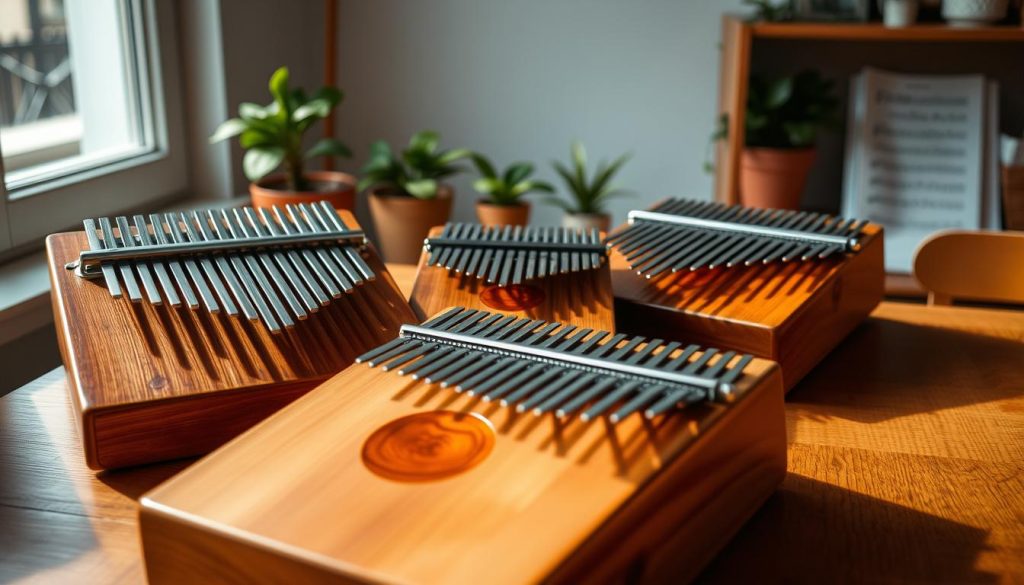
Young children benefit from starting with a simple instrument. A kalimba with fewer tines makes learning easier, helping young musicians become familiar with it without feeling overwhelmed.
Seven- or eight-tine models are ideal for getting started quickly. Even people with no musical experience can play simple tunes before long. These instruments make learning playful and approachable.
Adult beginners may also enjoy these options. However, a 10-tine model remains accessible with a little patience and offers more room to progress.
Intermediate and Advanced Players
For people with some musical experience, a 10-tine kalimba is recommended. It lets them explore varied melodies and work from more elaborate sheet music. Its wider range greatly enriches the playing experience.
Musicians with training may choose an instrument with even more tines from the outset. That will give them more ways to express themselves and experiment with new compositions.
Specific Uses: Music, Meditation, and Composition
For meditation and relaxation, consider a kalimba with a low tuning. Mahogany models are particularly suitable because of their soft, enveloping sound.
For composing and playing with other instruments, tuning in C is a useful choice. It makes creating original melodies easier. A 10-tine kalimba offers enough notes to explore a range of musical ideas.
Most sheet music and tablature available online is written for 17-tine models. With a little creativity, however, you can adapt it for an instrument with fewer tines.
Design and ergonomics also matter for the way you intend to play. A light, compact instrument is ideal for meditation on the go. A model with a resonator box can enrich the sound of your compositions.
To sum up, choosing a kalimba that fits your skill level and needs will help you enjoy playing and keep making progress.
| Criteria | Beginners | Intermediate players | Advanced players |
|---|---|---|---|
| Number of tines | 7 or 8 | 10 | 10 |
| Tuning | Midrange | Varied | C |
| Use | Early music education | Exploration | Composition |
| Materials | Lightweight wood | Mahogany | Mahogany |
7-, 8-, or 10-Tine Kalimba: Which Model Should You Choose?
Choosing the right instrument helps you enjoy making music. Tine count is a key consideration. The right number will help you get the most from your kalimba.
The 17-note kalimba is the best-selling standard model. For anyone seeking a compact format, however, 7-, 8-, and 10-tine models offer appealing alternatives. Price differences between models are usually modest.
A tuning hammer is often included with quality models. It makes it easy to maintain and adjust your instrument over time. Stores such as Instruments du Monde and Kalimba Sanza offer a selection of quality kalimbas, with free delivery on some models.
- Understanding the main differences between the models will help you make an informed choice.
- A 7-tine kalimba is ideal for portability and introducing children to music.
- An 8-tine model offers a useful balance for beginners who want more possibilities.
- A 10-tine kalimba is the most versatile choice: it suits both motivated beginners and experienced players.
- Price should not be your only consideration; wood quality and the presence of a resonator box matter just as much.
- A tuning hammer is essential for most quality models.
- Sheet music found online can be adapted for different formats, but models with more tines provide more ways to interpret it.
- Decide what matters most to you before choosing: portability, simplicity, musical range, or versatility.
- Think about how you will use it: a pocket-sized 7-tine kalimba for travel, or a 10-tine model for more involved playing at home.
- Browse specialist stores to discover quality models with good resonance.
Each model has its strengths. The best choice is the one that suits your needs.
Conclusion: Find the Right Kalimba for You
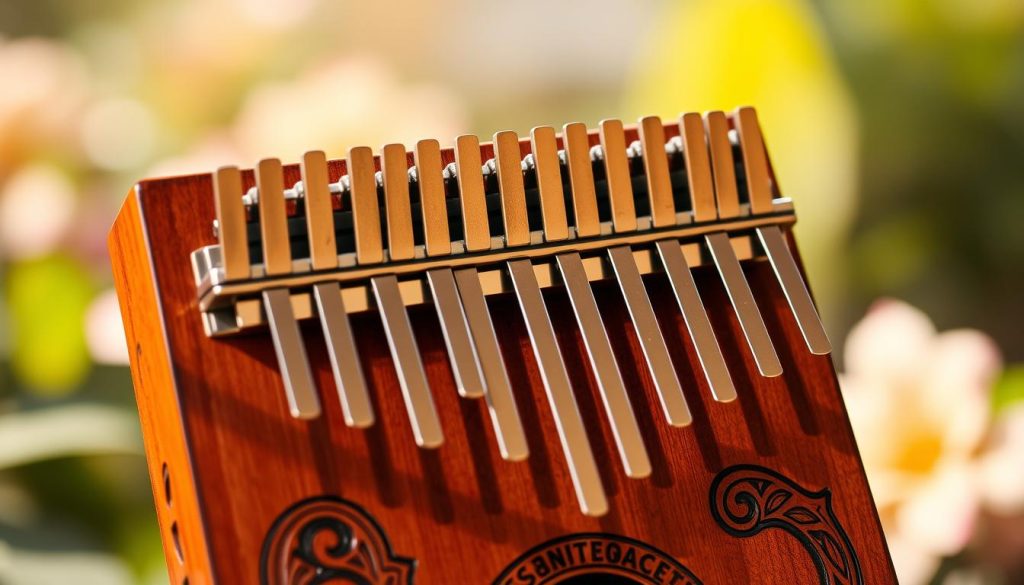
Choosing the right instrument helps you enjoy making music. Match the number of tines to your needs and skill level. A quality kalimba made from solid wood such as mahogany can provide rich sound and lasting performance.
Seven-tine models are excellent for beginners, while 10-tine models suit more experienced musicians. A resonator box can also enrich the sound and offer more expressive possibilities.
Explore the available options and, if possible, try several instruments before you buy. Specialist stores can advise you and help you find the right model. Whichever you choose, the kalimba can bring calm and creativity into your daily life.
Thank you for reading! Feel free to share this article with other music lovers.