
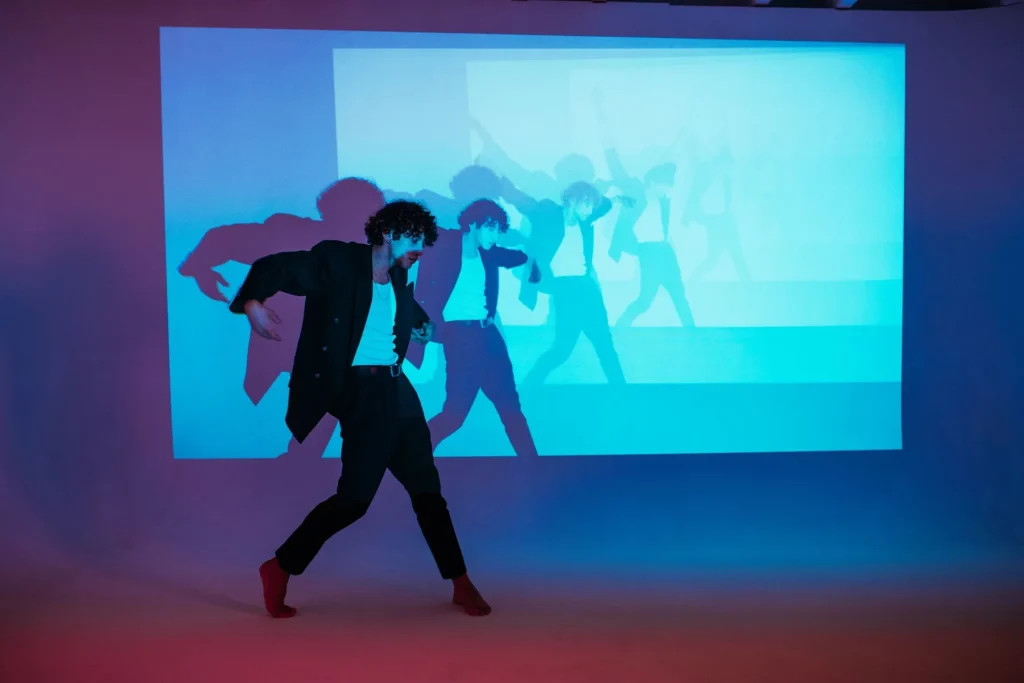
Reggaeton dance is deeply rooted in the history of reggaeton, a musical genre shaped by the complex origins of Latin music. It emerged in the late 20th century, blending reggae, hip-hop, and Caribbean percussion.
The phenomenon extends beyond music. A form of expression shared across generations, it belongs to a vibrant culture of celebration and festivity.
Reggaeton has attracted a worldwide audience. Its dance movements, driven by infectious rhythms, have become iconic. They express freedom and a sense of connection.
The history of reggaeton begins in the underground scenes of Puerto Rico and Panama. The genre then quickly reached the global music scene, thanks in part to artists who played a key role in its rise. To learn more about dance techniques, explore this informative resource.
The origins of reggaeton dance
Reggaeton dance comes from the Caribbean. It evolved under various influences, particularly reggae, dancehall, and salsa, which helped make reggaeton a distinctive genre.
Caribbean musical influences
In the 1980s and 1990s, artists from Puerto Rico and Panama created this style. Their “boom-cha-boom-cha” rhythm reflects their creativity. Artists such as Bob Marley influenced the music, while local scenes helped it develop.
Emergence in Puerto Rico and Panama
Reggaeton became popular in Puerto Rico and Panama. Artists such as Daddy Yankee brought the style to a wider audience. Its blend of hip-hop and Afro-Caribbean rhythms appealed to many listeners and created cultural connections within Latin American communities.
Reggaeton’s early years
The 1990s were crucial for reggaeton. Drawing on reggae and hip-hop, the genre took hold in Latin America. Puerto Rico and Panama were the first to embrace it.
Development in the 1990s
By the late 1990s, reggaeton had grown in popularity. Pioneering artists defined this period with compelling rhythms influenced by 1993’s “Dem Bow.”
This musical blend gave artists a way to tell stories about life in working-class neighborhoods and reach a wider audience.
Pioneering artists
Vico C and Daddy Yankee were key figures. Vico C popularized the genre with socially engaged lyrics. Daddy Yankee brought reggaeton to international attention with “Gasolina.”
Their work defined reggaeton’s sound and helped create a musical culture whose influence continues today.
The evolution of reggaeton dance
Reggaeton dance has changed considerably in recent years. Its wide range of movements and styles attracts more and more people. Cultural influences and artistic innovation have played a key role in this evolution.
Changes in movements and styles
Reggaeton dance movements have evolved by incorporating elements from different musical genres. This variety lets dancers express themselves in different ways and enriches the evolution of reggaeton dance.
Hip-hop and contemporary dance influences appear in the choreography. Their fusion attracts a wider audience.
The spread of choreography
Popular dance routines are shared on social media, making reggaeton dance accessible to everyone. Viral videos increase its visibility and encourage new trends. These routines show how dance is evolving through new ways of creating and sharing it.
Reggaeton dance attracts growing numbers of dancers and music fans. It reveals the richness of an art form that continues to change. The fusion of traditional and contemporary movements points to an exciting future for reggaeton.
| Year | Notable event | Impact on reggaeton |
|---|---|---|
| 2017 | Six of the ten most-viewed music videos on YouTube | Worldwide popularity |
| 2022 | 25.9% growth in music streaming | Increased interest in reggaeton |
| 2023 | Bad Bunny’s album Un Verano Sin Ti | International recognition |
| 2020 | J Balvin’s Super Bowl performance | Greater cultural impact |
Reggaeton dance: origins and evolution
Reggaeton dance brings several styles together. Its roots lie in Caribbean percussion. Sensual and suggestive movements give it a distinctive energy.
An overview of different dance styles
There are many reggaeton dance styles, each with its own features. Dancers learn to follow the rhythms.
Reggaeton classes are open to everyone. They begin with a warm-up, followed by instruction in technical movements.
Participants progress at their own pace. The sequences change from week to week, helping them understand the movements better.
How popular choreography has evolved
The evolution of choreography in urban dance is fascinating. Artists such as Daddy Yankee and J Balvin are highly popular, and their music attracts a wide audience.
Modern routines blend tradition and innovation. They draw inspiration from songs such as “Despacito,” whose music video was made in Puerto Rico.
Reggaeton dance continues to attract more people. It stays true to its musical roots while continuing to innovate.
Perreo and its cultural meanings
Perreo is a well-known reggaeton dance style. Its movements convey a sense of freedom. The dance creates a strong physical connection between dancers and represents important cultural values for the Latin American community.
Perreo is often associated with sensuality, drawing both admiration and controversy. It opens conversations about identity and representation in urban culture.
Reggaeton’s iconic dance style
Perreo is a symbol of urban culture. Beyond entertainment, it invites reflection on sexuality and people’s place in society.
Locally and internationally, perreo sparks debate about decency, respect, and personal expression.
Impact on urban culture
Perreo has a significant impact on urban culture today. Its spread beyond Puerto Rico contributes to a better understanding of social and cultural dynamics.
Perreo encourages young people to explore their identities and celebrate their heritage. A product of our society, it reflects reggaeton’s blend of influences and provides space for creative expression.
| Aspect | Description | Impact |
|---|---|---|
| Dance style | Provocative and liberating | Encourages self-expression |
| Cultural meaning | Reflects sensuality and social relationships | Opens conversations about identity |
| Evolution | Incorporates varied elements of reggaeton | Strengthens global urban culture |
Reggaeton on the international stage
Reggaeton has changed greatly in recent years. Its growing popularity owes much to artists such as J Balvin and Bad Bunny, whose sounds and authentic lyrics have attracted diverse audiences.
Growing popularity worldwide
Reggaeton has crossed linguistic and geographic borders. Streaming platforms and social media have helped it spread. Sold-out concerts and collaborations with international stars demonstrate its rapid rise.
Reggaeton has become a global cultural phenomenon. More than a musical style, it is a major expression of Latin influence.
Collaborations with international artists
Collaborations between reggaeton artists and performers from other genres have broadened its audience. Icons such as Beyoncé and Katy Perry have taken part in memorable duets. These collaborations have enriched popular music.
They have introduced reggaeton to more people. To learn more, read about it here.
| Artist | Collaboration | Release year |
|---|---|---|
| J Balvin | Mi Gente (feat. Beyoncé) | 2017 |
| Bad Bunny | Te Boté (Remix) | 2018 |
| Ozuna | La Modelo (feat. Cardi B) | 2018 |
| DJ Snake | Taki Taki (feat. Selena Gomez, Ozuna, Cardi B) | 2018 |
Conclusion
Reggaeton dance and its sounds reflect a rich cultural history. Rooted in Caribbean traditions, it continues to adapt to our times. This art form gives marginalized communities a voice and expresses their struggles and the strength of their collective identity.
This conclusion about reggaeton emphasizes that the musical style expresses joy, passion, and resilience. It has a significant cultural impact on our societies.
Reggaeton dance has a promising future. It is embracing more global trends while celebrating diversity. Artists collaborate across borders, showing that music can bring people together.
Reggaeton redefines norms and explores new themes. It seeks a balance between tradition and innovation.
Reggaeton’s growing popularity, illustrated by “Despacito,” shows its importance in global culture. The genre goes beyond entertainment: it plays a crucial role in cultural exchange around the world.
Music is a universal language. Reggaeton’s reach shows how art can transcend borders and create an inclusive space for everyone.
To learn more about reggaeton’s history and impact, read more here.