

The kalimba, also known as the thumb piano, has grown in popularity thanks to viral videos on social media. This African instrument is ideal for beginners because it is quick to learn and easy to play. Many online tutorials make it easier to learn your favorite songs.
In this guide, you will learn how to make an informed choice between a model with a sound box and a flat model. This decision matters to your musical experience. We will examine the two main categories of thumb pianos, hollow and flat models, to help you understand their characteristics.
We will also explain how the sound box amplifies sound. You will learn how it affects the vibrations of the tines as you play. This guide will help you choose the instrument that best suits your needs and musical style.
Introduction: understanding the kalimba and why choosing a model with or without a sound box matters
Increasingly popular, this African instrument, often called a thumb piano, captivates listeners with its enchanting notes. This small instrument is prized for being easy to learn and for producing gentle melodies.
Before buying your first kalimba, it is essential to understand that your choice of a model with or without a sound box will largely shape your playing experience. It will also affect the sounds you can produce.
Introducing the kalimba
This instrument works through metal tines attached to a wooden or acrylic body. Plucking the tines with your thumbs produces harmonious notes. The kalimba is an excellent choice for beginners and experienced musicians alike.
The two main categories: hollow and flat models
Kalimbas fall into two main categories: hollow models, which have an internal cavity, and flat models, which have a solid body. Hollow models let you shape the sound through their sound box, which amplifies the tines’ vibrations.
Flat kalimbas, generally made from a single block of material, produce a quieter but more even sound. This guide will help you understand the differences and make an informed choice.
| Kalimba type | Features | Advantages | Disadvantages |
|---|---|---|---|
| Hollow | Internal cavity, sound holes | Greater volume, sound shaping possible | Can be heavier |
| Flat | Solid body, no cavity | Even sound, light weight | Lower volume |
What does a kalimba’s sound box do?
The sound box plays an essential role in how a kalimba produces sound and affects the quality of its melodies. It amplifies the sound, making the musical experience richer and more engaging.
The role of the hole in the center of the instrument
The hole in the center of some kalimbas is more than decoration. It is the opening of the sound box, an internal cavity that plays a fundamental role in amplifying the instrument’s sound.
When you pluck the tines of your thumb piano, vibrations travel through the wood and enter the sound box. They then reflect off its inner walls before emerging through the hole, much as they do on an acoustic guitar.
How the box amplifies sound and affects vibrations
The amplification is comparable to cupping your hands around your mouth to make your voice carry farther. The sound box concentrates and projects sound waves outward.
The cavity in the middle of the instrument directly affects how vibrations are distributed. The central tines, closer to the hole, benefit from more amplification than those at the edges.
Different sound hole shapes and designs
The sound hole is not always circular. Some makers create decorative openings shaped like animals, such as a deer, cat, or flamingo, combining appearance with acoustic function.
Some models also have one, two, or even three additional holes on the back. Covering them with your fingers while playing lets you create sound effects.
The sound box changes the kalimba’s sonic character. Without it, the instrument produces a quieter, more intimate sound; with it, the volume is greater and the sound more enveloping.
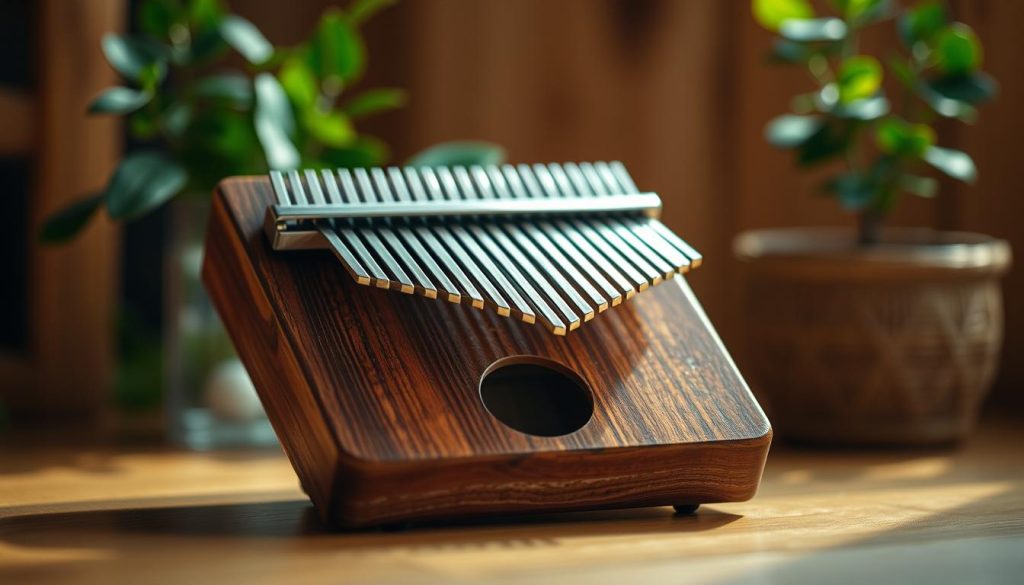
Kalimba with or without a sound box: essential differences
Choosing an instrument with or without a cavity can considerably affect your musical experience. A sound box changes both the volume and the quality of the notes produced.
Effects on volume and tone
The most immediate difference between the models is volume. A hollow model produces a louder sound, making it suitable for playing to an audience. A flat kalimba produces a quieter sound, ideal for personal practice.
Differences in volume consistency across the tines
Another important consideration is how even the sound is. On an instrument with a sound box, the central tines near the hole resonate more than those at the edges. This can create an imbalance that some musicians find unpleasant.
By contrast, a flat model provides more consistent volume across the tines, making it easier to play and learn, especially for beginners.
Effects on materials and construction options
Choosing between a hollow and a flat model also affects the available materials. Instruments with a sound box are generally wooden, while flat models can be made from wood or acrylic. This distinction also affects additional features, such as a jack socket for an amplifier.
| Kalimba type | Volume | Sound consistency | Materials |
|---|---|---|---|
| Hollow | High | Uneven | Mostly wood |
| Flat | Moderate | Even | Wood or acrylic |
- Hollow models are ideal for playing to an audience.
- Flat models are better suited to playing in intimate settings.
- Good craftsmanship is essential for good resonance.
- The two types differ considerably in sound.
How materials affect sound and use: wood or acrylic
Your instrument’s material has a significant effect on its sound and playing experience. Two main materials stand out: wood, particularly mahogany, and acrylic. Each has characteristics that affect tone, weight, and handling.
Wood (mahogany, maple, kiaat): tone and weight
Mahogany is the most common wood for beginner kalimbas. It produces a round, warm sound, with enough sustain for each note to sound distinct. Its light weight makes long playing sessions less tiring.
Other woods, such as maple and kiaat, produce brighter tones. The AMI Hugh Tracey Alto 15 Notes model, made from kiaat, illustrates the exceptional sound quality a hardwood kalimba can offer.
Acrylic: appearance, weight, and sound
Clear or colored acrylic kalimbas appeal to players with their modern design. They produce a brighter, more crystalline sound. However, they are often heavier than wooden models, which can make the instrument harder for beginners to handle.
Wood absorbs and spreads the tines’ vibrations, creating rich harmonics. Acrylic reflects the energy more directly, producing a sharper but less warm timbre.
Possible combinations with or without a sound box
Most hollow models are wooden; acrylic kalimbas with a sound box are rare. This limits your options if you want the benefits of both features. Acrylic kalimbas are often flat models, which limits the sound effects you can create, such as the vibrato and wah-wah effects possible with hollow models.
| Material | Tone | Weight | Use |
|---|---|---|---|
| Wood (mahogany) | Round and warm | Light | Ideal for beginners |
| Acrylic | Bright and crystalline | Heavier | Modern design |
- Mahogany is often recommended for its pleasing resonance.
- Acrylic kalimbas may appeal for their appearance but can be less comfortable to play.
- Wooden models are generally lighter, an advantage during long playing sessions.
- Material choice also affects your budget, as wooden models are often more affordable.
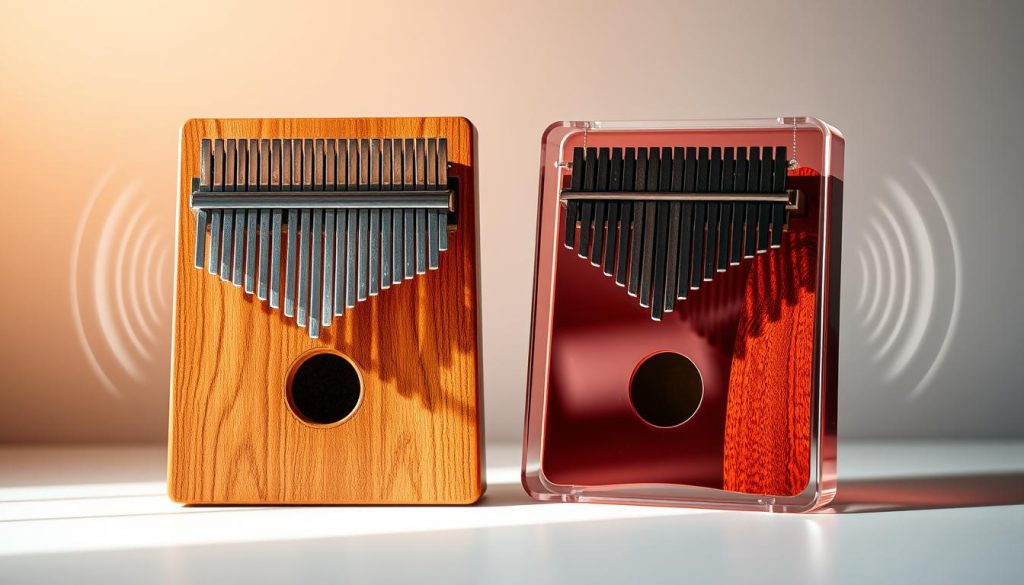
Sound effects made possible by the sound box
Models with an internal cavity offer interesting sonic possibilities. Their holes let you create expressive effects. By covering and uncovering these openings with your fingers as you play, you can enrich your melodies.
Creating vibrato and wah-wah effects with the holes
A vibrato effect, for example, can be created by alternately covering and uncovering the holes on the back of the kalimba. This technique changes the air pressure inside the box and modulates the notes’ sound. It adds a subtle, captivating quality to your playing.
A wah-wah effect is produced by partially covering the main hole on the front of the instrument. This movement creates a distinctive change in tone, similar to an electric guitar with an effects pedal. These techniques add another expressive dimension to playing and make each performance unique.
Limits of flat kalimbas for sound effects
Flat models have no internal cavity, so they cannot produce these effects. This is a significant limitation for musicians who want to explore all their instrument’s expressive possibilities. Flat kalimbas offer a more even sound but lack the dynamic range of hollow models.
Some premium models, such as the AMI Hugh Tracey Alto 15 Notes, are designed to produce exceptional vibrato effects through carefully placed sound holes. These instruments support expressive playing and offer a broad range of sounds.
Mastering these effects takes some practice but can be highly rewarding. By combining thumb movements on the tines with finger movements over the holes, you can create distinctive sounds. For children and beginners, experimenting with sound effects makes learning playful and encourages musical creativity from the first few sessions.
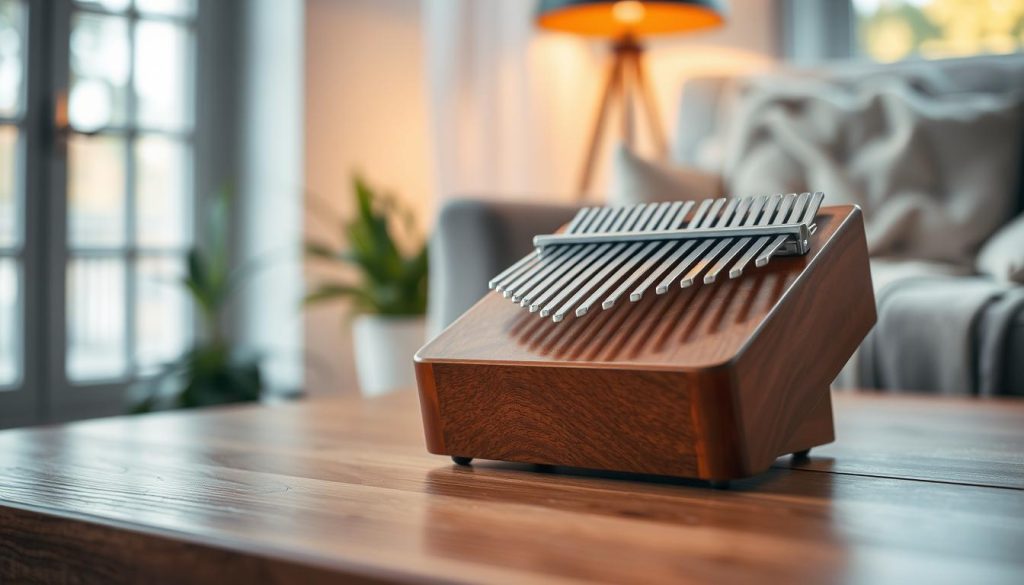
Ergonomics, grip, and weight: choosing a kalimba for your hands and how you will use it
Ergonomics is an important factor when choosing an instrument: it affects how you play and experience the music. The shape, size, and weight of your instrument determine your comfort. A poor fit can strain your hands and hinder your progress.
Dimensions, thickness, and ease of handling
In most cases, a model without a hole is thinner than a hollow model, whose sound box needs space. Flat instruments are generally lighter, making them suitable for children and people with small hands. A thicker, hollow kalimba is often more comfortable for musicians with large hands.
Kalimbas for children and people with small hands
For children aged 4 to 7, a small, lightweight kalimba with fewer tines is ideal. It is easy to hold and does not require excessive thumb strength. Flat models without a sound box are particularly well suited to these young musicians.
How material and shape affect weight
Weight is an important factor in how long you can play comfortably. An acrylic instrument, heavier than a wooden model, can become tiring after a few minutes of practice. This is particularly true for children or adults with less hand strength.
Here are some key points to consider when choosing:
- The dimensions affect how easily you can reach the central tines.
- A kalimba that is too wide for your hands can make playing awkward.
- The material’s texture and the absence of sharp edges improve comfort.
- Acrylic models can be slippery, making them harder to play.
- Consider how you plan to use it: a light model is preferable for playing while standing or traveling.
- Try several models to find the one that feels most natural to hold.
Durability, care, and transport: the strengths and limitations of each model
Durability matters, especially if you plan to take your instrument everywhere. Hollow models, which contain a sound box, are generally less resistant to knocks. Flat models made from a single block are more robust.
How sturdy are flat and hollow kalimbas?
An acrylic kalimba, for example, is often sturdier than a wooden model. This polymer resists impacts and scratches particularly well, making it a good choice for traveling musicians or children who may sometimes drop things.
Despite their appealing sound, hollow models can be more vulnerable to knocks. If you travel frequently, a kalimba without a sound hole is therefore recommended for its strength.
Caring for wood and cleaning acrylic
Care is another aspect to consider. Flat kalimbas without a cavity are easier to maintain. Dust cannot collect inside, and wiping them with a cloth is usually enough to clean them.
Wooden models, such as those made from mahogany, need regular care. A suitable oil can be used to condition the wood and preserve its appearance. This takes a little more time and effort but helps maintain the instrument’s quality.
Storage and transport for each shape
Storage and transport also vary with the instrument’s shape. Hollow kalimbas fit easily into hard cases because the foam inside follows their shape. Flat models may move around in the same cases and therefore need extra care when packed.
For those who want to take their instrument everywhere, a flat acrylic kalimba combines durability, easy maintenance, and a manageable price.
| Kalimba type | Durability | Care | Transport |
|---|---|---|---|
| Hollow | Less resistant to knocks | Needs regular care | Easy to store in a hard case |
| Flat | More resistant | Easy to clean with a cloth | May move around in a case |
Whichever model you choose, regular care and careful storage will extend your instrument’s life. For more information about the different types, see this article.

Kalimba design: appearance and function
A kalimba’s appearance can affect how much a musician wants to play it. An attractive instrument may encourage regular use, which is essential for progress.
Models with a sound box offer relatively limited design options. They often take the form of a hollow box, sometimes decorated with distinctive cutouts. These can depict animals, such as a deer or cat, and give the instrument a unique look.
Flat kalimbas come in a much wider variety of shapes. You can find models shaped like cats, dogs, frogs, cows, pigs, or deer. These playful designs particularly appeal to children and make learning music more fun.
Resin is a popular decorative material for these models. It allows objects such as seashells or marine motifs to be embedded inside the body, creating unique instruments with an ocean or nature theme.
Clear acrylic also offers interesting visual possibilities. Color and light effects that cannot be reproduced with wood catch the eye and give the instrument a modern appearance.
However, make sure the design does not interfere with comfort. A shape that is too complex or raised decorations could make the instrument difficult to hold and uncomfortable to play.
Wooden kalimbas can be personalized with engraving or paint. They offer a more understated, natural appearance that appeals to musicians who value the traditional instrument’s character.
As a gift for a child, a flat kalimba shaped like an animal and decorated with colorful resin makes an immediate visual impression. It can inspire them to explore music through play.
Hollow mahogany models with a fine satin finish have a timeless elegance that appeals to adults and musicians who care about their instrument’s appearance.
Ultimately, design should be a secondary consideration after sound quality and comfort. Even so, it adds to the pleasure of owning and playing a beautiful instrument every day.
Number of tines: a key consideration for beginners and advanced musicians
The number of tines on a kalimba plays a fundamental role in learning the instrument. Like piano keys, each tine produces a note. More tines provide a wider range of notes, but they can also make it harder to find your way around the instrument.
How tine count affects learning and repertoire
Beginners are advised to choose a model with 10 to 17 tines. With fewer than 10, the instrument quickly becomes limiting, while more than 17 can make the notes feel crowded and discourage new players. The 17-tine kalimba has become a common learning instrument because most online tutorials and sheet music are designed for it.
Choosing between 8, 10, 17, or 21 keys
For children aged 4 to 7, an 8- or 9-tine model can offer a first hands-on introduction to music. Its limitations may become apparent once a child wants to play more elaborate pieces. Models with 21 or 24 tines are better suited to experienced musicians: they offer an extended range but demand greater precision.
Why suitable tuning matters (often C major)
C major tuning is the most common and the most suitable for beginners. Its gentle, harmonious scale makes it easy to improvise without clashing notes. It encourages musicians to keep learning and enjoying the instrument.
Useful accessories for tuning and learning
Some accessories make learning easier:
- Tuning hammer: makes it easy to correct notes that are out of tune.
- Note stickers: help you quickly identify notes on the tines.
- Protective case: protects the instrument during transport.
- Small music booklet: provides simplified sheet music for beginners.
For a first purchase, it is advisable to choose a complete set containing the kalimba, a tuning hammer, note stickers, a case, and a sheet music booklet. These items make a difference over time and justify a slightly higher budget.
| Number of tines | Who it suits | Learning difficulty | Model examples |
|---|---|---|---|
| 8 to 9 | Children (ages 4 to 7) | Easy | Entry-level models |
| 10 to 17 | Beginners | Moderate | Standard 17-tine model |
| 21 to 24 | Experienced musicians | High | Advanced models |
Kalimba with or without a sound box: which should you choose?
Now that we have explored the characteristics of kalimbas, let us recap the advantages and disadvantages of each type. This will help you choose the model that best fits the way you play.
Summary of advantages and disadvantages
The hollow model with a sound box stands out for its higher volume. It also allows vibrato and wah-wah effects and often includes a jack socket for amplification. However, it is generally heavier and less robust, and the central tines may sound louder than those at the edges.
The flat kalimba without a sound box appeals for its light weight and durability. It produces an even sound and is easy to maintain. However, its volume is limited and it cannot produce these sound effects, which may restrict your musical creativity.
Advice for choosing according to your needs
For a beginner who wants a good instrument to learn on, a hollow 17-tine mahogany kalimba is often the best choice. This model offers excellent value and a warm sound that encourages regular playing.
If you travel frequently, a flat acrylic or wooden kalimba may be more suitable because it is durable and easy to carry. Although its volume is lower, its portability is a major advantage.
For children, a light, flat kalimba with fewer tines and an appealing design makes an excellent first instrument. It is easy to hold and does not require much thumb strength.
A closer look at hybrid models (acrylic and a sound box)
Hybrid models that combine an acrylic body with a sound box, such as the one offered by Instruments du Monde, are an interesting option. They combine the advantages of both features and offer a rewarding playing experience.
Your budget will also determine which kalimbas are within reach. Expect to pay around 30 euros for a decent entry-level model and between 80 and 150 euros for a premium instrument with better sound and finish.
Take time to read other musicians’ reviews before you buy. Their feedback on sound quality, durability, and comfort can help you avoid disappointment.
Whether you choose a kalimba with or without a sound box depends on how you will mainly use it, the size of your hands, your budget, and your musical goals. This guide gives you what you need to make an informed decision and find an instrument that suits you.
Conclusion
After reading this guide, you have the information you need to choose your instrument. The number of tines, type of kalimba, and materials are all factors to consider when finding the right one for you.
We have explored the role of the sound box and the differences between models. Ergonomics, durability, and care also matter if you want to play comfortably.
Whether you choose a model with a full sound or a quieter instrument, the most important thing is to pick one that makes you want to play every day. Music brings pleasure and personal fulfillment, and the kalimba is an excellent companion as you begin your musical journey.
Compare models and listen to sound samples to refine your choice. The right instrument will accompany you throughout your musical journey.