
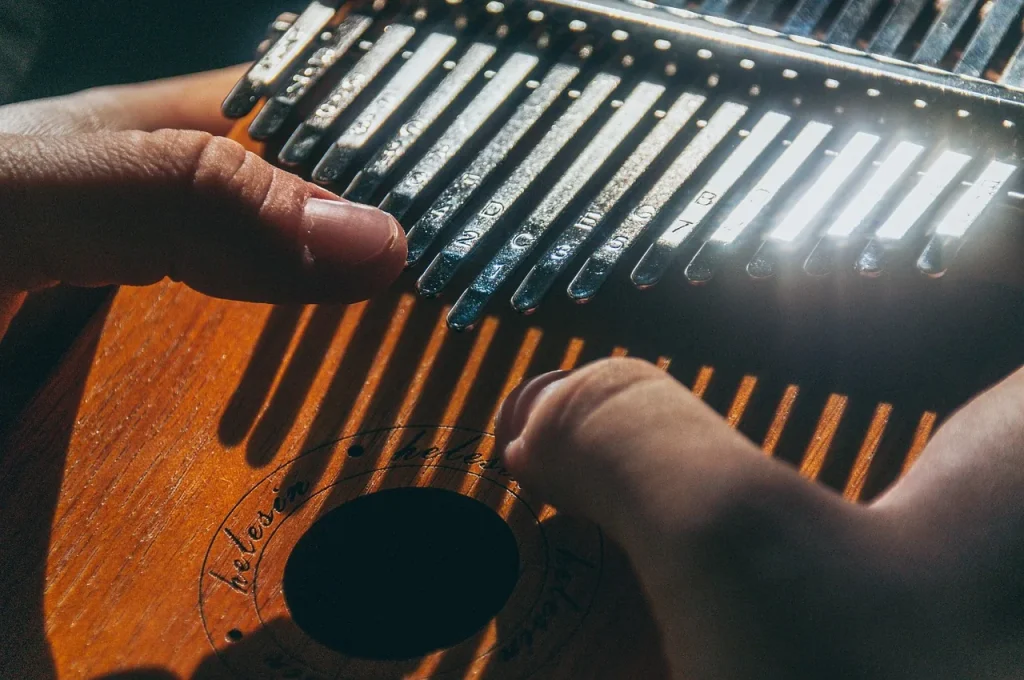
The kalimba, often called a thumb piano, is attracting more and more music lovers. Its popularity has surged thanks to viral social media videos in which its gentle notes and captivating melodies draw listeners in.
In this guide, we explore current price ranges for different models. Whether you are a beginner or an experienced musician, you will find options ranging from entry-level instruments to professional models. In France, prices start at €30 and exceed €280 for high-end models.
We will explain the factors behind these price differences so you can choose an instrument that suits your needs, whether for relaxation, learning or performing.
Introduction: the kalimba, an accessible and popular instrument
The kalimba, an instrument with African roots, is attracting more and more enthusiasts. Known by various names, including mbira and sanza, this captivating musical instrument has evolved over the years. Once made with bamboo tines, it now has metal tines that enhance its sound.
The instrument’s popularity has surged thanks to viral videos on platforms such as YouTube and Instagram. Musicians share covers of popular songs that attract millions of views. This enthusiasm has expanded the market and made kalimbas available at a range of prices.
The kalimba is ideal for beginners. It requires no prior knowledge of music theory, and you can play recognizable melodies within minutes. These instruments offer a simple, quick way to learn, supported by many online tutorials.
More experienced musicians also appreciate the kalimba’s versatility. Its ability to produce gentle, complex sounds makes it a popular choice for composing and improvising. Its music has a soothing quality, making it an excellent choice for relaxation.
Kalimbas come in many forms, from small five-tine instruments for children to professional chromatic versions with 34 notes. Lightweight and compact, they are ideal travel companions for making music anywhere.
Why choose a kalimba today?
Choosing a kalimba means choosing an instrument that is both accessible and engaging. Its simple design is particularly well suited to beginners who want to start making music. The modest number of tines makes it easy to learn. Within minutes, you can play harmonious notes without worrying about wrong notes.
The kalimba is also known for its soothing qualities. Its vibrations create an atmosphere suited to relaxation or meditation. Many music therapists include it in their sessions because it can promote a sense of well-being in patients.
For children, the kalimba is an excellent introduction to music. Its size suits small hands, and its ease of use lets young children discover music through play. Young musicians can learn to play it quickly, building their confidence.
The kalimba is highly versatile. It fits a range of repertoires, from traditional African music to covers of modern songs. Even with a limited number of models, there is plenty of scope for musical creativity. Whether you want to compose original melodies or play familiar pieces, the kalimba offers a rewarding experience.
Finally, the build quality of modern kalimbas has improved considerably. Entry-level instruments now offer stable tuning and careful finishing. This makes playing enjoyable whether you are an experienced musician or a novice. To explore the options, read our article on everything you need to know about the kalimba.

The technical features that affect a kalimba’s sound and price
To fully appreciate a kalimba, it helps to understand the technical features that shape its sound. The choice of materials is particularly important to its tone.
Choosing materials: wood and steel
Woods such as mahogany, koa and bamboo play a crucial role. Mahogany offers balanced warmth, while koa gives the sound a distinctive projection. Bamboo is lightweight but may be less durable.
For the tines, rounded mineral-steel edges make playing more comfortable. Uncoated steel can offer greater clarity. Tine quality directly affects the instrument’s tuning accuracy and durability.
The resonator: hollow body or solid block
The resonator is a crucial technical feature. A hollow body with sound holes amplifies the volume. Covering the holes with your fingers also lets you create vibrato effects.
By contrast, a solid-body kalimba produces a more even sound. This type of model is ideal for practicing without disturbing others or for studio recordings that require a controlled sound.
How the number of notes affects complexity
The number of notes on your kalimba determines the range of pieces you can play. Models with 5 to 9 tines suit beginners, while those with 10 to 15 tines suit intermediate players.
For advanced musicians, a kalimba with 17 or more tines opens up a wide range of songs.
Tuning and musical scale
C major is the most common tuning on modern kalimbas. This intuitive diatonic scale makes it easier to learn your first pieces.
Build quality, particularly how the tines are fixed and aligned, affects resonance and how well the instrument stays in tune over time.
Understanding these technical features helps you make an informed choice and invest in a kalimba whose price reflects its materials and craftsmanship.
Types of kalimba by shape and number of tines
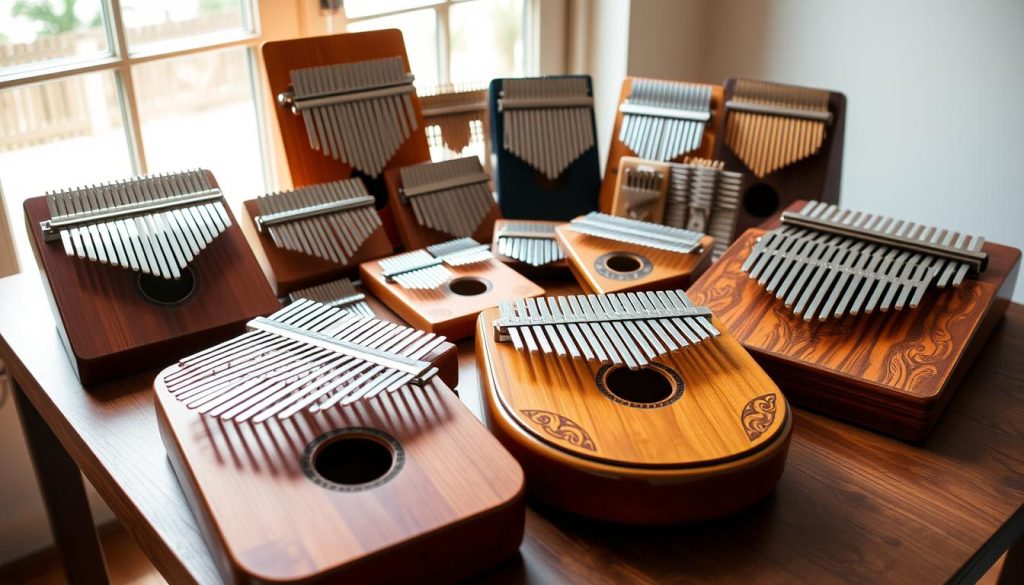
There are different types of kalimba, each with features that affect the sound and playing experience. Understanding these differences will help you make an informed choice.
Kalimba with a resonator box
This traditional model often has a box-shaped resonator. Its hollow design naturally amplifies the sound. Holes at the back let you adjust the volume and create effects such as wah-wah.
Board or solid-block kalimba
A board or solid-block kalimba is sturdier and easier to carry. It produces a direct, even sound, ideal for recording or quiet practice. If you travel often, this model could be your best choice.
Common formats: 5, 8, 9, 10, 15, 17 and 21 tines, plus chromatic models
Kalimbas come in several formats based on their number of tines:
- 5 tines: ideal for young children or a simple introduction to music.
- 8 tines: perfect for relaxation and meditative improvisation.
- 9 tines: suitable for beginners and easy to learn.
- 10 tines: a good balance between simplicity and melodic possibilities.
- 15 tines: suitable for intermediate musicians.
- 17 tines: a versatile format valued for its range.
- 21 tines and chromatic models: intended for experienced musicians seeking a wider range.
Each type of kalimba has its advantages. The right model depends on your level, musical goals and preferred sound. To explore the options, read our article on 17- and 21-key models.
How much does a kalimba cost?
A kalimba’s price can vary considerably depending on several factors. In France, models generally fall into three broad categories: entry-level, mid-range and high-end. Musicians at every level can therefore find an instrument suited to their needs.
Price ranges in France by level and model
Entry-level kalimbas, particularly 17-note models, generally cost between €30 and €45. This makes them among the most affordable instruments for beginners. Mid-range models cost between €45 and €100 and offer better-quality wood and more effective steel tines.
For demanding musicians, high-end and chromatic kalimbas cost between €100 and €150, or as much as €284 for the professional MAGADI M32, which promises exceptional sound quality.
What affects the price: wood, tines, finish and accessories
The choice of wood has a significant effect on price. Woods such as mahogany and walnut cost more but offer greater resonance and warmth. Steel tine quality also matters: well-calibrated tines stay in tune more accurately and last longer.
Included accessories, such as a hard case or tuning hammer, add to the instrument’s overall value. They can justify a slightly higher price.
Tips for getting good value
For good value, consider established brands such as Gecko, Ling Ting and Meinl. They offer reliable instruments starting at around €45 to €55. Seventeen-note models strike an excellent balance between cost and versatility: they let you play a wide repertoire without paying for an expensive instrument.
Before buying, compare prices across specialist online shops. Read customer reviews to assess the instrument’s actual quality. A kalimba with engraved notes rather than stickers offers better long-term value and makes learning easier.

Which kalimba should you choose for your level and needs?
Choosing the right instrument is essential to enjoying music. Whether you are a beginner, intermediate player or experienced musician, there are models for every level. Here is an overview of the available options.
Recommended models for beginners
For beginners and children, the five-tine Meinl KA5S is an ideal choice. Sturdy and simple, it lets you learn without frustration at an accessible price of around €25 to €30.
The seven-tine Hokema B7 is another excellent option. This kalimba stands out for its thoughtful shape and curved tines, which make it comfortable to play for anyone seeking a higher-quality instrument.
Models for intermediate players
Intermediate players will appreciate the ten-tine Meinl KL1008H Sonic Energy. Made of mahogany, it produces a warm, balanced sound while remaining easy to handle as your skills develop.
The 15-note AMI Hugh Tracey Alto is another interesting model. Handmade in South Africa from kiaat wood, it produces exceptional vibrato effects through its rear sound holes. It is ideal for exploring more advanced techniques.
High-end instruments for experienced musicians
For experienced musicians, the 17-tine mahogany Sela SE 246 has a range from C4 to E6. This model produces a full, clear and warm sound. It comes with a carrying case.
Chromatic kalimbas, such as the 26-note AMI Hugh Tracey Alto Chromatic, are designed for demanding musicians. This model includes semitones, making it ideal for jazz or film music.
Whatever your level, choose a model that fits your goal. An entry-level model is enough for occasional recreational use. If you want to make serious technical progress, consider investing in a mid-range or high-end instrument.
Make learning easier with a model that includes note stickers or has notes engraved on its tines. You can then find the notes without knowing music theory. Finally, check that the kalimba fits your hands so you can play comfortably and progress quickly.
Ergonomics, playing comfort and essential accessories
To get the most from your instrument, it needs to fit your hands. The kalimba should be narrow enough for you to reach the central tines easily. This will improve your comfort and accuracy.
Matching a kalimba to the size and shape of your hands
Ergonomics is an essential but often overlooked factor. A kalimba that is too wide tires your hands and makes the central tines hard to reach. Conversely, one that is too narrow can lead to mistakes when you play adjacent keys.
Your hand size helps determine the ideal format. People with small hands may prefer a compact model with 8 to 10 tines, while those with larger hands may be more comfortable with a standard 17-tine model. Playing comfort also depends on the tine finish. Rounded edges and even spacing let you play longer without thumb irritation or fatigue.
Useful accessories: case, tuning hammer and stickers
A hard case is essential for protecting your instrument while traveling. It guards against knocks, dust and changes in humidity that could affect the wood and tuning. The tuning hammer supplied with most kalimbas lets you adjust the vibrating length of each tine to correct its pitch. It is an essential tool to keep handy.
Colored note stickers make visual learning easier at first. It is a good idea to remove them gradually as you develop muscle memory and your musical ear.
Care tips to preserve your instrument
For everyday care, a soft cloth is enough to remove dust from the tines and wood. Avoid harsh chemicals that could damage your kalimba’s finish. Check the tuning regularly, especially after travel or a change in temperature, because wood and steel react to their surroundings.
Mobile tuning apps use your smartphone’s microphone to identify notes and guide you through tuning step by step. This makes the process accessible even to beginners. Regular care and quality accessories extend your kalimba’s life and preserve its sound over the years.
| Accessory | Purpose |
|---|---|
| Hard case | Protects the instrument from knocks and moisture |
| Tuning hammer | Adjusts the pitch of the tines |
| Note stickers | Support visual learning |
| Soft cloth | Allows regular cleaning |
Where and how can you buy a kalimba in France?
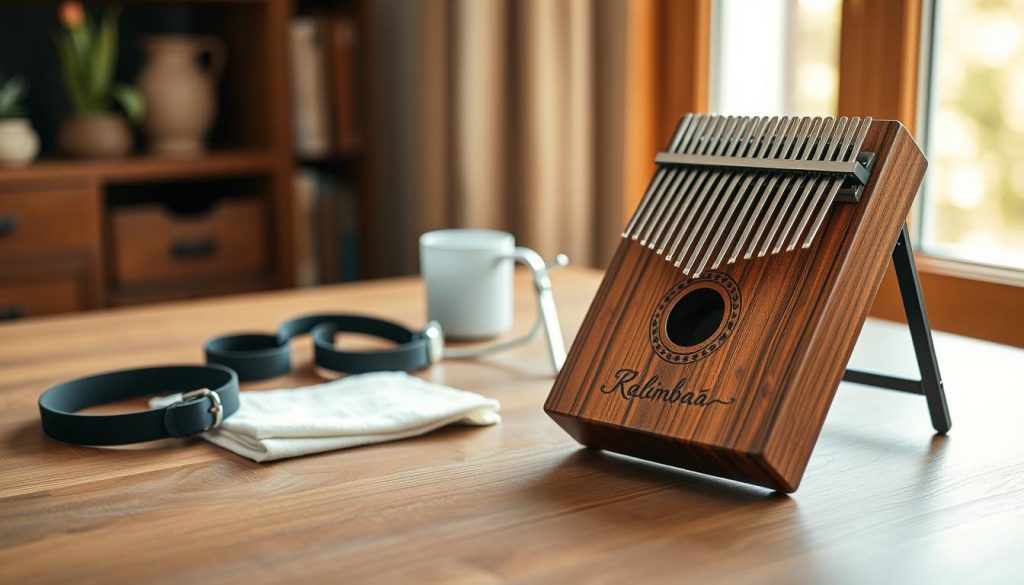
You have several options when buying a kalimba. Physical music shops and online stores each have advantages. Here are some tips to help you buy with confidence.
Specialist shops and recommended online stores
Music shops suit people who want to try an instrument before choosing. They often provide personalized advice and sometimes offer adjustments in the shop. This is especially helpful for beginners.
Online stores such as Instruments du Monde offer a wide choice of models. They also offer secure payment through services such as Stripe or PayPal and customer support that is often available seven days a week.
Check warranties, customer service and returns
Before completing a purchase, check the warranty terms and make sure the seller has a clear return policy. That way, you can return the instrument if there is a problem. Responsive customer service is also valuable if you have questions after buying.
Marketplaces may offer attractive prices, but check that branded products are genuine. Always read customer reviews to assess product quality and the seller’s reliability.
Tips for finding promotions and good-value bundles
For the best offers, watch for winter and summer sales and Black Friday. Subscribe to specialist stores’ newsletters to receive exclusive discount codes.
Bundles containing a hard case, stickers and a tuning hammer are an excellent choice for a first purchase. They provide everything you need at a favorable overall price.
| Accessory | Purpose |
|---|---|
| Hard case | Protects the instrument from knocks and moisture |
| Tuning hammer | Adjusts the pitch of the tines |
| Note stickers | Support visual learning |
| Learning app | Helps you get started playing |
Conclusion
This musical instrument has become a favorite among people who enjoy soothing sounds. With prices ranging from €30 for entry-level models to more than €300 for professional versions, there is an option for every budget.
To choose well, decide what you need: relaxation, learning or advanced playing. The 17-tine model is often recommended for its versatility and value.
The quality of the wood and steel tines affects sound and durability. Consider accessories such as a case and tuning hammer, too.
Finally, read customer reviews before buying to assess the seller’s reliability. Whether you are a beginner or an experienced musician, the kalimba offers a rewarding musical experience.