
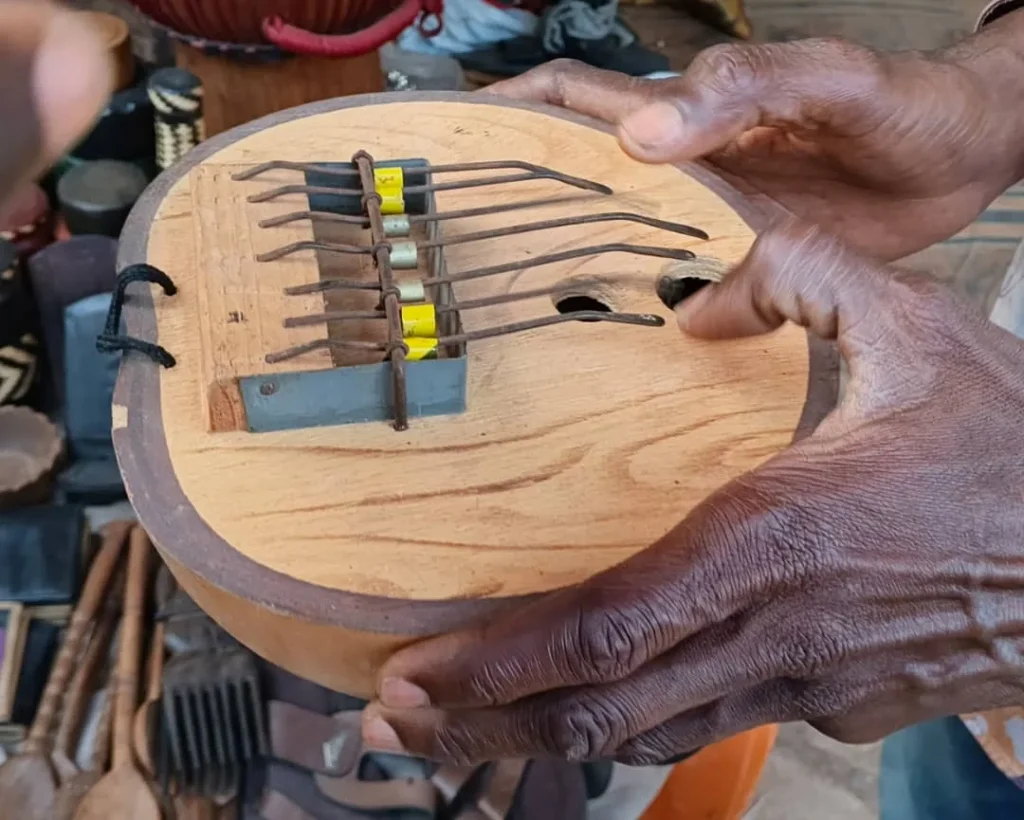
The kalimba, also known as a thumb piano, is an African musical instrument that is attracting more and more enthusiasts in France. This guide will help you choose between a 17-key model and a 21-tine model.
17-key models are ideal for beginners. They are easy to get started with and offer an introduction to this fascinating instrument. Although rarer, 21-tine models let you play a wider variety of notes and are better suited to experienced musicians.
It is important to understand your musical needs before making a choice. The number of keys affects both the range of playable notes and how difficult the instrument is to learn. In this guide, we will cover the main differences between the two models, along with their advantages and disadvantages.
Understanding the main differences between 17- and 21-tine kalimbas
This African thumb instrument comes in several forms. Each offers a different musical experience. The main differences are the number of playable notes and the arrangement of the tines.
Number of playable notes and range
Each kalimba key corresponds to one note, as on a conventional piano. A 17-key model therefore has 17 notes, while a 21-key model has 21. Those four additional notes extend the instrument’s range.
The four extra tines are placed in the centre of the instrument. They produce lower notes, adding depth and richness to the sound. You can hear the difference in melodies such as “Ballade pour Adeline”.
Tine arrangement and its effect on sound
The extra tines, often shown in blue in diagrams, change the arrangement of the notes and create a different listening experience. Tines at the edges vibrate less, which prevents shorter tines from being added to produce higher notes.
It is important to identify the notes and position the stickers correctly for the number of keys on your instrument. This makes learning easier and improves your playing.
| Model | Number of keys | Additional notes | Tine arrangement |
|---|---|---|---|
| 17-key kalimba | 17 | 0 | Standard |
| 21-key kalimba | 21 | 4 | Centre |
Advantages and disadvantages of a 17-tine kalimba
The 17-key model is considered the most accessible choice for people who want to learn this instrument. Its popularity makes it a starting point for beginners.
With just 17 keys, the arrangement of the notes is easier to remember. This simplicity makes learning quick and enjoyable. A large community of players also offers valuable support through a wealth of learning resources.
The sheet music, tablature and video tutorials available online are mostly designed for this model. New players can therefore make progress quickly.
Another major advantage is value for money. A 17-tine kalimba generally costs €10 to €20 less than its 21-tine counterpart. It is an appealing way to discover the instrument without spending too much.
Its standard dimensions and light weight also make it easy to carry. You can take it almost anywhere.
It does have some drawbacks. Its range of notes is more limited, which may frustrate experienced musicians or anyone who wants to explore more complex melodies. Although every note on the 17-key model is also found on the 21-key model, it offers less depth of sound.
In short, the 17-tine kalimba is an excellent choice for beginners. It offers an enjoyable, accessible learning experience while leaving room for musical progress. For more information about the different models, see this guide.
| Advantages | Disadvantages |
|---|---|
| Easy to learn | Limited note range |
| Active community and abundant resources | Less suitable for experienced musicians |
| Good value for money | Less depth of sound |
| Compact size and light weight |

Advantages and disadvantages of a 21-tine kalimba
For those who want to go further, the 21-key model is a good choice. It suits musicians who want to broaden their musical experience.
The four additional tines provide a wider range of notes. Placed in the centre, these lower notes add acoustic depth to melodies. They make it possible to play more complex and varied pieces.
Learning to play it is slightly harder than learning on a 17-tine model. It remains accessible, but getting used to the different key arrangement takes a little more time.
The amount of available sheet music is another consideration. Fewer resources are written specifically for this model, although music for a 17-key kalimba can be adapted.
A 21-key kalimba is slightly heavier and wider, which may make it less comfortable during long playing sessions. This can matter to musicians who play often.
This instrument generally costs €10 to €20 more than a 17-key model. Its greater musical possibilities may justify the extra cost.
This model particularly suits musicians who already have some musical experience. Players who enjoy creating their own arrangements will appreciate its flexibility.
In short, the 21-key kalimba is ideal for anyone likely to feel limited by a 17-key model. It is a worthwhile investment for musicians who want to explore new sounds.
| Advantages | Disadvantages |
|---|---|
| Wider note range | Slightly harder to learn |
| Greater acoustic depth | Less sheet music available |
| Suitable for creative musicians | Heavier and bulkier |
| More musical possibilities | Higher price |
17- or 21-tine kalimba: which should you choose?
Among musical instruments, the kalimba stands out for the variety of its configurations. Choosing the right model can make a considerable difference to your musical experience. The 17- and 21-key models are two popular options, each with its own characteristics.
The 17-key model is often recommended for beginners. Its standard range is enough for most melodies. It is easy to get started with, and plenty of sheet music and tutorials are available online. The 21-key model expands the range of sounds and lets you play more complex pieces.
Here is a summary table to help you choose:
| Criterion | 17-key kalimba | 21-key kalimba |
|---|---|---|
| Note range | Standard | Slightly wider |
| Learning difficulty | Very easy | Easy, but takes some adjustment |
| Available resources | Plenty of sheet music | Less sheet music available |
| Size and weight | Standard size, lightweight | Slightly larger and heavier |
| Price | Low | Moderate |
In short, if you are a beginner or new to music, choose the 17-key model. It will give you an enjoyable learning experience. If you already have some experience or enjoy making your own arrangements, the 21-key model may suit you better. Consider your musical goals before choosing to avoid disappointment.
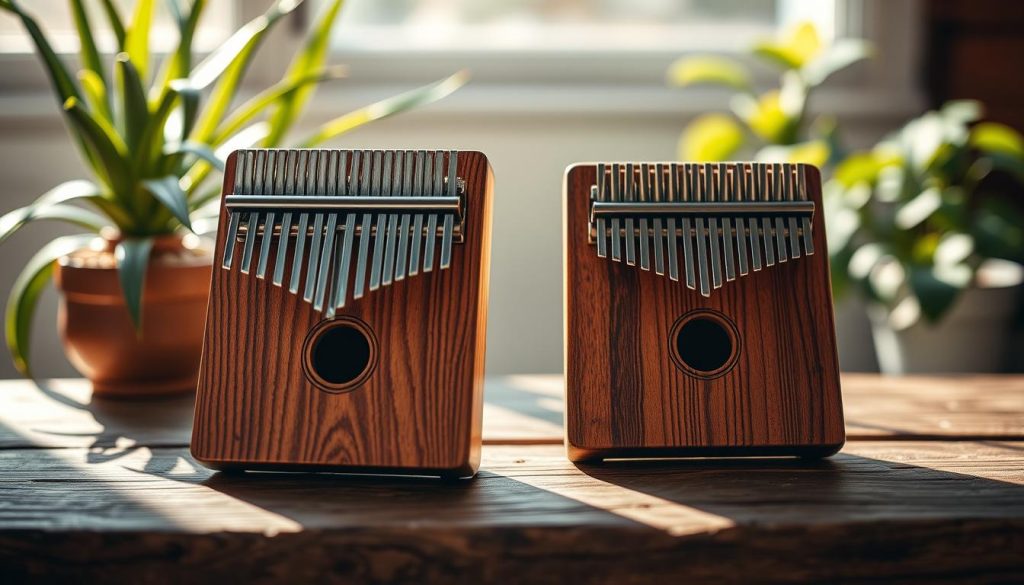
Kalimbas with fewer than 17 or more than 21 tines: uses and limitations
Kalimbas come in many forms, from the simplest to the most complex. Instruments with fewer than 17 keys, such as 5-, 9- or 10-tine models, are often considered pocket instruments. Although very compact, they have limited musical possibilities.
These small models are, however, ideal for introducing children to music. Their light weight and gentle sound make them pleasant choices for young musicians. They let children discover music in a playful, accessible way.
For those seeking a middle ground, 10- to 15-key kalimbas exist, but they are relatively rare on the market. They offer a balance between portability and musical possibilities, although the choice of designs and materials is often more limited.
An interesting historical detail: Hugh Tracey’s original model from the 1950s had 15 keys. This intermediate format therefore has a place in the instrument’s development.
Kalimbas with more than 21 keys, such as 24-, 34- or even 42-tine models, are generally chromatic instruments. They are intended for experienced musicians who can read music and want a richer range of sounds.
Choosing more and more keys is not necessarily wise for a beginner. Too many tines can confuse a new player and quickly sap their motivation. It is better to choose a number of keys that suits your level, then progress at your own pace.
In conclusion, finding a balance between simplicity and musical potential is essential. Whether you choose a 5-, 10-, 17- or 21-key model, each kalimba has its own advantages and limits. A suitable choice will help you enjoy your instrument fully and enrich your musical experience.
| Type of kalimba | Number of keys | Characteristics | Who it suits |
|---|---|---|---|
| Pocket instruments | 5, 9, 10 | Very compact, gentle sound | Children, beginners |
| Middle-ground models | 10 to 15 | Good balance, limited choice | Aspiring musicians |
| Historical models | 15 | Hugh Tracey’s original model | Musicians of all levels |
| Chromatic instruments | 24, 34, 42 | Rich sound, music-reading skills required | Experienced musicians |
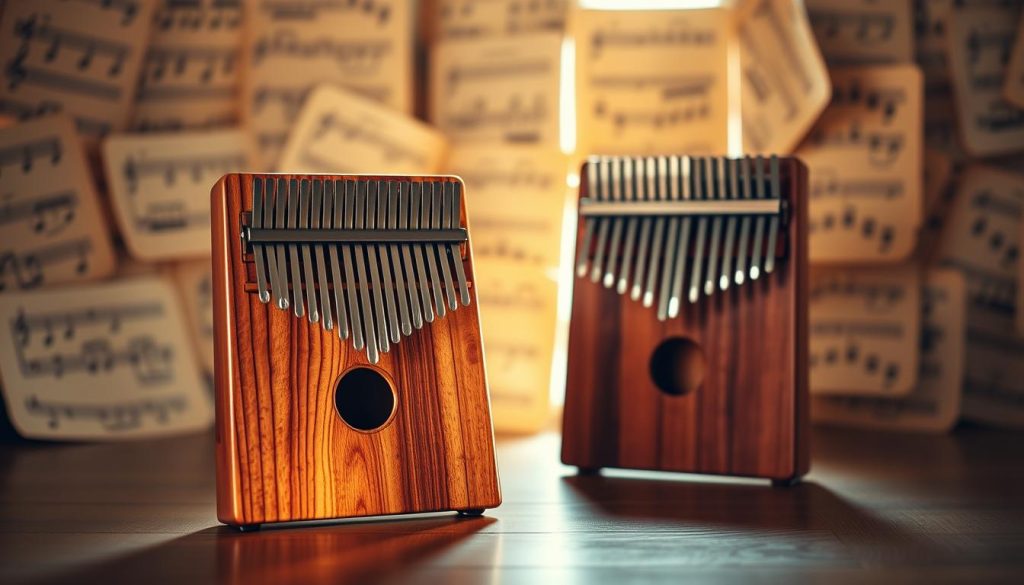
Diatonic or chromatic: which type of kalimba should you choose?
When choosing an instrument, the distinction between diatonic and chromatic is important. Each type of kalimba has characteristics that meet different needs.
Features and uses of a diatonic kalimba
A diatonic kalimba has a single row of tines. They correspond to the notes of a scale, like the white keys on a piano. This model is ideal for beginners and children.
Its advantages include light weight and ease of use. A wide range of models is available, with or without a resonator box and made from different materials, such as maple wood or clear acrylic.
This model also has some disadvantages. The lack of additional semitones means a tine must be retuned to produce an altered note. The limited number of tines may also frustrate more experienced musicians.
Features and uses of a chromatic kalimba
A chromatic kalimba has several rows of tines: one for the natural notes and another for sharps and flats, like the white and black keys of a piano.
This model has many advantages. It supports continued learning and can be more economical in the long run because it removes the need to buy several diatonic kalimbas. It also offers a wide variety of tones and musical keys without requiring retuning.
Its price is a major drawback, however. A quality chromatic kalimba may cost between €80 and €300, while a quality diatonic model generally costs between €50 and €120. A chromatic model is also heavier and may look intimidating.
As for tuning, common brands mainly offer models in C and B. Makers such as Poopoopidoo offer a wider range, including F-sharp, G, A and B-flat.
To make an informed choice, consider your musical background. If you are a beginner, have a limited budget or want an instrument for meditative playing, a diatonic kalimba is recommended. For accomplished musicians, a chromatic kalimba may be the better option and help avoid frustration over missing notes.
| Type of kalimba | Characteristics | Advantages | Disadvantages |
|---|---|---|---|
| Diatonic | One row of tines corresponding to the notes of a scale | Lightweight, simple, wide choice of models | No additional semitones; retuning required |
| Chromatic | Several rows of tines for natural notes, sharps and flats | Room to progress, economical in the long run, varied tones | Higher price and greater weight |
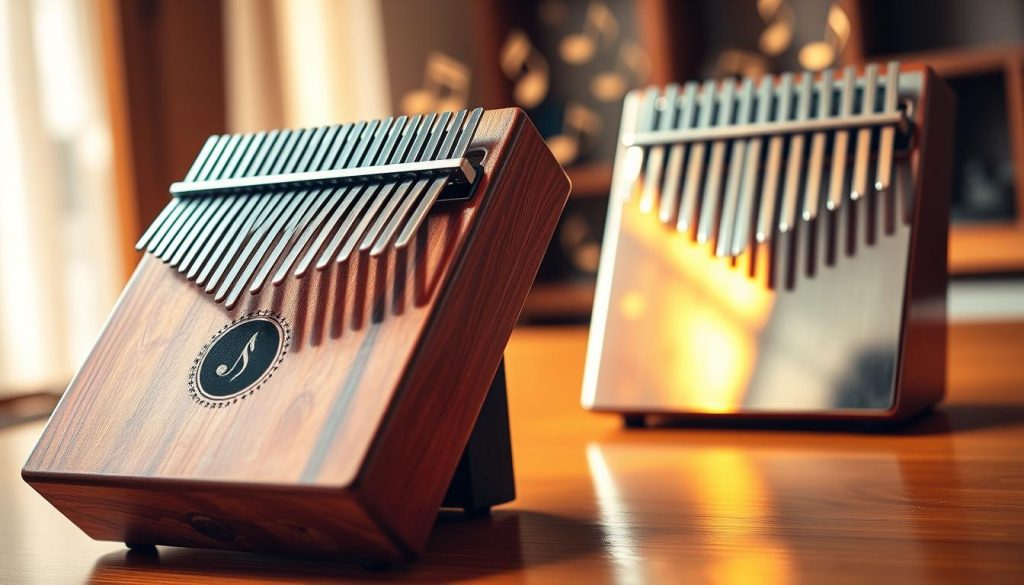
Practical tips for choosing a kalimba that meets your needs
Choosing a musical instrument can seem complicated, so it helps to be well informed. The number of keys is a central consideration, but other factors also deserve your attention.
Build quality plays a key role in the musical experience. Look for quality materials such as maple or mahogany, which offer better resonance and durability. These types of wood produce a rich, warm sound.
Also consider the resonator box. It can amplify the sound and add to your playing, especially on models with at least 17 keys. It can help you produce captivating sound effects.
When buying, check which accessories are included. A tuning hammer is essential for keeping the instrument in tune. Note stickers and a protective case are also recommended, especially for a first purchase.
For those looking for a high-quality kalimba, the Instruments du Monde store offers carefully designed models with free delivery.
People who experience anxiety or have neurodivergent traits may wish to pay particular attention to tuning and tone. Consider lower tunings, such as F-sharp, G or F, which produce warm, reassuring sounds.
If you want to give someone a kalimba but do not know their preferences, choose B or B-flat tuning for a non-redundant chromatic model, or G or F-sharp for a redundant model. These options suit most users.
For babies, favour clear sounds without a metallic edge. A 17-key model tuned to B or a 21-key diatonic kalimba is ideal. You can also place the instrument against a baby’s feet or hands so they can feel the vibrations.
Finally, consider your state of mind and sensitivity to sound. These factors will affect your choice of tuning and tone for an enjoyable musical experience.
Conclusion
Choosing a thumb instrument deserves some thought. A 17-key model is often the best choice for a beginner, while a more experienced musician may prefer a 21-tine model. Beyond the number of keys, the instrument’s quality is essential for a pleasant, relaxing sound.
The Instruments du Monde store offers high-quality models for every skill level. To enrich your experience, it is worth learning to read sheet music and tablature. You will then be able to play pieces from popular culture.
Whatever model you choose, the most important thing is to enjoy playing this accessible, soothing instrument. Keep exploring and share this article with other enthusiasts.