
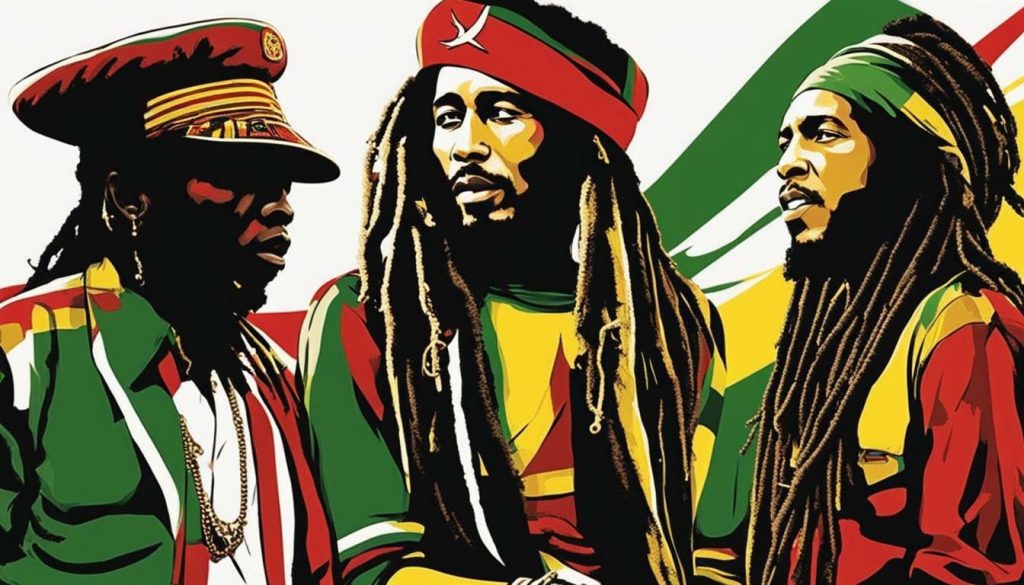
Reggae, an iconic musical genre, has a vibrant history dating back to the late 1960s. Originating in Jamaica, it grew out of ska and rocksteady, two influential genres of the time. Its name comes from the song “Do the Reggay” by Toots and the Maytals, who played a key role in its emergence.
Bob Marley, one of reggae’s best-known figures, did much to popularize it around the world. With landmark songs such as “No Woman, No Cry” and “Redemption Song”, Marley captured the essence of reggae and became a symbol of Jamaican music.
Reggae is also closely connected to the Rastafari movement, a religious faith that advocates freedom, justice and equality. Political and social themes often appear in reggae lyrics, making the genre a form of expression for oppressed people and those seeking change.
In 2018, UNESCO recognized reggae as intangible cultural heritage of humanity, acknowledging its importance and its impact across generations.
Before becoming a musical style in its own right, reggae emerged in Jamaica as a natural evolution of ska and rocksteady. Both genres were very popular in the 1960s, when reggae began to take shape.
Ska, with its lively, upbeat rhythms, was the sound favored by young Jamaicans at the time. Its bright horns and driving beats made it festive music that invited people to dance.
Rocksteady appeared shortly afterward, characterized by slower tempos and heavy basslines. It brought elements of soul and rhythm and blues into Jamaican music, creating a more sensual, melodic atmosphere.
| Ska | Rocksteady |
|---|---|
| – Fast rhythms | – Slower tempos |
| – Bright horns | – Heavy basslines |
| – Festive music | – Sensual atmosphere |
Ska and rocksteady laid the foundations for reggae in Jamaica. Musicians began experimenting with slower rhythms and more minimal arrangements, emphasizing the bass and rhythm guitar. Reggae emerged with a distinctive sound and a relaxed atmosphere evocative of Jamaica’s sunny beaches.
Before becoming a musical style in its own right, reggae emerged in Jamaica as a natural evolution of ska and rocksteady. Both genres were very popular in the 1960s, when reggae began to take shape.
Ska, with its lively, upbeat rhythms, was the sound favored by young Jamaicans at the time. Its bright horns and driving beats made it festive music that invited people to dance.
Rocksteady appeared shortly afterward, characterized by slower tempos and heavy basslines. It brought elements of soul and rhythm and blues into Jamaican music, creating a more sensual, melodic atmosphere.
“Ska and rocksteady laid the foundations for reggae in Jamaica.”
Jamaican musicians began experimenting with slower rhythms and more minimal arrangements, emphasizing the bass and rhythm guitar. Reggae emerged with a distinctive sound and a relaxed atmosphere evocative of Jamaica’s sunny beaches.
| Ska | Rocksteady |
|---|---|
| – Fast rhythms | – Slower tempos |
| – Bright horns | – Heavy basslines |
| – Festive music | – Sensual atmosphere |
The birth of reggae: Toots and the Maytals and “Do the Reggay”
Thanks to Toots and the Maytals and their song “Do the Reggay”, the term “reggae” became associated with this distinctive musical genre. Reggae emerged in Jamaica in the late 1960s from ska and rocksteady. Toots and the Maytals played a crucial role in popularizing reggae, particularly through their famous song “Do the Reggay”. Its driving rhythm and joyful lyrics captured the spirit of reggae. It marked the beginning of a new musical era in Jamaica and helped establish reggae as a genre in its own right.
Toots and the Maytals were not the only artists who contributed to reggae’s emergence. Bob Marley, an iconic figure in Jamaican music, also played a major role in popularizing reggae worldwide. His socially conscious songs and charisma brought reggae to a wider audience and helped it spread internationally. Bob Marley is now regarded as one of the most influential and important artists in reggae’s history.
The impact of Toots and the Maytals and Bob Marley on reggae’s emergence cannot be underestimated. Their talent, creativity and vision helped reggae flourish and become a globally recognized musical genre. Reggae offers more than compelling music: it also allows artists to convey important political and social messages. It embodies resilience, hope and the power of music to inspire change and bring people together.
In short, reggae’s emergence is closely linked to Toots and the Maytals and their song “Do the Reggay”. Artists such as Bob Marley subsequently popularized the genre worldwide. Today, reggae is recognized as a powerful form of artistic expression that carries important political and social messages. It continues to evolve and influence other musical styles around the world.
Reggae and the Rastafari movement
Reggae is closely linked to the Rastafari movement, but it also appeals to a wider audience. The Rastafari movement, which arose in Jamaica in the early twentieth century, is a religion that advocates freedom, equality and justice for all peoples. Rastafari followers regard reggae as a form of artistic expression that conveys their values and beliefs.
Reggae music is often associated with a message of peace, love and resistance to oppression. Reggae lyrics reflect Rastafari teachings, addressing themes such as spirituality, a connection with nature, and struggles against racism and social injustice.
Reggae aims to be authentic music that everyone can enjoy. Its infectious rhythms and captivating sounds have won listeners around the world, whether they follow Rastafari or not. Reggae brings people together around a universal message of love and unity.
| Notable reggae artists associated with the Rastafari movement | Albums | Release years |
|---|---|---|
| Bob Marley | “Exodus” | 1977 |
| Peter Tosh | “Legalize It” | 1976 |
| Bunny Wailer | “Blackheart Man” | 1976 |
| Jimmy Cliff | “The Harder They Come” | 1972 |
| Frederick “Toots” Hibbert | “Funky Kingston” | 1973 |
Reggae is much more than a musical genre: it gives voice to a cultural and spiritual movement. Its popularity continues to grow, reaching millions of people around the world and spreading its message of love and social justice.
Ultimately, reggae crosses borders and reaches beyond religious beliefs. It transcends cultural differences and unites people around a common cause. In Jamaica and elsewhere, reggae remains a source of inspiration and connection for many listeners.
Reggae as political and social expression
Reggae is often regarded as the music of oppressed people, addressing important political and social themes. Its lyrics reflect the struggles, hopes and concerns of marginalized and disadvantaged people. Reggae gives a voice to those who lack one, using music to protest injustice and raise social awareness.
Reggae artists have used their prominence to address poverty, racial discrimination, social inequality and human rights. They have denounced oppressive political systems, unchecked capitalism and the exploitation of people. Reggae is a passionate and committed form of expression that seeks to inspire change and encourage audiences to reflect.
“Music is the weapon of the future.” – Bob Marley
Bob Marley, one of reggae’s most influential artists, played a major role in using the genre to promote justice and peace. His landmark songs, including “Redemption Song” and “Get Up, Stand Up”, call listeners to action and urge them to stand up for their rights. Marley used his international fame to draw attention to the social and political problems faced by marginalized communities worldwide.
| Socially conscious reggae artists | Socially conscious songs |
|---|---|
| Peter Tosh | “Equal Rights” |
| Burning Spear | “Slavery Days” |
| Alpha Blondy | “Brigadier Sabari” |
Reggae has also raised awareness of global issues such as apartheid in South Africa and the fight against injustice and racism. Reggae concerts have supported social and political causes, drawing attention to specific issues and mobilizing people for change.
In conclusion, reggae is far more than an entertaining musical genre. It is a powerful form of expression that gives a voice to oppressed people and supports just causes. Its rhythms and social commitment make it a force for social and political change. Over the decades, reggae has continued to evolve and inspire generations of musicians and activists, leaving a lasting mark on music and culture worldwide.
Image:
Note: This article is provided for informational purposes and is not an in-depth analysis of the social and political issues addressed in reggae.
The evolution of reggae and its subgenres
Since its beginnings, reggae has evolved into various subgenres and influenced other musical styles around the world. Over the years, notable artists such as Bob Marley, Peter Tosh and Bunny Wailer have contributed to that evolution by pushing the boundaries of traditional reggae.
Roots reggae, for example, is characterized by slow rhythms, deep basslines and socially conscious lyrics. Bob Marley and the Wailers played an essential role in popularizing this subgenre and used their music to oppose oppression and social injustice.
Another influential subgenre is dub reggae, which emphasizes production and sound effects. Producers such as King Tubby, Studio One and Lee “Scratch” Perry played key roles in its development, experimenting with studio recordings and manipulating tracks to create distinctive effects.
The evolution of reggae and its subgenres
Other subgenres include dancehall, reggae fusion and reggae rock, all of which have helped expand and diversify reggae. Dancehall is a more energetic, dance-oriented style with faster rhythms and lighter lyrics. Reggae fusion combines reggae with genres such as hip-hop, R&B and pop to create a modern hybrid sound.
Reggae is a genre rich in both history and variety. From its beginnings in Jamaica to its worldwide recognition, it continues to influence and move millions of people. Through its roots in ska and rocksteady, its close relationship with the Rastafari movement and its role in political and social expression, reggae remains a powerful and enduring cultural force.
| Subgenre | Influential artists |
|---|---|
| Roots reggae | Bob Marley, Peter Tosh, Bunny Wailer |
| Dub reggae | King Tubby, Studio One, Lee “Scratch” Perry |
| Dancehall | Shaggy, Beenie Man, Sean Paul |
| Reggae fusion | Fugees, Shaggy, Sean Paul |
| Reggae rock | Slightly Stoopid, Rebelution, Pepper |
Rooted in Jamaican music history, reggae has spread around the world and become a widely appreciated form of cultural and musical expression. It emerged in the late 1960s, drawing on ska and rocksteady. Its name comes from the Toots and the Maytals song “Do the Reggay”, which played a key role in its emergence. Bob Marley’s talent and charisma helped popularize reggae worldwide, and he became an icon of the genre.
Reggae is closely linked to the Rastafari movement, which has influenced the themes and lyrics of many reggae songs. Reggae also appeals to people outside that faith and often addresses political and social issues, reflecting the struggles and hopes of oppressed people. In 2018, reggae was inscribed on UNESCO’s list of the intangible cultural heritage of humanity, recognizing its impact and importance in music.
Reggae has also evolved over time, giving rise to subgenres such as roots reggae, dancehall and dub. Artists and producers such as King Tubby, Studio One and Lee “Scratch” Perry played essential roles in that evolution, experimenting with new recording techniques and pushing the genre’s boundaries. Reggae has influenced many other musical styles worldwide, leaving a lasting mark on the music industry.
In conclusion, reggae is far more than a musical genre. It is a form of expression that crosses geographic and cultural boundaries, touching the hearts and minds of millions of people worldwide. Its legacy remains deeply rooted in Jamaican music history and continues to inspire new generations of artists. Reggae is a cultural force that can bring people together around messages of peace, love and justice.
FAQ
Who invented reggae?
Reggae emerged in Jamaica in the late 1960s. No single person invented it: the genre developed through the contributions of several Jamaican artists, including Bunny Wailer, Peter Tosh, Jimmy Cliff, Frederick “Toots” Hibbert and Bob Marley.
What were the precursors of reggae?
Reggae grew out of ska and rocksteady. Ska emerged in Jamaica in the 1950s, followed by rocksteady in the 1960s. Both styles helped shape reggae’s characteristic rhythms.
Where does the term “reggae” come from?
The term “reggae” is associated with Toots and the Maytals’ song “Do the Reggay”. It is generally linked to popular music and rough-edged rhythms.
How is reggae connected to the Rastafari movement?
Reggae is closely connected to Rastafari, a religious and cultural movement that originated in Jamaica. It often addresses spirituality and Rastafari teachings, but it also appeals to people who do not follow that faith.
What themes does reggae often address?
Reggae often addresses political and social themes such as injustice, resistance to oppression and the pursuit of freedom. It is regarded as music that gives a voice to oppressed and marginalized people.
How has reggae evolved over time?
Since its beginnings, reggae has developed into subgenres such as dub, dancehall and roots reggae. It has also influenced musical styles around the world, leaving a lasting mark on the international music scene.